






A snow-covered suburban street at dusk with lit houses and bare trees under a twilight sky.

Mini Split Installation in Salina, KS

Tell us about the job

Takes about a minute. No obligation.

New system or replacementMini-splitSaline County, KS
Step 1 of 2

What ZIP code is the job in?

Electricity in Kansas ran 14.15 cents per kilowatt-hour in 2024. A mini split runs on electricity, nothing else, so that rate applies every time it kicks on. The efficiency rating matters more here than in a state where power is cheap, because a unit that uses less to produce the same heat or cool air is saving you something real each month. This is worth asking about when you compare systems for installation, not just the price of the equipment itself. A higher SEER2 rating on the unit means less pull on the meter for the same result.

7 months
October through April, your system heats
5 months
May through September, it cools
22°F
the average winter night it heats against
90°F
the average summer afternoon it cools against
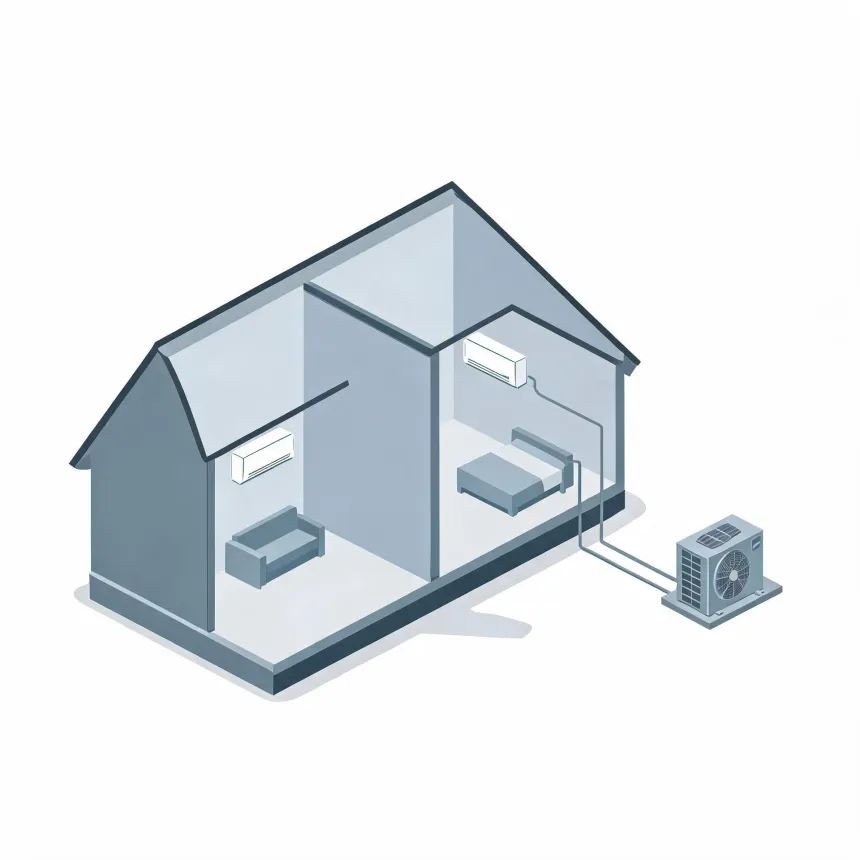
Isometric grey illustration of a cutaway house showing two rooms with wall-mounted indoor air conditioning units connected by lines to an outdoor condenser unit beside the building.
Your system heats October through April and cools May through September.

NOAA nClimDiv, 1991–2020 normals

Cooling runs May through September here.

Get the mini split installed in April and it's sized and set up right, not rushed in after the heat hits.

Most Salina homes heat with gas, so a mini split usually adds cooling or covers one room, not the whole job

62.8% of homes heat with gas
Cooling runs May through September
Summer afternoons average 90°F
Salina was built for gas heat, not ductworkHalf the homes here went up by 1966, before mini splits were an option

Ask the contractor to walk through SEER2 numbers on the units they're quoting, not just the price tag. Two systems can cost the same to install and pull very different amounts off your meter every month after. If a room or addition runs on the mini split alone, that gap shows up on every bill from the day it's turned on. Get the number in writing before you decide, not after.

The minimum here is 14.3 SEER2 and 7.5 HSPF2. See what qualifies for the credit.

Salina sits in climate zone 4A, which asks real work of both heating and cooling. A mini split counts as a split system under federal rules. Any unit installed here, ductless or not, has to hit 14.3 SEER2 for cooling and 7.5 HSPF2 for heating. That floor is already set. A federal tax credit is available on qualifying equipment. Ask what the quoted unit qualifies for before you sign anything.

Find a contractor
A man in a cap, dark shirt and tan work pants, seen from behind, climbs porch steps toward a red front door while carrying a canvas tool bag filled with screwdrivers.
A white mini-split air conditioner outdoor condenser unit mounted on metal brackets against a beige stucco exterior wall, with a blue sky and scattered clouds in the background.

The old equipment doesn't linger

Whatever gets replaced doesn't linger. A window unit or an old through-wall system comes out of the opening, and that opening gets patched or trimmed to fit the new line set. If a mini split is going in alongside an existing gas furnace, the furnace and ductwork stay put. Nothing about how that system heats the rest of the house changes. They run independently, so the furnace keeps doing its job everywhere the mini split doesn't reach. A contractor hauls away what comes out. If the old equipment was a central air condenser, the refrigerant in it gets recovered during removal, not left for later.

Ask how many zones the quote covers

One outdoor unit can run one indoor head or several, and the price changes a lot depending on which. A single zone cools or heats one room well. A multi-zone setup splits capacity across heads in different rooms, so each one runs a little weaker than a dedicated single zone would. Ask how many heads the outdoor unit is rated for and whether the rooms you want covered were counted in that quote, not added after.
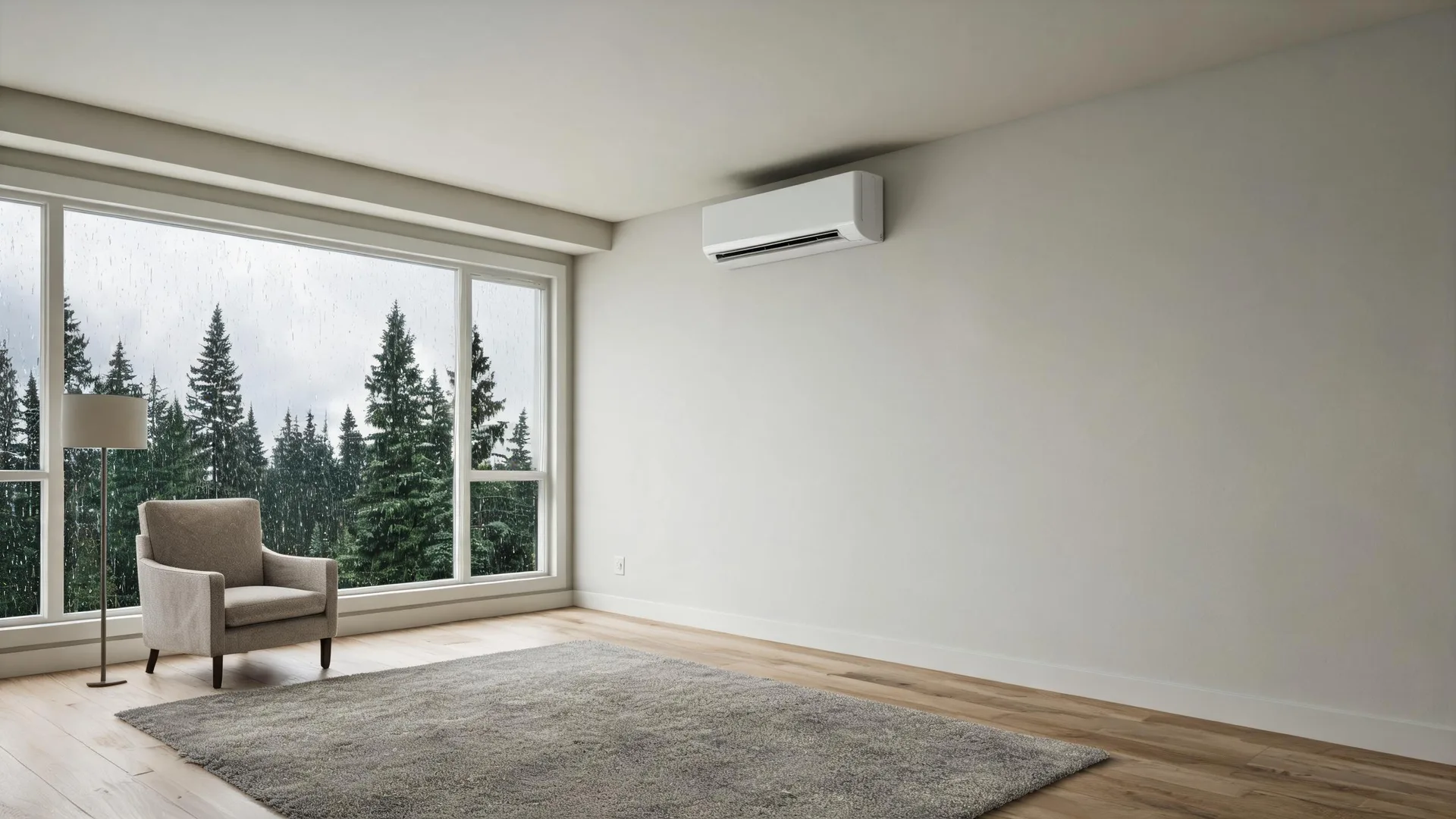
Ask where the line set and condensate drain will run

The indoor and outdoor units connect through a line set carrying refrigerant, plus a drain line for condensate. Both have to get from the indoor head, through a wall, to the outdoor unit, and the condensate line needs somewhere to drain that won't freeze or back up. A contractor walking the route with you before install, not just pointing at the wall where the head will hang, tells you whether the install will be clean or whether that line set is running somewhere awkward.

The number of indoor heads is the biggest driver, since each one needs its own line set run and its own spot on the outdoor unit's capacity. Where the outdoor unit sits matters too. It needs clearance on all sides to pull in air and dump heat, and a longer distance to the indoor heads means more line set, more refrigerant, and more labor to run it cleanly through walls. Mounting height and wall type change the job as well. A head going up on an exterior wall is usually a straighter shot than one on an interior wall, which may mean running line set through an attic or along a soffit instead. The condensate drain adds its own cost if gravity alone won't move the water out and a small pump has to be installed. None of this shows up on the spec sheet for the equipment itself, only in the labor to put it where you need it.

Install starts with the outdoor unit going in first, set on a pad or bracket with room to breathe on all sides. Then the crew runs the line set, the refrigerant lines and condensate drain bundled together, from that outdoor unit through a wall to each indoor head. That wall penetration gets sealed once the lines are through, so weather and pests stay out. Each indoor head gets mounted, leveled, and connected before anything gets powered on. Once everything's run and sealed, the line set gets pulled down to a vacuum to clear out air and moisture, because any left behind will wreck how the refrigerant cycles. Only after that vacuum holds does the system get charged and switched on, so the last part of the day is testing each zone, checking airflow, and confirming the drain actually moves water where it should.