5 months of summer run time
That's the stretch when dust builds up fastest inside the unit. A filter check every two to four weeks through those months keeps the coil behind it clear.
Clean the filters on a mini split in Salina every two to four weeks during the months you run it hard, and have the coils, blower wheel and condensate drain looked at once a year. Summers here get sticky and stay that way for months, so the unit runs long hours pulling moisture out of the air, and that moisture is exactly what lets dust and mold build up on the filters and coil fast. A dirty filter chokes airflow, which makes the system work harder and move less air for the power it uses. Winters are cold enough that the same unit may be doing your heating too, so it rarely gets a real break where buildup has time to stop. If your mini split came with the house, you may not know when it was last cleaned inside, which is worth finding out before another season starts.
Cooling runs May through September
Cooling runs May through September. That's five straight months of long run times, which is what loads up the filter and coil with dust and lint.
Heat runs October through April
Heat runs October through April. Seven months of heat pump duty means the same filter and coil are working nearly all year, not just in summer.
Power here costs 14.74 cents per kilowatt-hour
Power here costs 14.74 cents per kilowatt-hour. A dirty filter or coil makes the unit work harder to hit the same temperature, and that shows up on this rate.
NOAA nClimDiv 1991-2020 · EIA-861 2025
Skip the filters for a couple months in summer and the coil behind them starts loading up with dust. The unit still runs. It just pulls more power to move the same air, and moisture doesn't drain off the coil the way it should.
A clogged coil in July can freeze over, and then it stops cooling altogether until it thaws. That's a call for service that two minutes with the filter would have prevented.




That's the stretch when dust builds up fastest inside the unit. A filter check every two to four weeks through those months keeps the coil behind it clear.
The condensate drain clogs quietly, with no sign until water backs up. A yearly look catches it before it becomes a leak inside the house.

A mini split that's gone a season without attention doesn't shut off. It just works harder for the same cool air, and that shows up on your power bill before it shows up anywhere else. You'll notice the room doesn't feel as cold as it used to, or the unit runs longer to get there. Check the filter yourself and you'll usually see why: a gray layer of dust and lint sitting right where air has to pass through it.
The drain line is the one you can't check by looking. If it clogs, water backs up inside the unit and finds its way out somewhere you don't want it, onto a windowsill or down the wall below the indoor unit. By the time you see a stain, the clog has probably been there a while. Finding someone who actually works on mini splits and can get the coil and drain cleared before that happens is its own chore. Getting matched with a contractor who handles this, and hearing from them directly, skips the part where you're calling around Saline County asking who services these units.

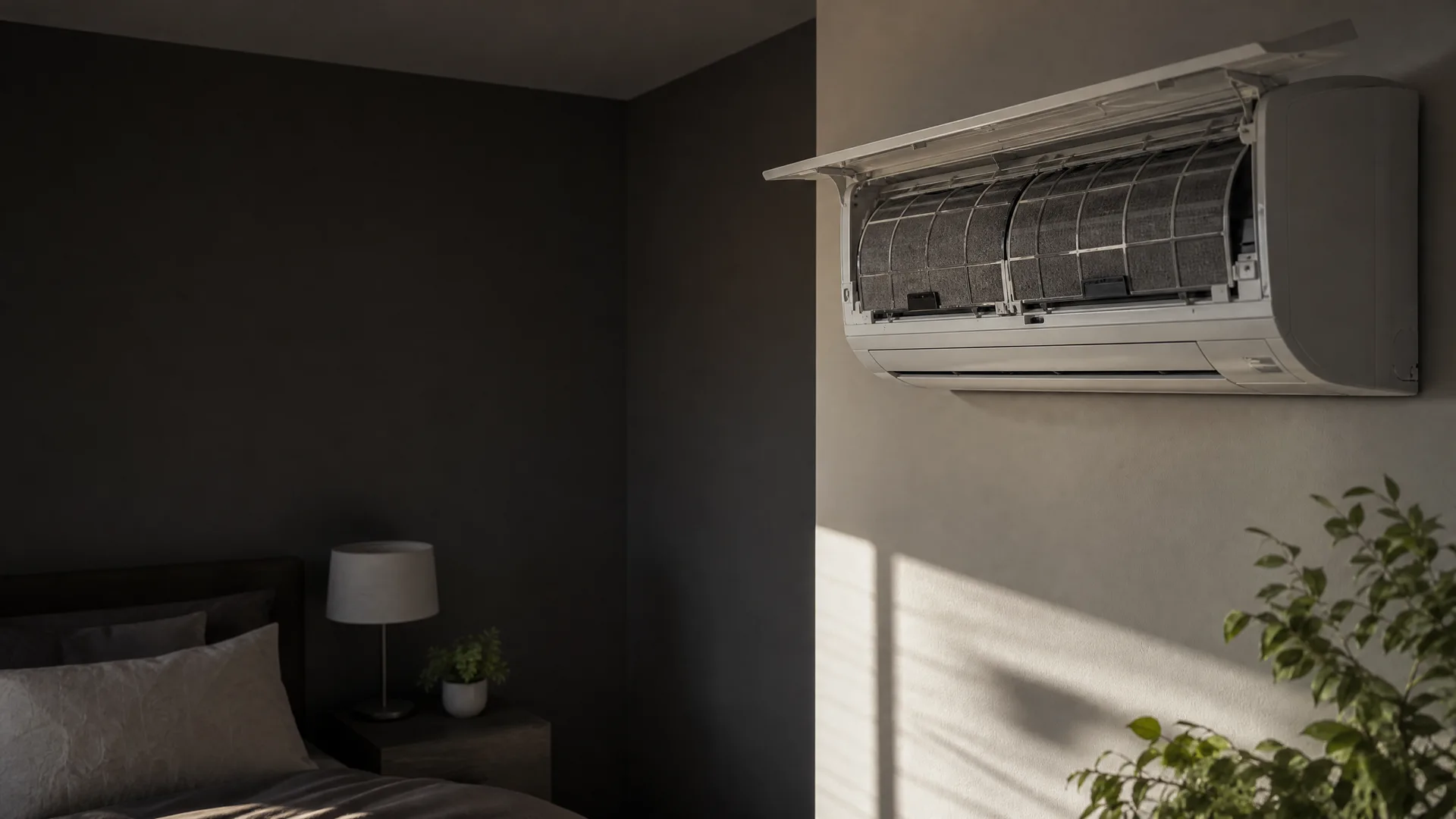
May, late afternoon, and the bedroom still holds the day's heat. You finally pull the front cover off the mini split, the one that's been running steady since the warm days started coming back to Saline County. The filter screen behind it is grey with dust, matted enough that you can see it's been blocking airflow for a while. You run a thumb across it and dust comes off on your skin. Outside, the light is going gold through the blinds. You set the cover down on the bed, screen in hand, already thinking about how long it's been since anyone looked past the filter at the coil underneath, or the drain line, or anything else back there.
You know the schedule now: filters every few weeks through the long cooling stretch, a yearly look at the coil, the blower wheel, the drain line. Keeping to that on your own means remembering it every month the unit runs, then finding someone qualified when it's time for the yearly check, explaining your setup to one company after another, and weighing quotes that don't quite match up. Most homeowners don't have time for that, and a missed month here or there is how a mini split ends up working harder than it should. Handing this to a contractor who already knows mini splits in Saline County means the filter habit still falls to you, but the yearly inspection and anything it turns up gets handled by someone who does this for a living. That's one less thing to track while your unit runs five months of summer and seven months of heat every year in Salina.
You can slide the filters out and rinse them without anyone's help. It takes a few minutes every two to four weeks through the summer, and most people get the hang of it fast. What you can't see is harder. The coil sits behind the filter, and the blower wheel is further back still. Dust on the coil doesn't rinse off with a hose, and a blower wheel caked with grime usually has to come apart to clean right. The condensate drain is worse. It runs inside the wall or under the unit, and you'd need to find it before you could check it.
A yearly visit covers what the filters don't. Someone who services mini splits regularly can pull the coil cover, clean the fins without bending them, check the blower wheel, and run water through the condensate drain to make sure it's draining and not just sitting there. They'll also catch a refrigerant issue or a loose connection before it turns into a repair call in August. That's the piece you can't do from the outside of the unit, no matter how often you clean the filter in front of it.


Air pulls in through the front grille and hits the filter first.
The filter screens out dust before air reaches the coil.
Refrigerant inside the coil pulls heat and moisture from that air.
Water collects on the coil and drips into the condensate pan.


Salina summers run long, and that's what drives the schedule. Filters come out every two to four weeks from May through September, rinsed clean, slid back in. That part you can keep up with on your own. The coil, blower wheel and condensate drain are a different matter. Those need eyes on them once a year, someone who knows what a dirty coil looks like versus a failing one, and what a drain line looks like before it backs up. Skip the filters and the coil behind them loads up with dust. The unit keeps running. It just pulls more power to push the same air through a dirtier coil, and that cost lands on your power bill whether you notice the dust or not. Skip the yearly check and the condensate drain can clog without any sign until water's already found somewhere to go it shouldn't.
None of this stops the unit from working. It just means the unit works harder, and you pay for that difference whether or not you ever see the coil yourself. The part that actually takes effort isn't the filter rinsing. It's finding someone licensed to handle the coil and drain, calling around to see who's available, explaining what the unit is and what it needs, then sorting through quotes to figure out who's worth having out. That's the piece most people put off, not because the mini split doesn't matter to them, but because finding the right person for it is its own task on top of everything else.

Skip calling around to set up a mini split tune-up.