

Mini split leaking water in Overland Park, KS
Explain the mini split problem once instead of to every shop in Johnson County.
Skip the callsWhy is my mini split leaking water?
A mini split dripping water onto the wall or pooling on the floor gets your attention fast, especially with Johnson County summers running long and sticky and the unit working hard month after month. You want to know if this is something minor or if water is about to damage your floor or drywall. Most of the time the cause is one of a few things, and figuring out which one matters before you decide what to do next.
It's almost always a clogged or blocked condensate drain
Your mini split pulls moisture out of the air and that water has to go somewhere. It drains through a small line, and when that line clogs with algae or dirt, the water backs up and comes out of the unit instead. A dirty air filter can cause the same thing by freezing the coil, which then drips as it thaws. Either way, the water is a symptom of something blocking the system's normal drainage, not a sign the unit itself is failing. With the humidity Johnson County gets most of the summer, condensate lines clog faster here than they would in a drier climate, so this is a common call for mini splits running from April through October.
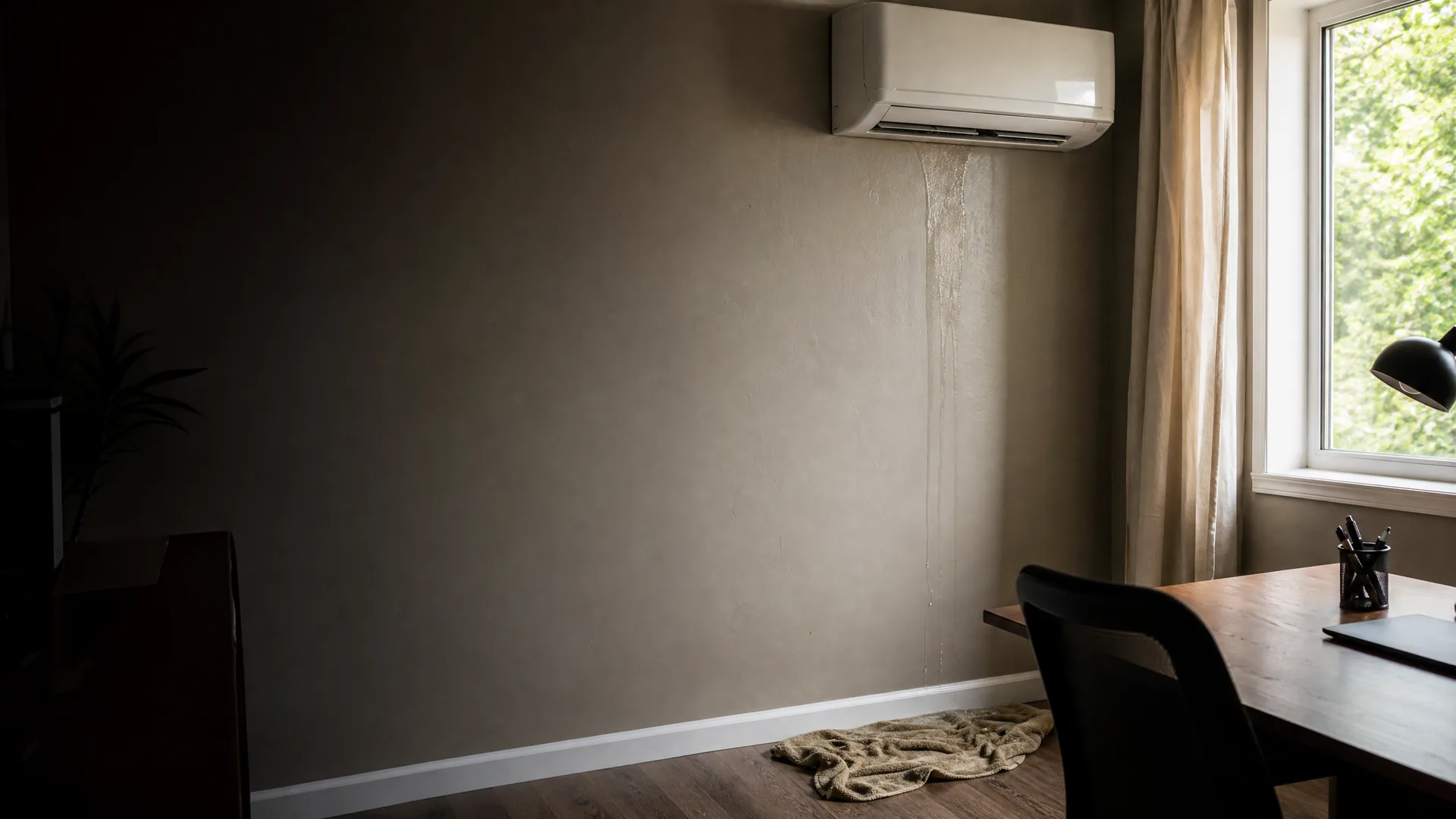
You're at your desk on a July afternoon, the mini split humming above the window, when you notice the wall looks wrong. A dark streak runs down from the bottom of the indoor unit, soaking into the paint. You get up, press a finger to it, and it's wet. By the time you've grabbed a towel and laid it on the floor under the unit, water is already beading along the edge of the case and dropping steady, one drop every few seconds. The towel's soaked through in twenty minutes. You check the thermostat. It still reads 72. The unit's still blowing cold air into the room like nothing's wrong, and that's what gets you, because it's clearly still working, and it's still leaking.
How much does your mini split actually run here?
Cooling runs May through September
Cooling runs May through September. That's five months of condensate draining through the line, five months the drain pan and pump get tested.
Heat runs October through April
Heat runs October through April. Seven months leaning on the system means seven months the same drain and pump have to keep working without a break.
Power here costs 13.46 cents per kilowatt-hour
Power here costs 13.46 cents per kilowatt-hour. A mini split running wet and overworked costs more to run than one draining the way it should.
NOAA nClimDiv 1991-2020 · EIA-861 2025




Clear It Yourself or Call for Help
Clean it yourself first
- A clogged drain line is the most common reason a mini split leaks, and a wet-dry vacuum at the outdoor end of the line can pull the clog free.
- The filters behind the front cover catch dust and lint, and rinsing them clears one of the easier causes of a blocked drain pan.
- Checking that the indoor unit sits level matters, because a unit tilted the wrong way sends condensate toward the wall instead of into the pan.
- Flushing the line with a cup of distilled vinegar once the clog is out helps keep algae from building back up as fast.
- This works when the leak is new and light, a damp spot rather than a steady drip or a soaked wall.
Call a contractor
- A pump that's failed, a cracked drain pan, or a line that's collapsed inside the wall need tools and parts you won't have on hand.
- A local contractor who services mini splits all summer in Johnson County has seen which brands clog fast and which pumps wear out first.
- One contractor means one visit and one diagnosis, instead of calling around and explaining the same leak to several companies.
- If the line runs through the wall or the attic, finding the actual low point or kink takes someone who can open it up and trace it.
- A unit that keeps leaking after you've cleared the line and leveled it points to a problem inside the coil or the pan itself, not the drain.
- Waiting on a steady drip risks the drywall and the subfloor under it, which costs more to fix than the leak itself.

Warm indoor air passes over the cold evaporator coil.
Moisture in the air condenses on the coil's surface.
Condensate drips down into the drain pan below.
The pan feeds into a drain line sloped to drain outside.
What's that wet patch under your mini split
Look at the wall below the indoor unit. A stain spreading across the paint, a dark ring on the ceiling, or water beading on the cover itself all point the same direction. Check the floor too, especially if the unit sits over wood or carpet, since standing water there will warp a floor board or leave a mildew smell behind if it sits long enough. Some homeowners notice a musty smell from the unit before they ever see the water, which usually means moisture has been sitting in the drain pan or line for a while. A unit that's merely damp along the bottom seam is worth checking now, before a slow drip turns into a soaked wall or a ruined section of drywall.
The tilt matters more than you'd think
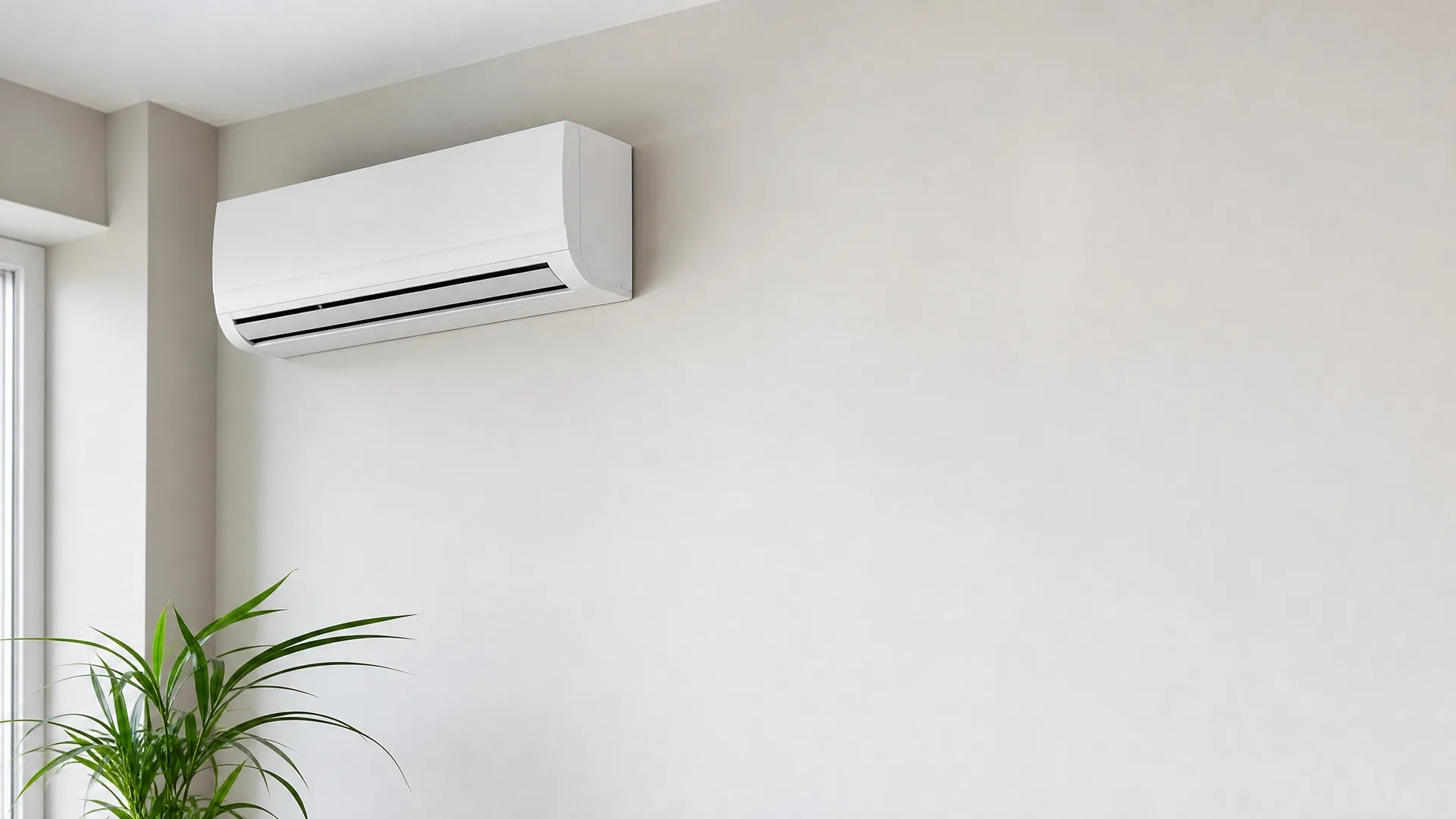
Indoor units mount with a slight tilt toward the drain outlet, so gravity pulls condensate to the pan and out the line. A unit that's shifted level, or tilted the wrong way, leaves water pooling at the back of the pan instead of draining. That pooled water finds the lowest edge and runs over, usually right where the line connects. Check if the unit sits flush against the wall bracket or if one side has pulled away.
Why the line runs where it does
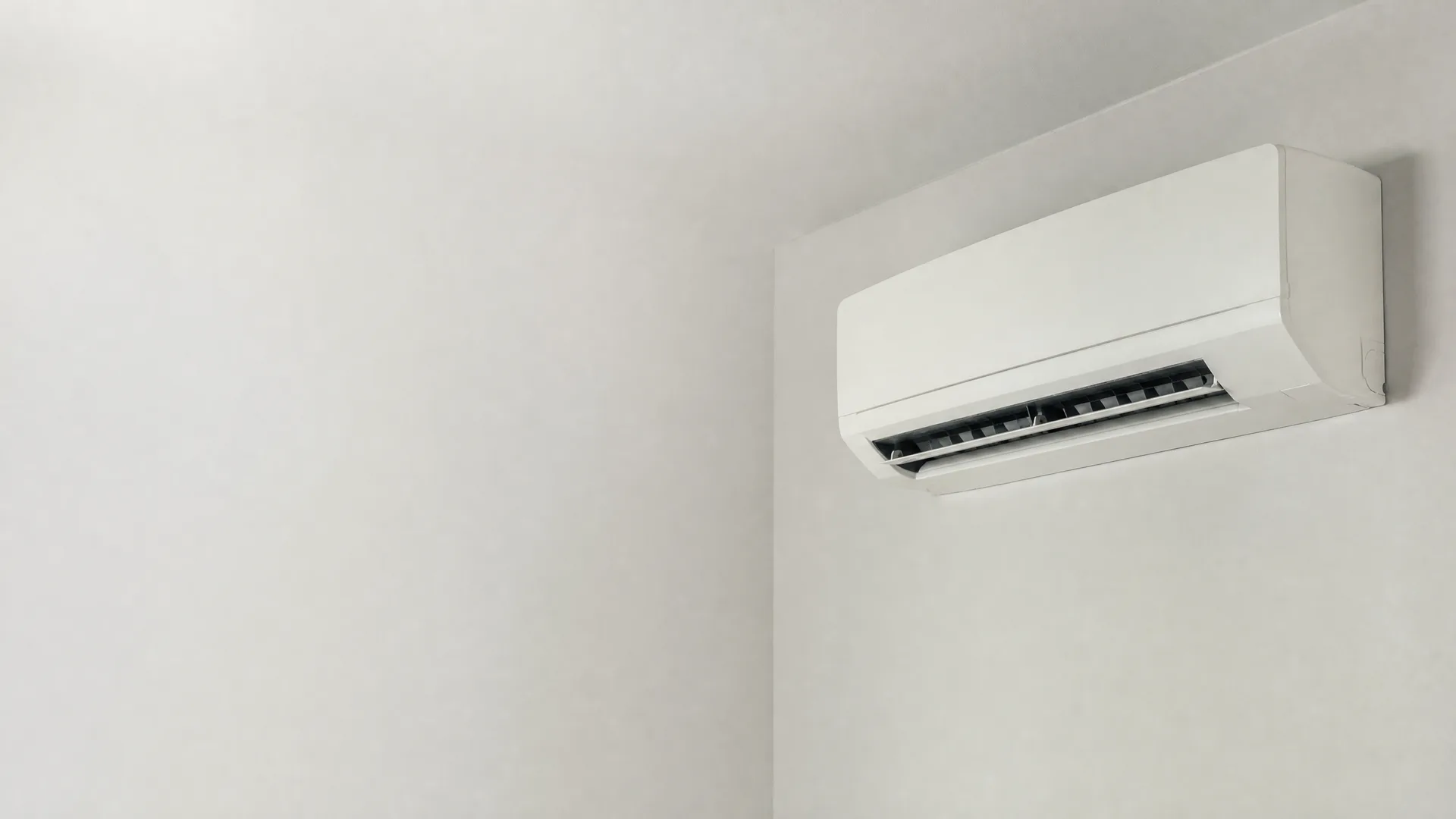
The drain line slopes downward the whole way from the indoor unit to wherever it empties outside, often fifteen feet or more depending on where the outdoor unit sits. Any low spot in that run holds standing water, and standing water breeds the same algae that causes a clog further down. A line that was routed with a dip in it, even a small one, works against the slope instead of with it, and that spot keeps backing up no matter how often the end gets cleared.
Cooling runs May through September
Five months of cooling means five months your drain line has to keep up, May through September. If it's going to clog or your pan is going to overflow, summer here is when it happens, not in the cold months when the system sits idle.
NOAA nClimDiv 1991-2020


No calling every shop in Johnson County

A licensed pro who repairs mini splits in Johnson County gets your request.
You're not committing to anything by asking.
Leave a clogged drain line alone and the water doesn't stop at the wall stain. It keeps finding the drywall, the insulation behind it, and the stud underneath, and all three stay wet longer than the stain suggests. On an upstairs unit, that same water works through the ceiling below before you ever see it on ceiling drywall, so by the time you spot a ring up there, it's already been running a while. A full drain pan can also trip the float switch and shut the unit off altogether, which in a Johnson County July means the room it cools starts climbing in minutes, not hours. Mold likes the same wet drywall and insulation the leak is soaking, and once it's established behind a wall you're not solving it with a vacuum on the drain line. None of this needs the leak to go on for weeks. A pan that's been backing up for a few days of hard summer cooling is enough to start the damage, even if the stain on your wall still looks small.


A condensate pump doesn't know the water level is rising unless the float switch tells it to. When that switch sticks or wears out, the pump sits idle while the pan fills past its edge. Some indoor units build in a second pan below the first, wired to a sensor that cuts the system off before the overflow ever reaches your wall. That's a safeguard, not a fix, and it means the real problem is still sitting there unaddressed. Where the line set passes through the wall, it runs inside a sleeve packed with insulation and sealed at the ends. If that seal cracks, condensate finds the gap and tracks sideways through the wall instead of down the line where it belongs, which is why a leak can show up on drywall nowhere near the drain path. Outside, the line sits low enough that grass clippings and dirt work into the opening from the outside in. And anywhere the line sags between joists, water pools in that low spot, and algae starts building there long before you'd ever see it.
The parts behind the leak
- The condensate pump, if the unit has one, uses a float switch to trigger a small motor that pushes water uphill to the drain line.
- A failed float switch lets water rise past the pump without tripping it, so the pan overflows even though the motor never runs.
- Some indoor units have a secondary drain pan with its own sensor that shuts the system off before water reaches the wall.
- Line sets often run through a wall sleeve packed with insulation, and a cracked seal there lets condensate track sideways instead of down.
- The outdoor end of the drain line sits low to the ground, where dirt and grass clippings can pack into the opening and block flow from outside in.
- A drain line that loses its slope over time, often where it sags between joists, creates a low spot where water sits and algae builds up.


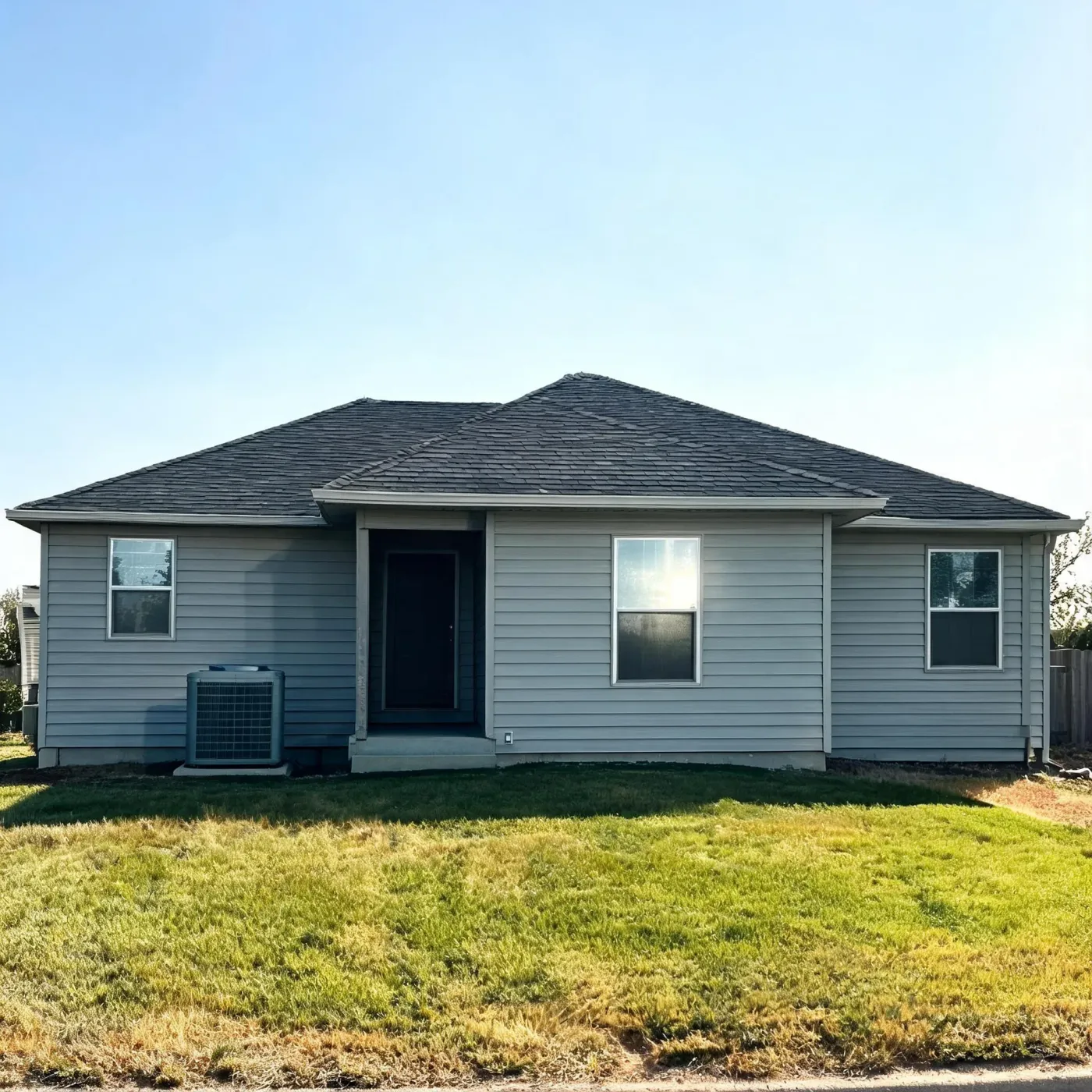
Johnson County's air sits heavy all summer. The dew point averages 65°F across June, July and August, according to NOAA climate records, and anything past 60 feels sticky to most people. That thick air is exactly what your mini split's coil has to pull moisture out of, hour after hour, all season. The more water it's pulling from the air, the more it's sending down that drain line, which means more volume for a clog or a weak pump to fail on. A dry June doesn't tell you much. A muggy stretch in July or August is when a partial clog turns into water on the wall.
NASA POWER T2MDEW

A mini split that drains right stays dry and quiet
Water on the wall or floor under your mini split almost always traces back to a clogged drain line, a tilted unit, a dirty filter, or a pump that's stopped doing its job. Each of those has a clear fix, and a tech who works on these units all summer has seen every one of them more than once.
Finding that tech is the part that takes the time. Instead of searching contractor sites, calling a handful of companies, and explaining the same wall stain to each one before you can compare quotes, you get matched with one licensed local contractor who already knows what Johnson County summers do to a drain line and a condensate pump. One call in, not five calls out.

One form, no calling around