How often should I clean my mini split in Kansas?
You run yours hard on humid July nights and it keeps you comfortable after dark, but you've noticed the air coming out isn't as cold as it used to be, or the unit seems to be working harder than it should. You want a straight answer on how often it actually needs attention, not a sales pitch.
Clean the filters every two to four weeks in summer and have the system serviced once a year
A mini split pulls humid air across its coil all summer, and the filters catch whatever's floating in that air. In Kansas, with sticky stretches from June through August, those filters load up fast, so wash or vacuum them every two to four weeks while you're running the system hard. Beyond the filters, the coil and the condensate drain need a closer look once a year, since dust and moisture build up where you can't easily see them. Since most homes here heat with gas, the mini split likely sits idle for a chunk of the year, which is a good time to get that yearly check done before summer humidity puts it back to work.

The filters trap dust before air reaches the coil inside.
Dirty filters block airflow, so the coil can't absorb heat right.
A dirty coil forces the unit to run longer for less cooling.
A contractor clears the filters, coil, and condensate drain line.
DIY Filters or Full Cleaning
Clean the filters yourself
- You can slide the filters out and rinse them with water every few weeks through July and August when the unit runs most.
- It costs nothing but a few minutes and keeps dust and pet hair from choking the airflow between cleanings.
- You can see and feel the difference right away if the air coming out feels weaker before you rinse them.
- It does not reach the coil, the blower wheel, or the drain line, where mold and grime build up where you cannot see them.
- Skipping this step for months lets dust cake onto the coil, and rinsing filters alone will not undo that.
Have it professionally cleaned
- A contractor opens the unit and cleans the coil and blower wheel directly, not just the filters you can reach.
- This matters most once or twice a year here, with Kansas summers pushing the system hard from June into September.
- A contractor also checks the drain line and clears it, since a clogged drain can cause leaks or shut the unit down.
- It catches a coil that is losing efficiency before the unit is drawing more power to cool the same room.
- It takes the guesswork out of whether what you are doing at home is actually enough for how hard your unit runs.
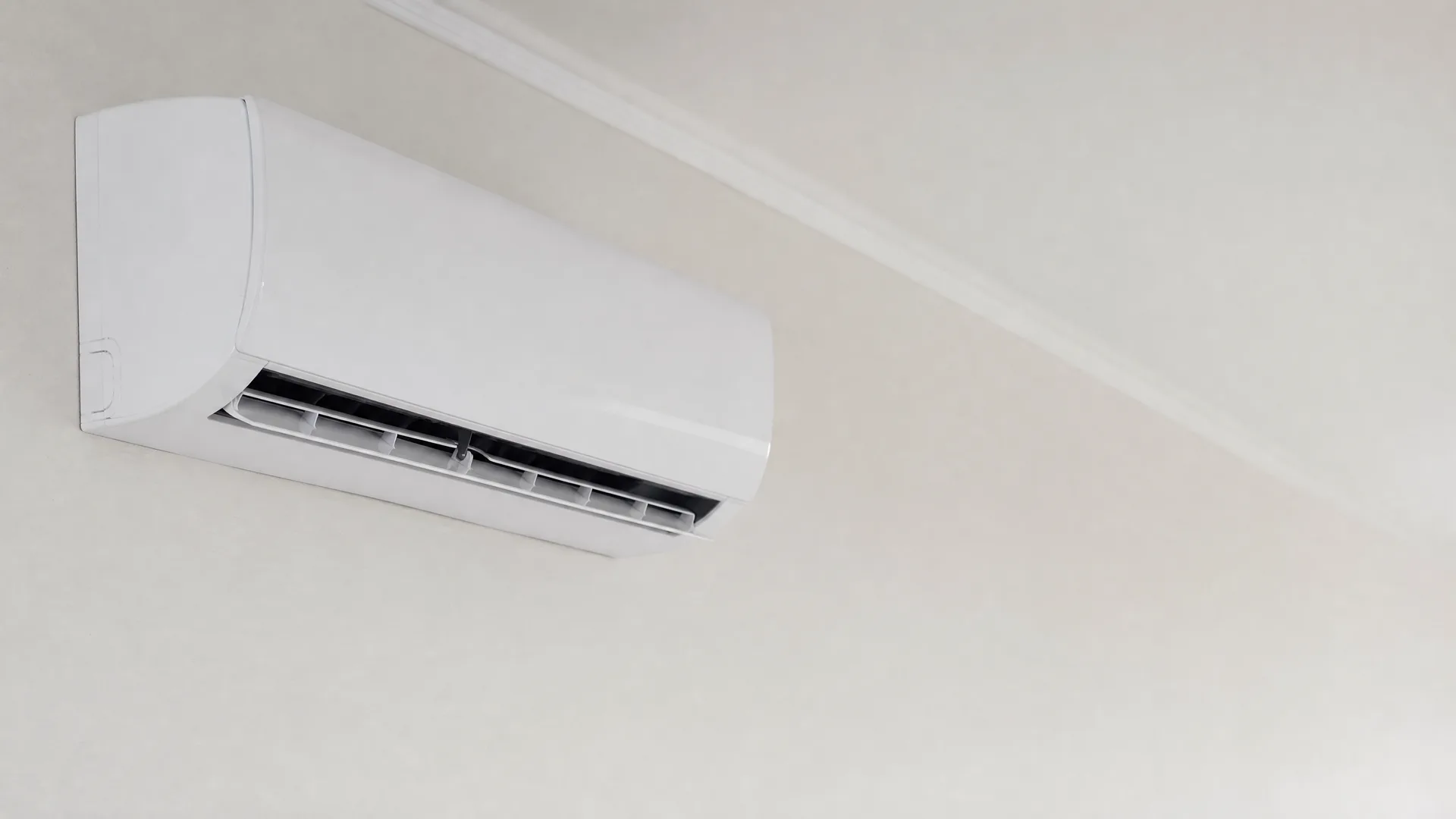
What's behind that coil
Pull the filters and you'll see a wall of thin metal fins packed close together. That's the evaporator coil, and it's where the actual cooling happens. Warm air passes over it, the refrigerant inside pulls the heat out, and cool air blows back into the room. Dust that gets past the filters settles on those fins. Once it builds up, air can't move through as easily, and the coil can't pull heat the way it's built to.
Why the drain line matters too
As the coil cools the air, it pulls moisture out of it, and that water has to go somewhere. A small drain line carries it outside, drop by drop, the whole time the unit runs. Algae and dust can build up inside that line over a cooling season and slow the drip. When it backs up, water can collect inside the unit instead of draining out, and you may notice it pooling near the indoor head. A contractor checks that line as part of a cleaning, not just the filters and coil.
Power costs 14.44 cents per kilowatt-hour statewide
At 14.44 cents a kilowatt-hour, a mini split losing its cooling power isn't just less comfortable, it's running longer to do less, and that shows up on your bill. Clean filters and a clear coil keep it from working harder than it has to all summer.
EIA-861 2025 statewide residential average




Matched to your mini split job
A Kansas summer gives your mini split a long stretch of hard running, and that's when a dirty filter or coil costs you the most. By the time the air feels weak or the unit sounds like it's working overtime, the coil behind those filters has likely been coated for a while. Rinsing filters yourself gets you partway there, but the coil, the drain line and the blower wheel need someone who can open the unit up and actually check them. Once a technician has looked at yours, they can tell you how often your specific system needs that attention, since a unit running most of the day through July and August needs it more than one used a few hours a week. You don't have to track that schedule yourself or figure out what's wrong before you call. Hand off the diagnosis and let someone who works on these units every week tell you where yours stands and what it needs before the next stretch of heat.
What to take from this
- Rinse the filters yourself every few weeks from June through September, when the unit runs longest.
- Have a contractor clean the coil and check the system once a year, ideally before the heat sets in.
- A dirty filter cuts airflow, and a dirty coil forces the unit to run longer for less cooling.
- Skipping cleaning shows up as weaker airflow first, then as a higher bill at 14.44 cents a kilowatt-hour.
- Most Kansas homes lean on gas heat, so the mini split's hardest stretch is the humid summer months.
- A clear filter and coil keep the unit from working harder than it needs to all summer.
You asked how often to clean a mini split in Kansas, and the answer comes down to two schedules. Rinse the filters yourself every few weeks once the heat sets in and the unit is running most of the day. That part takes a few minutes and you don't need anyone's help for it. The coil is different. It sits behind the filters and does the actual work of pulling heat out of the air, and once it's coated with dust, rinsing a filter won't fix it. That's a yearly job for a contractor, and doing it before the first hot stretch means the unit isn't already behind when it matters most. Skip either one and the pattern is the same. Airflow drops first, quietly enough that you might not notice right away. Then the unit starts running longer to hold the same temperature, and that extra runtime is what shows up on your bill at 14.44 cents a kilowatt-hour. None of this is really about the mini split itself. It's about whether it's working as hard as it has to or harder than it should, through the stretch of the year it can least afford to struggle. Keep the filters clean and the coil clear, and it won't be the thing you're thinking about on a July evening.


Mini Split Maintenance
A mini split pro near you
Send the form and the mini split tune-up stops being something to remember.
