



Mini split light blinking in Overland Park, KS

Send the request today and let a mini split pro reach out to you.

Let a pro reach out

A blinking light on your mini split is the unit's way of showing an error code, and what it means depends on the pattern and the brand. A steady blink pattern, counted and repeated, usually points to something specific: a clogged filter, a drainage problem, low refrigerant, or a sensor fault. Some units blink one color for normal defrost and switch to a different color or pattern when something is wrong. With winters here getting cold enough to ice over an outdoor unit, a blinking light during a defrost cycle can be normal. But if the light keeps blinking outside of that, or the unit stops heating or cooling while it blinks, that is the system flagging a fault it cannot fix on its own. The exact count and color point to a specific problem, and that detail matters for diagnosing it correctly rather than guessing and replacing parts that are not the issue.

A smiling bearded man in a dark green henley shirt sits on a blue-gray couch in a living room, with a bowl of popcorn in the foreground and a houseplant and window behind him.
A smiling man in a dark sweatshirt reclines on a gray sofa in a living room, with a wooden bowl of popcorn on a table in the foreground and a dining area, shelving, and pendant lamp behind him.
A smiling man in a navy long-sleeve shirt reclines on a sofa in a living room, with a bowl of popcorn on a wooden coffee table and framed pictures on the wall behind him.
A smiling man in a dark green long-sleeved shirt sits on a gray sofa in a living room, with a bowl of popcorn in the foreground and windows and a potted plant behind him.

Why does my mini split run almost year round here?

  • Cooling runs May through September

    Cooling runs May through September. That's five straight months of the compressor cycling on, which wears on the same parts that trip an error light.

  • Heat runs October through April

    Heat runs October through April. Seven months of heating puts more hours on your mini split than most people guess, even with gas backup elsewhere in the house.

  • Power here costs 13.46 cents per kilowatt-hour

    Power here costs 13.46 cents per kilowatt-hour. A mini split throwing codes and short-cycling still draws power the whole time it's struggling.

NOAA nClimDiv 1991-2020 · EIA-861 2025

Light blinking but the unit still runs

Some error codes don't stop the mini split from working. It might still cool or heat the room while the light blinks, just not as well as it should. A dirty filter or a sensor reading wrong can trip a code without shutting the system down. You can wait a short while on this one, but the strain doesn't go away on its own, and the same part that's struggling now is more likely to fail outright once the compressor is running hard every day through a Johnson County summer.


Light blinking and the unit stopped

If the mini split has shut off and the light keeps blinking, the system has caught something it won't run through. That's usually a refrigerant problem, a failed sensor, or a board protecting the compressor from damage. Waiting doesn't help here, there's nothing to wait out. Instead of spending the evening on hold with one contractor after another, or calling around Overland Park trying to find someone who can even look at your brand, send the form once and let someone else sort through who's available.

A dusty, stained white wall-mounted mini-split air conditioner indoor unit installed high on a plain off-white interior wall near the ceiling.
Before you get your mini split repair
A white wall-mounted mini-split air conditioner unit installed high on a beige interior wall below white crown molding, with a window and woven shade at the left edge showing green foliage outside.
After you get your mini split repair

The control board inside your indoor unit counts out its fault in blinks, a set number, a pause, then the same set again. That pattern is the board telling you what it logged, not just that something's wrong. It holds that code until the fault clears or until the power gets cut, which is why some homeowners pull the breaker and think they fixed it. The light often comes back within minutes once the unit restarts, because the same condition is still there. A clogged drain line works through a float switch in the indoor unit, and the board gives that its own pattern, separate from a dirty filter or a bad sensor. A refrigerant sensor fault tends to blink faster or longer, since the board ranks that above a simple airflow problem. None of this translates across brands. A Mitsubishi head and a Fujitsu head can flash the same two blinks and mean two different things, so the count only means something once you know which unit you're reading.

Reading the Blink Pattern

  • The indoor unit's control board reads a blink pattern in sets, so a code like two blinks, pause, two blinks again tells the board which fault it logged.
  • Most mini splits store that code in a loop until the condition clears or until someone cuts power and restarts the unit.
  • A blocked drain line trips a float switch inside the indoor unit, and the board shows that as its own distinct pattern separate from a filter or sensor fault.
  • Brands don't share one code system, so the same blink count from a Mitsubishi head and a Fujitsu head can point to two different problems.
  • A refrigerant sensor fault usually shows a faster or longer blink sequence than a simple airflow restriction because the board treats it as a higher priority fault.
  • Cutting power at the breaker clears a stored code, but the light comes back within minutes if the fault is still there when the unit restarts.
A woman with wavy brown hair sits on a beige couch with her eyes closed and a slight smile, a knit blanket over her lap and a closed dark-covered book resting on it, with a lit lamp and plant in the dim background.
A smiling man with dark wavy hair and a short beard, wearing a navy crewneck sweater, sits at a candlelit dinner table with a bowl of food, wine glass and a lamp and framed art behind him.
A white wall-mounted mini-split air conditioner on a beige interior wall, with a window at left showing trees and a wooden fence, and dark wood flooring below.

Running fine, light steady

This is what a mini split should look like: mounted near the ceiling, quiet, pulling air through a clean filter. No blink, no code. In a Johnson County summer that means it's keeping up without straining, and the inside stays where you set it.

A white wall-mounted mini-split air conditioner indoor unit with dark louvered vents, installed near the ceiling on a beige wall below white crown molding.

Blinking and worn down

Dust built up on the casing here, and the louvers show it. A unit that looks like this is more likely to throw a code, because a dirty filter or a clogged coil is exactly what trips a fault light. The blinking is it telling you something is already wrong.

What are you noticing when you look at the unit

You probably walked by and caught the light out of the corner of your eye. It might blink a few times, pause, then repeat the same pattern, or it might just flash steady and fast. The room temperature is the next thing you check. Maybe the air coming out feels weaker than usual, or the unit is blowing but the room isn't catching up to the thermostat setting. Some people notice a smell first, musty if the drain line is backed up, or nothing at all if the fault hasn't affected airflow yet. If this keeps going unchecked, a minor fault can turn into a stuck compressor or a coil that freezes over, and you're looking at a bigger repair than the one you'd have today.

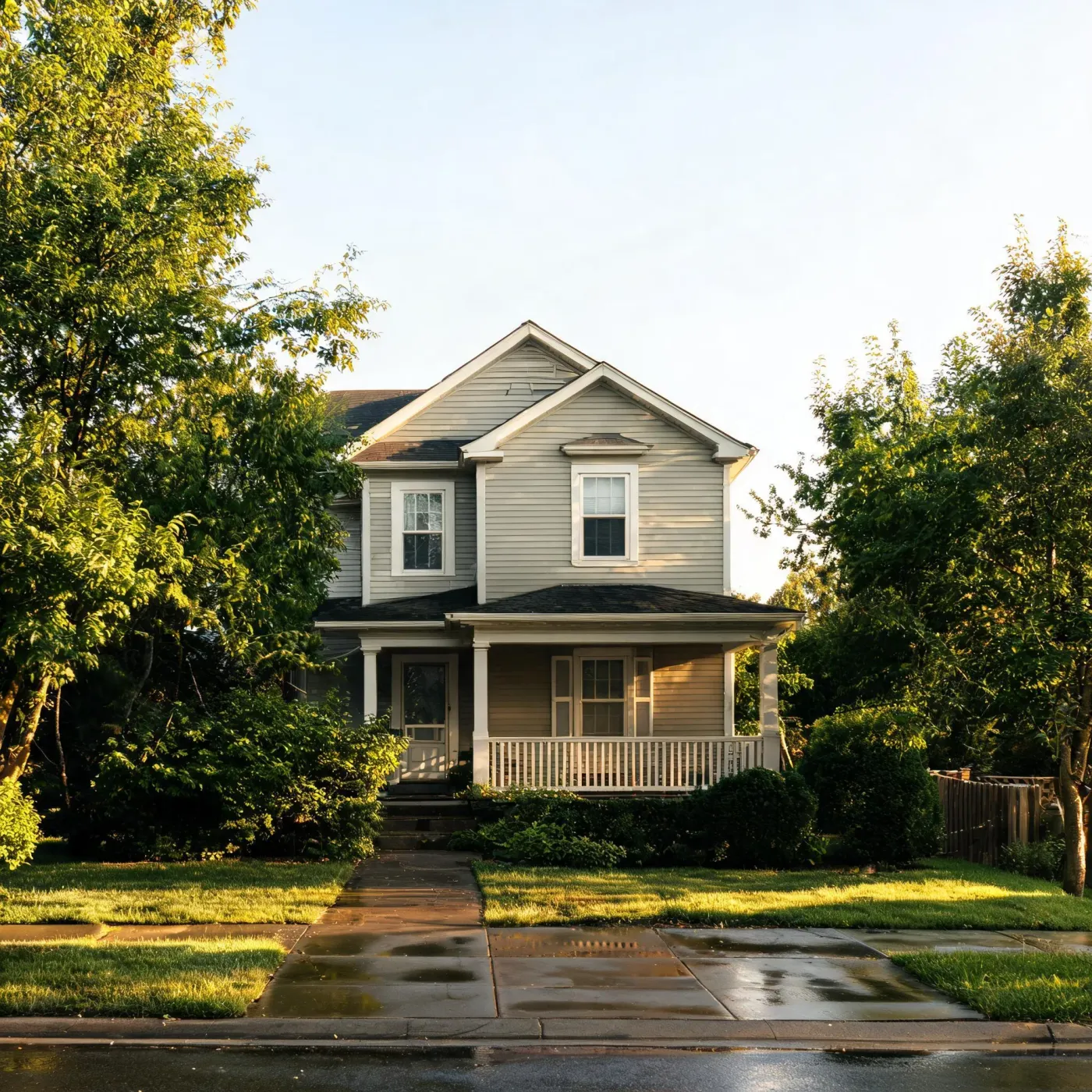
A two-story light-colored house with horizontal siding, a covered front porch with white railings and columns, flanked by green trees and shrubs, with a concrete walkway leading to a wet sidewalk and street.

A dew point near 65°F is what makes a Johnson County summer feel heavy even when the temperature itself isn't that high. Your mini split has to pull more moisture out of the air to keep the room feeling right, and that moisture runs across the same coil and drain line that trip a lot of error codes. A clogged drain or a coil that can't shed water fast enough shows up as a blink pattern on nights like that. If you're already seeing the light, that load is one reason. Finding out which fault it is beats guessing, and it beats calling around to find someone who can tell you.

NASA POWER T2MDEW

Hand off the search today

A blinking light doesn't wait for a convenient week. If it's July and the dew point's sitting heavy, or it's January and the heat side trips the same code, the room stops being comfortable while the unit keeps flashing at you. Figuring out which brand uses which pattern, then finding someone licensed to work on your specific system, is its own chore. Most people start by searching around, calling a few numbers, describing the blink pattern over and over to whoever picks up, then waiting on quotes to compare. Send the request here and that part is done. One contractor who works on mini splits in Johnson County gets your information and takes it from there. You stop being the one who has to track down help and start being the one who gets a call back about fixing the thing. That light isn't going to mean less the longer it blinks, and the sooner someone who knows the error codes looks at it, the sooner the guessing stops.

A white wall-mounted mini-split indoor unit installed high on a gray interior wall, with a window at left and part of a light gray sofa with a dark cushion at lower right.

Mounted near the ceiling, no light blinking

This is a mini split doing its job. It sits quiet against the wall, pulling air through a clean filter, no code flashing. Nothing about it asks for attention, which is exactly how it should look.

A white wall-mounted mini-split air conditioner indoor unit with visible dust and staining along its lower vent, installed on a plain pale wall.

Dirt and mold built up along the vents

This is what sits behind a lot of blink codes. Grime along the lower casing and the vent slats means the filter hasn't been cleaned in a while, and that buildup is often what trips the light in the first place. Once it's caked on like this, a wipe-down won't clear it.

Call a Tech or Wait It Out

Call a tech

  • A tech reads the blink pattern against the brand's own chart, so there's no guessing whether it's two blinks or three that was logged.
  • Clearing the actual fault means cutting the circuit board's memory of it, which usually takes more than flipping the breaker.
  • If the code points to a refrigerant problem, that work needs gauges and a license, not something to try from the wall unit.
  • A drain line or sensor fault gets fixed at the source, so the same code doesn't come back the next humid week.
  • You get the room back to actually cooling or heating, not just the light going dark while the problem sits underneath.

Wait it out

  • The light might go off on its own if the fault was minor, like a filter that dries out or a sensor that resets.
  • Leaving a drainage code alone through a Johnson County summer risks water backing up into the unit or the wall below it.
  • A refrigerant fault left alone usually gets worse, since the system keeps cycling on a charge it can't maintain.
  • The room keeps losing ground on hot or cold days even while you wait, since the unit's compensating for whatever tripped the code.
  • You still have to notice the pattern, write it down, and figure out which brand's chart it matches before anyone can act on it.
A dim room with a wall-mounted mini-split air conditioner above a water stain running down the gray wall to a towel on the wood floor, with a black shelving unit, a desk with a lamp and potted plant by a window, and an office chair at right.

You're at the desk around two in the afternoon, the mini split humming above the window, when you notice the wall under it has gone dark. A streak, running down from the unit toward the baseboard. You get up, press a hand to it, and it's wet. The light on the indoor unit is blinking, the same pattern over and over, and you hadn't even clocked it until now. You grab a towel from the hall bathroom and lay it along the floor where the water's pooling. Outside it's thick and sticky, the kind of Johnson County afternoon where you want the door shut and the unit working, not dripping onto the carpet while you try to get through the rest of your emails.

A closed silver laptop and a light ceramic mug of dark coffee on a wooden table, with a wooden chair, kitchen counter with sink, pendant lamp, potted plant, and a window showing a sunset sky in the background.

A blinking light is the unit telling you something specific

The pattern on that light points to one fault the board has logged, not a general complaint. Whether it's a clogged filter, a drain line backing up, or a sensor reading wrong, the code narrows it down before anyone opens the unit. That's true whether it trips in a muggy July afternoon or a cold stretch in January.

Matching a blink count to the right brand's chart, then clearing it, is a job for someone who does this daily. Otherwise you're left counting blinks against a manual you don't have, calling around to find out which company services your brand, and explaining the same pattern over again to whoever picks up. Send the request once and that part of it is off your plate.

A gray upholstered sofa with a beige cushion and knit blanket beside a curtained window, with a white mug and a book on a dark wooden table in the foreground and a lit lamp in the background.
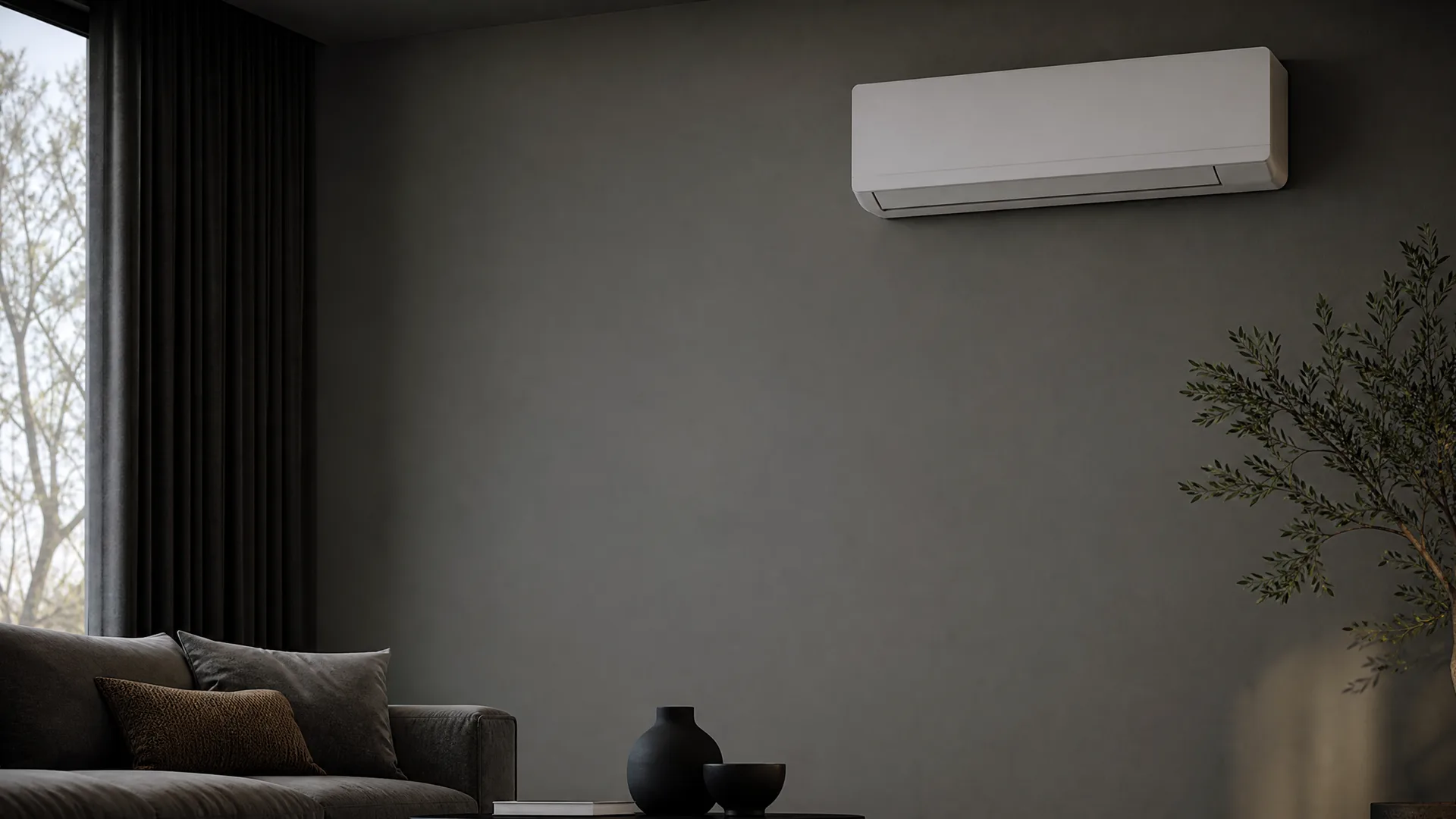
A white wall-mounted mini-split air conditioner on a dark gray interior wall above a gray sofa, with a window and curtain at left, a potted olive-like plant at right, and a black vase and bowl on a table in the foreground.

Hand off the mini split problem

Skip calling shops to ask who repairs mini splits in Johnson County.

RepairMini-splitJohnson County, KS
Step 1 of 2

What ZIP code is the job in?