13.4 SEER2 minimum
That is the lowest rating allowed for new split system air conditioners sold today. Anything you install will meet or beat it, so the real choice is how far above it to go.
 Find my pro
A local installer who puts in air conditioners gets your project.
Kansas summers get sticky, and your air conditioner has to work against that humidity as much as the heat. A higher SEER2 rating means the unit uses less electricity to do that work, but the right number for your house depends on more than the climate. Your home's size, your ductwork, how much shade you get, and what you're willing to spend up front all push the answer in different directions.
Most homes in Kansas heat with gas, so the furnace side of a system often stays put while the air conditioner gets replaced on its own. That matters, because the SEER2 rating that makes sense for you is tied to what the AC has to pair with and what your ducts can actually move. A unit rated higher than your ductwork can support won't deliver the efficiency the label promises.
Power here runs at a typical price, so the math on a higher rating isn't as simple as it might be somewhere with expensive electricity. A contractor who looks at your actual house, your current ductwork, and your utility bills can tell you where the payoff really is for your situation, rather than guessing from a chart.
This is the kind of decision that's hard to get right from a general answer, because it depends on specifics only someone standing in your house can see. Once you share a few details about your home, a contractor who installs systems in Kansas can reach out and walk through what fits your situation. You won't need to track down quotes or figure out which rating is worth the cost on your own. That part moves to someone else once you send the form.
A SEER2 rating of 15 to 16 is a sensible target for most Kansas homes. That range gives you enough efficiency to handle a sticky summer without paying for capacity your house won't use. SEER2 measures how much cooling a unit produces per unit of electricity, so a higher number means lower electric bills during the months your air conditioner runs hardest. But going well past 16 only pays off if your ductwork, your home's size, and how long you plan to stay in the house line up with that investment. A new system has to meet federal minimum efficiency standards regardless of the number you choose, so even an entry-level unit installed today is more efficient than one from ten or fifteen years ago. The right size matters as much as the rating. An oversized unit cycles on and off too fast to pull humidity out of the air, leaving the house feeling damp even when the temperature reads fine. A contractor who calculates the load for your specific house can tell you where in that range makes sense for you.


Send the form and stop researching installers for the new air conditioner.
Get in touch with a local installer about a new air conditioner.
There's no charge for the request.




That is the lowest rating allowed for new split system air conditioners sold today. Anything you install will meet or beat it, so the real choice is how far above it to go.
These compressors adjust output instead of switching fully on and off, which helps pull humidity out of the air during a sticky Kansas summer without raising your electric bill as much.
If your air conditioner runs most of the afternoon without the house ever feeling dry, that's the humidity winning, not just the heat. You might notice the upstairs stays warmer than the rest of the house, or the unit cycles on and off more than it used to. A higher electric bill in July and August is normal here, but a bill that keeps climbing while the house feels the same or worse usually means the system is working harder than it should. Left alone, an aging or undersized unit tends to run longer to hit the same temperature, which adds wear and can shorten its life. None of this means you need to replace anything today, but it's worth knowing what your system is telling you.
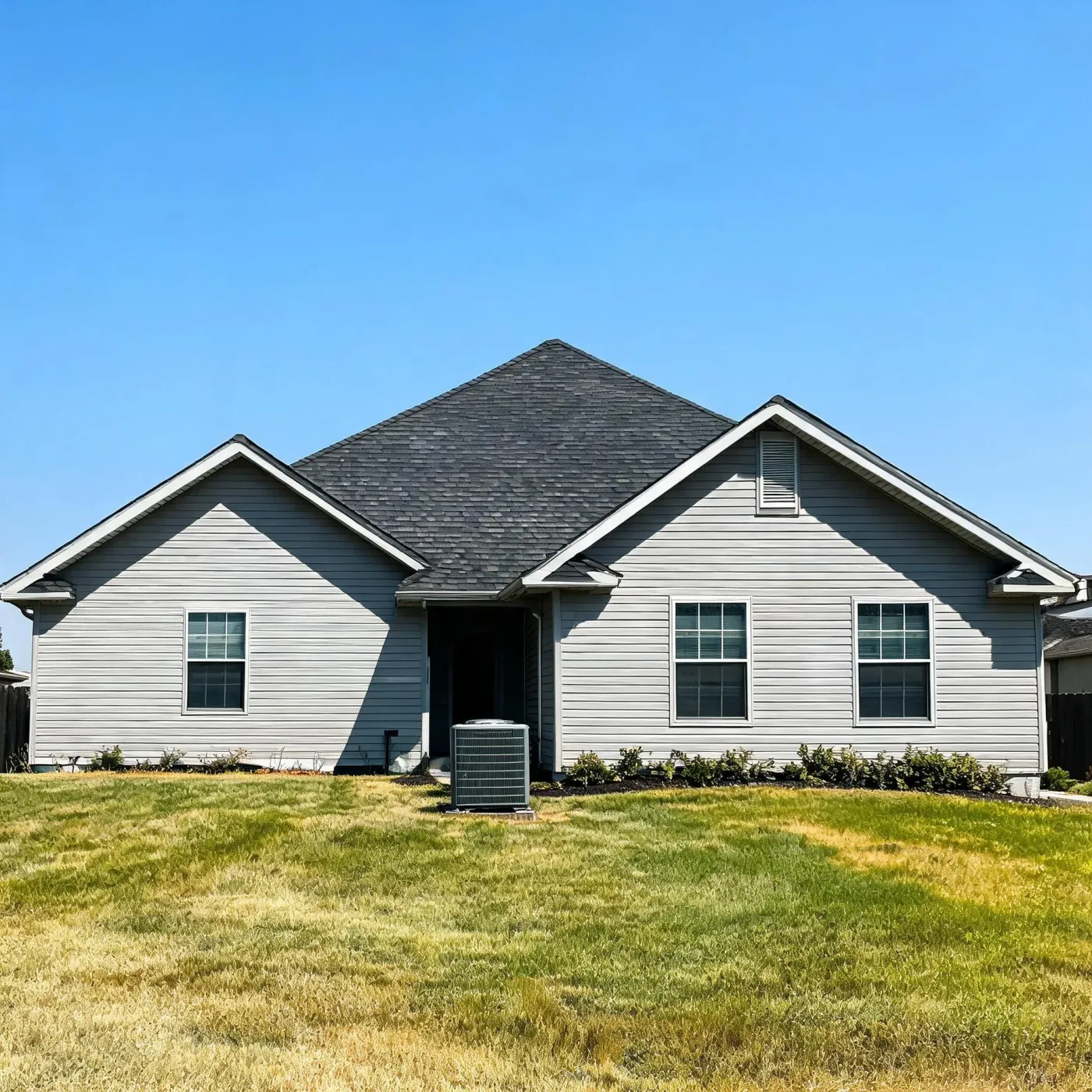
A dew point of 64°F is what summer air in Kansas averages through June, July and August, according to NOAA climate data. That is sticky enough to feel damp on your skin even when the thermometer isn't that high. Your air conditioner has to pull that moisture out of the air, not just cool it, and that takes longer run times than a dry heat would. A unit sized and rated for drier air struggles here. It cools the house but leaves it clammy, running longer than it should to get there. A higher SEER2 rating helps because it keeps pulling that moisture out without burning through as much electricity to do it.
NASA POWER T2MDEW county cells weighted by homes


A SEER2 rating in the 15 to 16 range gives most Kansas homes enough efficiency to handle a sticky summer, without charging you for capacity your house can't put to use. Every unit sold today starts at a 13.4 floor, so nothing installed will fall short of that. The question that actually matters is how far above it makes sense for your house, and that answer isn't the same for every home. A two-stage or variable-speed system run at a higher SEER2 wrings more moisture out of the air than a single-stage unit at the same number, which matters more in Kansas than the raw temperature does. If your afternoons are spent waiting on an air conditioner that runs and runs without the house ever feeling dry, that's a sign the current setup isn't matched to what your home needs. Getting the match right means looking at your ductwork, the size of your house, and how well the new unit pairs with your furnace, since gas furnaces and air conditioners share that same duct system. None of that is a guess you have to make alone. Once you send the form, the work of finding someone who installs these systems in Kansas and sizes them correctly stops being something you have to figure out yourself. A contractor who knows these installs takes it from there, and that part of the job is off your plate.
One request and the search for a pro is handled.