











Why your AC is making a loud noise in Kansas

RepairCentral ACKansas
Step 1 of 2

What ZIP code is the job in?

Why is my AC making a loud noise?

A loud noise from the AC is hard to ignore once summer in Kansas turns muggy and the system is running most of the day. You want to know if it's something to shut off right away or something that can wait for a repair call. The sound itself usually tells you which kind of problem you've got before anyone even looks at the unit.

The noise points to a specific part, not the whole system failing

A grinding or screeching sound usually means a motor bearing is worn out, either in the condenser fan outside or the blower inside. A loud bang or clank when the unit starts points to a part that has come loose, often a fan blade hitting its housing. Rattling that comes and goes with the airflow is often just a panel or screw that has worked itself loose over a season of running. Hissing or bubbling is different from all of these. That sound means refrigerant is escaping, and running the unit longer in that state can damage the compressor. With Kansas summers putting long hours on the outdoor unit, loose panels and worn bearings show up more often than they would on a system that barely runs half the year.

A woman with long blonde hair in a light blue shirt leans back on a beige sofa with her eyes closed, in a softly lit living room with cushions and a blurred plant and shelf in the background.
A woman with long dark hair in a gray knit sweater sits on a gray sofa with a cushion, looking toward a window in a living room with framed pictures and a lamp in the background.
A woman with long dark hair in a light grey knit sweater sits on a sofa indoors, looking to her right, with a framed landscape picture, a potted plant and a curtained window behind her.
A woman with long dark hair leans back against a gray sofa with her eyes closed, in a living room with a curtained window, a potted plant, and a dark screen in the background.

What does the noise your AC is making actually mean

A banging or clanking usually means a loose part inside the outdoor unit, sometimes a fan blade hitting its housing. A high-pitched squeal often points to the blower motor or a belt worn thin. Hissing can mean refrigerant escaping from a line, and that's not something to wait on, since a system low on refrigerant works harder and can freeze up or quit entirely in the middle of a stretch of 90-degree days. A rattle that comes and goes might just be a panel vibrating loose. Grinding usually means a motor bearing is failing. If the noise shows up when the whole house is trying to stay cool and comfortable, it's worth paying attention to rather than turning up the TV to cover it.

An outdoor air conditioning condenser unit on a concrete pad at the corner of a house, next to vinyl siding and a plain light-colored wall, with grass and a mulch bed in the foreground.

The outdoor unit takes the beating

The condenser sits outside through every muggy Kansas afternoon, running long hours to keep up. That constant run time is what loosens a fan blade or wears a bearing down to where you can hear it. A unit that cycles on and off for a few minutes at a time rarely makes these noises. One that runs for hours straight, which is normal here in July and August, wears parts faster and will tell you about it before it quits.

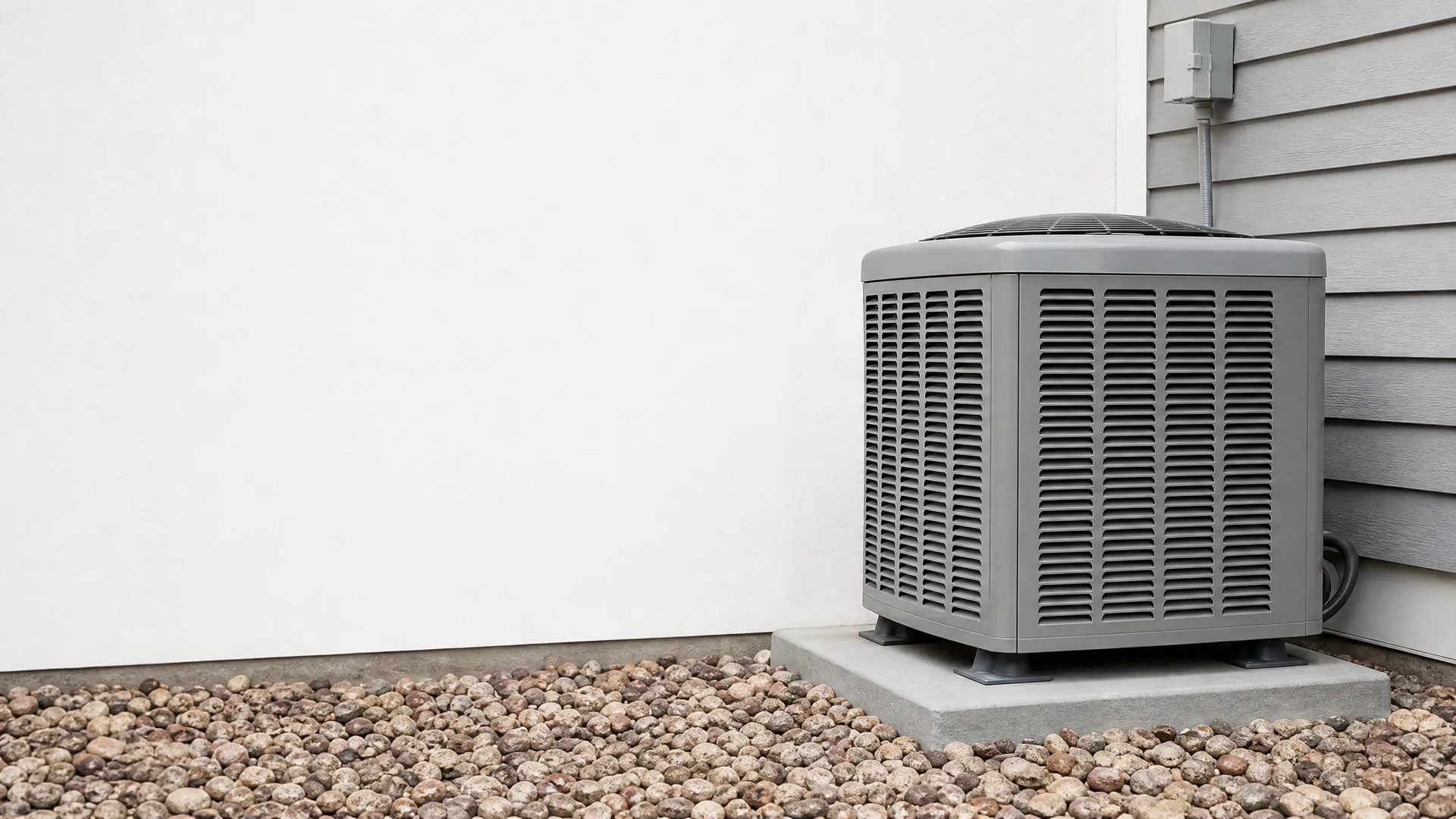
A gray outdoor air conditioning condenser unit sits on a concrete pad beside a white stucco wall and gray horizontal siding, surrounded by rounded landscaping gravel, with an electrical disconnect box mounted on the siding above.

Some noises mean shut it off

A grinding or a loud metal-on-metal sound means something is contacting a moving part, and letting it run can turn a cheap fix into a motor replacement. A rhythmic clicking that keeps time with the compressor is different from a single click at startup or shutoff, which is normal. If the noise is new and getting louder over a day or two, that's a part failing, not settling in. Gas furnaces don't factor into this, since the noise is coming from the cooling side of the system.

Keep Running or Shut It Off

Safe to wait

  • A faint rattle that only happens at startup usually means a panel screw worked loose and can wait for a scheduled visit.
  • A soft clicking when the unit shuts off is often just the metal cooling down and contracting, not a sign of damage.
  • A low hum that hasn't changed in volume or pitch over weeks points to normal compressor operation, not a developing problem.
  • If the noise comes and goes with no change in how cold the air feels, the system is likely still cooling the house the way it should.
  • A mild vibration you can only hear standing right next to the outdoor unit rarely means the fan or motor is at risk.

Shut it off now

  • A loud bang or metal-on-metal screech means a part has broken loose and could damage the fan blade or housing if it keeps running.
  • Grinding that gets louder by the hour usually means a bearing is failing and the motor could seize.
  • A burning smell with the noise means stop the system immediately and have someone look at the wiring or motor before running it again.
  • Hissing paired with the house not cooling down means refrigerant is escaping, and running the unit longer only adds strain on the compressor.
  • A noise that shows up alongside warm air from the vents means something inside has already failed and running it more won't fix it.
A smiling older woman with gray shoulder-length hair in a cream cable-knit turtleneck sweater stands behind a wooden board holding a round loaf of bread, in a warmly lit kitchen with a dark window and shelves behind her.
A woman and a child wrapped together in a thick knitted beige blanket on a sofa, both with eyes closed, beside a lit table lamp in a dim room.
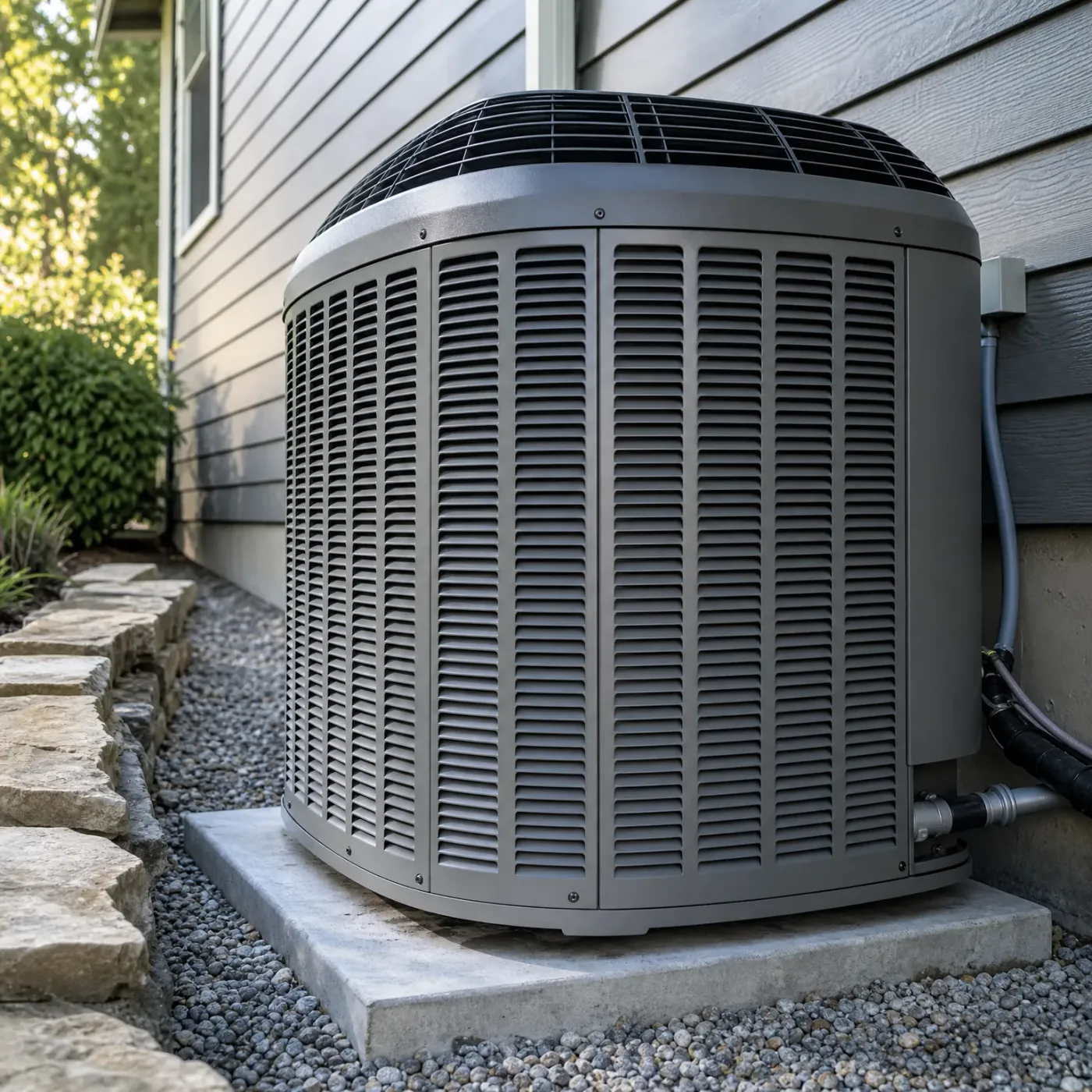
A gray outdoor air conditioning condenser unit with louvered sides and a black top grille sits on a concrete pad beside a house with horizontal lap siding, surrounded by gravel and a stone border.

Matched to your air conditioner job

The pro who reaches out is licensed in Kansas.

Describe your air conditioner job, and a local pro who handles it gets in touch.

Reach a local pro

Sending the form costs nothing.

A woman in a cream sweater and jeans stands in an open black front door of a white stucco house, viewed over the shoulder of a man in a navy jacket in the foreground.

What's happening inside the cabinet when you hear it

Open the outdoor unit and there are two things that spin: the fan up top and the compressor sealed down at the bottom. A grinding or screeching sound usually traces back to the fan motor bearing, since that's the part spinning in open air where you'd catch it. A deep rattle that comes and goes with the compressor cycling on is a different story, and it can mean something loose inside the compressor housing itself, which isn't a part anyone opens up and fixes on the spot.

Indoors, the blower pulls air across the coil and pushes it through your ducts, and a squeal from that unit usually means the motor bearing or the belt on older setups, not the coil and not the ducts. Knowing which side the noise comes from, outdoor cabinet or indoor blower, tells a contractor where to start before they even get a ladder out. A local tech who works on Kansas units all summer has usually heard your exact noise on someone else's system that same week, and matching you with one who's already headed your way, instead of a handful of companies all calling at once, gets you an answer faster.

A dark ceramic vase holding a leafy green branch sits on a round wooden table, with a blurred cushioned wooden armchair, woven basket, window and shelving with pottery in the background.
An outdoor air conditioner condenser unit on a concrete pad beside a house with beige horizontal siding and a stone-veneer base, with refrigerant lines running to a gray wall-mounted electrical box, surrounded by dark mulch, a flowering shrub and an evergreen on the left.

Running quiet, the way it should

A unit like this one cycles on, settles into a steady hum, and cycles off without complaint. The pad is clean, the disconnect box is sealed up, and nothing rattles when the compressor kicks in. This is what a healthy system sounds like through a long Kansas summer.


An outdoor air conditioning condenser unit on a concrete pad beside a house with light vinyl siding, an electrical disconnect box and conduit on the wall, bare shrubs and mulch to the right, and a concrete walkway in the foreground.

Something inside is loose or wearing out

This unit looks the same from the yard, but a bang, squeal, or grinding coming from the cabinet means a part has worked loose or worn down. Left alone, a loose blade or a failing bearing usually gets worse, not better, especially with the unit running most of the day.

An outdoor air conditioner condenser unit on a concrete pad beside a house with light horizontal lap siding, with an electrical disconnect box and conduit on the wall behind it.
Before you get your air conditioner repair
An outdoor air conditioning condenser unit on a concrete pad beside a house with white horizontal lap siding, with an electrical disconnect box and insulated refrigerant line on the wall and a shrub over mulch to the right.
After you get your air conditioner repair

Keep running it

A noisy AC that keeps cooling can still be doing damage underneath. A loose part left alone tends to wear down something bigger, and that job costs more than it would have.

Find a licensed air conditioner pro

Get it looked at

A local contractor who works on these units every summer can usually tell what's making the noise before taking the cabinet apart, and get it fixed before it strands you without cooling.

Find a licensed air conditioner pro

Power costs 14.44 cents per kilowatt-hour statewide

At 14.44 cents per kilowatt-hour, a noisy AC straining to cool your house through a muggy Kansas summer shows up on your bill before it shows up as a breakdown. A fan blade hitting its housing or a worn bearing makes the compressor work harder, and that extra draw adds up fast when the unit runs most of the day.

EIA-861 2025 statewide residential average

A gray outdoor air conditioner condenser unit on a concrete pad beside a house with white horizontal siding and a brick foundation, with a wall-mounted disconnect box and conduit, and a green shrub with mulch at left.
A clean unit on a clear pad, running at a steady hum with nothing loose inside the cabinet.
An outdoor air conditioning condenser unit on a concrete pad beside a house with white horizontal vinyl siding, with a gray electrical disconnect box and refrigerant lines on the wall behind it.
Grime packed into the grille and top cover like this often comes with a louder, harder-working unit underneath.
  1. Warm air from inside the house pulls across the evaporator coil.

  2. Refrigerant carries that heat out to the compressor.

  3. The compressor squeezes the refrigerant and pushes it to the outdoor unit.

  4. The outdoor fan pulls air across the condenser to release the heat.

A loud noise from your AC is the system telling you something is loose, worn, or working harder than it should. Some of what you heard can wait for a scheduled visit. Some of it means shutting the unit off and getting someone out before a small part damages a bigger one. Either way, you don't need to guess at which it is. A local contractor who works on these units all summer, in Kansas heat, has heard that same rattle or squeal plenty of times and knows what it usually turns out to be before the panel even comes off. You'll be matched with one contractor, not a handful calling and texting all afternoon, and that contractor is licensed to do the work your system needs. They'll reach out to look at the noise directly, rather than you trying to describe it over the phone. That's the part that's hard to do on your own: knowing whether what you're hearing is a loose screw or the start of something worse.

A living room corner with a beige upholstered sofa, cushion and knit throw, a potted green plant in a woven basket, a framed botanical print on a taupe wall, and a window with foliage outside.
Sunlit room corner with a paned window, sheer cream curtain, a leafy plant in a woven basket on a wood floor, and a textured jute rug.
Sunlit room corner with a white-framed window overlooking green foliage, a wicker basket holding a cream knit blanket on a wood floor, and a woven rug in the foreground.
A woven basket holding folded cream blankets sits in a corner on a wood floor beside a linen curtain and window, with window-frame shadows cast on the beige wall.
Sunlit room corner with a potted variegated plant in a woven basket on a wood floor, a linen curtain beside a multi-pane window showing green trees, a framed artwork at upper left, and a jute rug in the foreground.

A local pro for your air conditioner repair

Your request stays with one local pro.

Get one local pro

It costs nothing to send, and you don't have to hire anyone.