






How long a central air conditioner lasts in Kansas

A local installer who puts in air conditioners gets your project.

Find my pro

How long does a central air conditioner last in Kansas?

Your AC has been running hard through another sticky Kansas summer, and you're wondering if it's getting close to the end, or if that noise it's making means a repair now and a bigger bill later. Knowing the typical lifespan helps you plan instead of just reacting when it finally quits on the hottest day of the year.

A central air conditioner in Kansas lasts 12 to 15 years

Most central air conditioners run 12 to 15 years before they need replacing. Kansas summers push that number down some. When the unit runs for months straight to keep up with heat and humidity, the compressor and the outdoor coil put in more hours every year than they would in a milder state, and that wear adds up faster. A system that gets regular service can still reach the higher end of that range. One that's been neglected, or one that's been undersized for the house since it went in, tends to wear out sooner. If your system came with the house, checking the installation date on the unit itself or in your paperwork tells you where it stands.

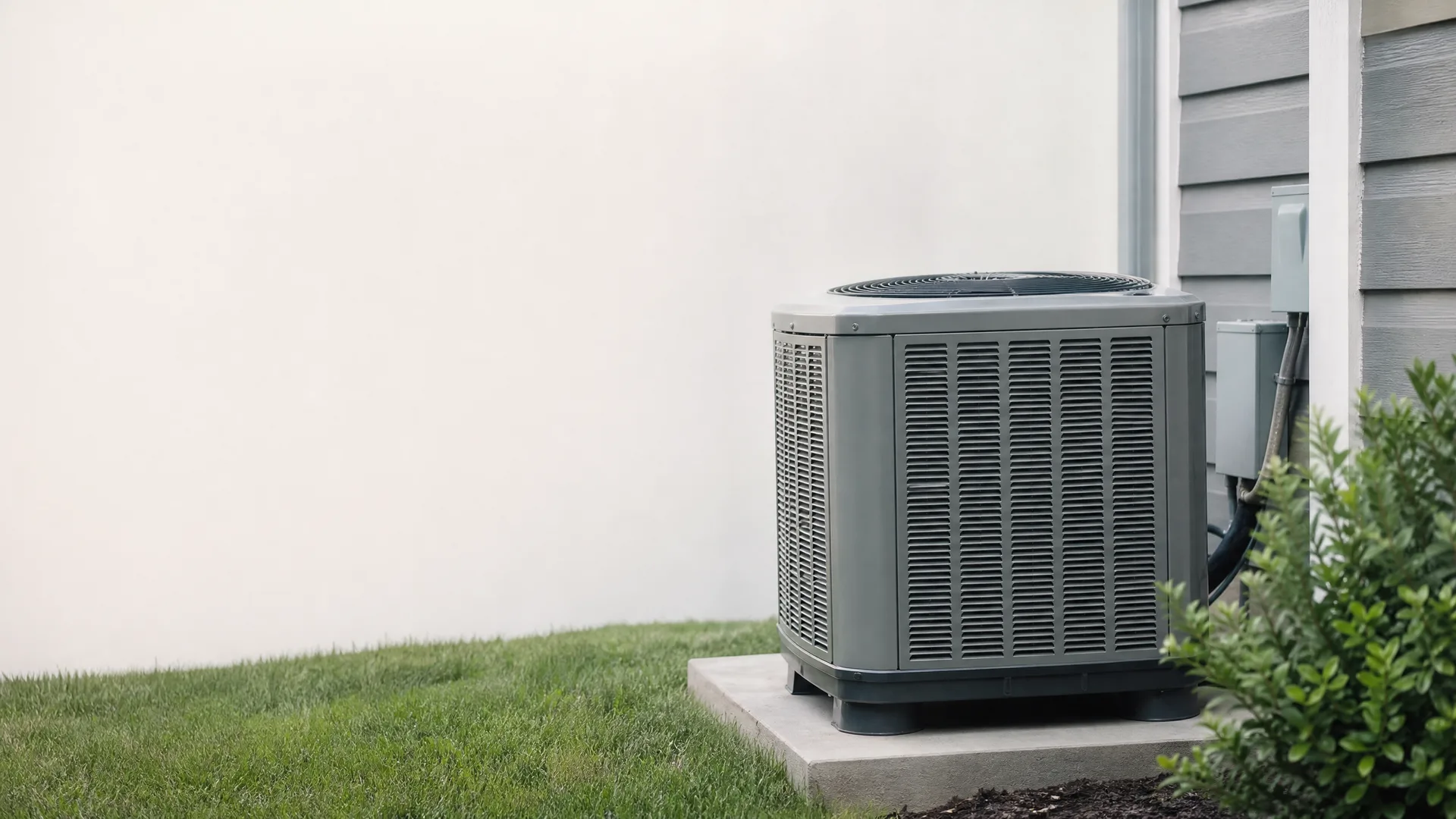
A gray outdoor air conditioner condenser unit on a concrete pad beside a house corner with lap siding and a stucco wall, surrounded by mown green grass.

Why Kansas summers wear units down

A central air conditioner works harder on a 95-degree day than on a mild one. In Kansas, that kind of heat and humidity stretches across most of the summer, not just a few weeks. The compressor runs longer to keep up, and longer run times add wear to the same parts year after year. A unit that cycles on and off gently in a cooler climate simply works a harder shift here.

An outdoor air conditioning condenser unit on a concrete pad beside a house with light stucco and lap siding, with mown grass to the left and a green shrub to the right.

What shortens or extends the years

Most central air conditioners are built to run for somewhere around 15 to 20 years, but where a unit falls in that range has a lot to do with upkeep. Dirty coils, a clogged filter, or low refrigerant force the compressor to work past what it was built for. A unit that gets its filter changed and coils kept clean tends to reach the far end of that range. One that doesn't tends to fall short of it.

Is your AC starting to show its age?

You might notice it running longer than it used to, cycling on and off more through the hottest part of the afternoon without the house feeling any cooler. Maybe there's a rattle or a hum that wasn't there last summer, or a musty smell coming through the vents. The air coming out might feel weaker, or just not as cold as it should on a 95-degree day. Your energy bill might be climbing even though you haven't changed how you use the thermostat. None of these mean the unit is finished, but ignoring them usually means a bigger repair bill later, and a system that fails on the one week you need it most.

A smiling gray-haired man in a dark wool coat with snow flecks stands in a dimly lit home entryway, with a lit table lamp, potted plant, framed pictures and a living room visible behind him.
An older man with gray hair and a beard, wearing a snow-dusted dark coat and knit scarf, stands smiling in a dimly lit house entry with a lit lamp, mirror, and a living room with snow visible through the window behind him.
An older man with gray hair and a beard, wearing a dark snow-dusted coat and plaid scarf, stands smiling in a warmly lit hallway with a lamp, side table and glass-paned doors behind him.
An older man with gray hair and a beard, wearing a dark coat dusted with snow, stands in a home entryway with a lit lamp, a staircase railing, and a living room with large windows behind him.

Repair the AC or Replace It

Keep Repairing

  • A single repair, like a capacitor or a contactor, usually costs far less than a new system, so one fix rarely justifies replacing the whole unit.
  • If the compressor and coils are still sound, a repair can get you through the rest of the summer without a bigger commitment right now.
  • Older units sometimes use refrigerant that's being phased out, and parts or refrigerant for them can be harder to find or cost more.
  • A unit that's needed two or three repairs in as many summers is telling you something, even if each fix on its own seemed small.
  • Repeated repairs add up, and at some point the total spent on patching an old unit together passes what a new one would have cost.

Replace Now

  • A new system comes with a warranty, so the parts most likely to fail in the first years are covered instead of coming out of your pocket.
  • Newer units are built to handle Kansas summers more efficiently, which matters when the AC is running for months at a stretch.
  • Replacing before a full breakdown means you choose the timing, instead of making the decision in the middle of a 95-degree week with no cool air.
  • A failing unit that's still running can cycle longer and harder to keep up, which puts strain on the rest of the system too.
  • If the compressor itself has failed, that's often the point where repair stops making sense and replacement is the practical path forward.
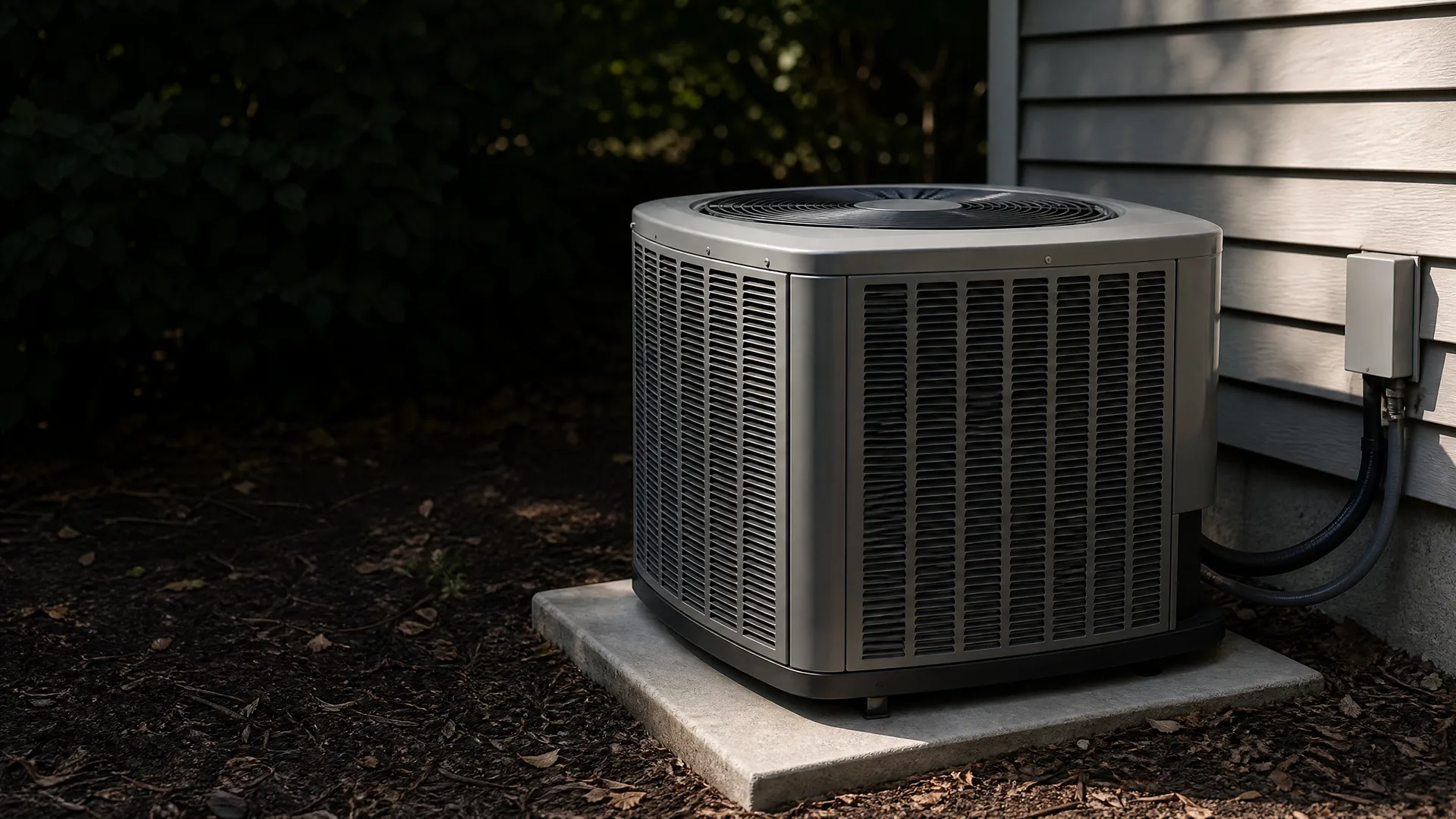
A gray outdoor air conditioner condenser unit on a concrete pad beside a house with horizontal lap siding, with a wall-mounted disconnect box and conduit, mulch bed, shrub, and lawn nearby.

Running the way it should

This is what a healthy setup looks like: the condenser sitting on its pad, lines running clean up the wall to the disconnect box, nothing straining. It cycles on, cools the house, shuts off. Nothing about it calls for attention.


An outdoor air conditioner condenser unit sits on a gray pad beside a light vinyl-sided wall, on a concrete slab next to a gravel bed.

Running into trouble

Same kind of unit, same spot beside the house, but this is the one that's earned a second look. If yours is cycling more than it used to or struggling to keep the house cool on the hot afternoons, it's telling you something about what's left in it.

A smiling man in an olive T-shirt and jeans stands in an open front doorway holding the door, facing a person in a navy polo and cap seen from behind in the foreground, with horizontal wood-look siding and a potted white flowering plant nearby.

What actually wears out first

A central air conditioner is two machines joined by a line set. The condenser sits outside and holds the compressor, which pumps refrigerant through the system. The evaporator coil sits inside, usually above your furnace, and pulls heat out of the air passing over it. The compressor is the part that fails most often, and it's also the most expensive single part to replace. Once it goes, the math usually points to a new system instead of fixing the old one.

Capacitors and contactors fail more often but cost far less, which is why a unit can need a few small repairs over the years before anything major happens. When a compressor does go, or the coil starts leaking refrigerant, that's usually the point where a straight repair stops making sense. If your unit is getting to that stage, a contractor who knows Kansas installs can look at what you have and tell you whether it's worth saving, and size a replacement around your house if it isn't.

Living room interior with a light sofa holding a dark green cushion and a brown knit throw, a tall leafy plant by a black-framed window, a wooden coffee table with a round tray, and wooden shelves holding vases and books.
  1. Refrigerant leaves the compressor as a hot, high-pressure gas.

  2. The condenser fan pulls outside air across the coil to cool it.

  3. Refrigerant turns to liquid and flows inside through the line set.

  4. The expansion valve drops its pressure so it turns cold.

An outdoor air conditioning condenser unit on a concrete pad beside a house with horizontal lap siding, with a shrub and mulch bed to the left and conduit and a small electrical box on the wall to the right.
Before you get your air conditioner installation
A gray outdoor air conditioner condenser unit sits on a concrete pad beside a house with horizontal lap siding, with conduit and an electrical disconnect box on the wall, dark mulch and a shrub to the left, and a concrete walkway in the foreground.
After you get your air conditioner installation

Matched to your air conditioner job

Send the form and the search for an installer is over.

Sending the form costs nothing.

Pushing through one more summer

If the unit is ten years old or less, running it through another Kansas summer is a reasonable bet. Parts for newer systems are easier to find, and a compressor or coil that's holding up this long usually isn't on the verge of failing outright. You'll pay for the repair, maybe a capacitor or a fan motor, and get back to the business of staying cool. If the house sells in the next few years, a working system with some age on it is an easier conversation than one that's already been replaced wall to wall. There's nothing wrong with getting the most out of equipment that's still doing its job, even if it's not as efficient as what's sold now.

Starting over with something new

Past twelve to fifteen years, the math shifts. A system that old is closer to its last repair than its first, and the next breakdown might land on the compressor instead of a cheap part. A new installation means a condenser and coil sized correctly for the house, refrigerant that meets current standards, and a warranty that covers the next decade instead of the next ninety days. It costs more up front than a repair ever does. But if the system is already showing more than one of the signs of age, replacing it on your own schedule beats replacing it on a July afternoon when the compressor finally quits and the house is 85 degrees.

Power costs 14.44 cents per kilowatt-hour statewide

A compressor that's straining pulls more power to do the same job, and at 14.44 cents a kilowatt-hour that shows up on your bill before you ever hear a new noise. An aging unit costing you more to run each summer is as real a sign as any rattle.

EIA-861 2025 statewide residential average

Replacing before it fails

You get to pick the week instead of dealing with whatever week it happens to be, which in Kansas usually means the hottest stretch of July or August. You can compare units and sizing without the pressure of a house that's already warming up. A new system also comes with a warranty that a patched-together old one doesn't have anymore, and it's sized for the house you have now, not whatever was standard when the old one went in.

Waiting for it to quit

You save the cost of replacement for as long as the unit keeps running, and some units keep going years past when you'd expect. The risk is timing it wrong. A compressor rarely gives warning, and when it goes in August, you're choosing a system in a hurry, in a hot house, from whoever can get there first. You also lose the chance to shop around or think through what size and setup actually fits your home.

A woman wrapped in a thick wool blanket sits in an armchair with an open book on her lap, beside a lit lamp and a frost-patterned window.
A smiling older woman with gray hair in a loose bun wearing a ribbed beige sweater stands in a dimly lit kitchen beside a window showing darkness outside, with a loaf of crusty bread on a wooden board in the foreground.
A gray outdoor air conditioning condenser unit on a concrete pad beside a house with horizontal lap siding and a stone veneer base, with a disconnect box and conduit on the wall, mulch bed and shrub to the right, and mowed grass in the foreground.
A unit like this cycles on, cools the house, and shuts off without drawing attention to itself.
An outdoor air conditioner condenser unit on a gray composite pad beside a house with horizontal siding, a concrete foundation, a basement window, and a conduit and disconnect box on the wall.
Dust caked into the mesh and a cabinet this dirty mean airflow is suffering before anything even breaks.
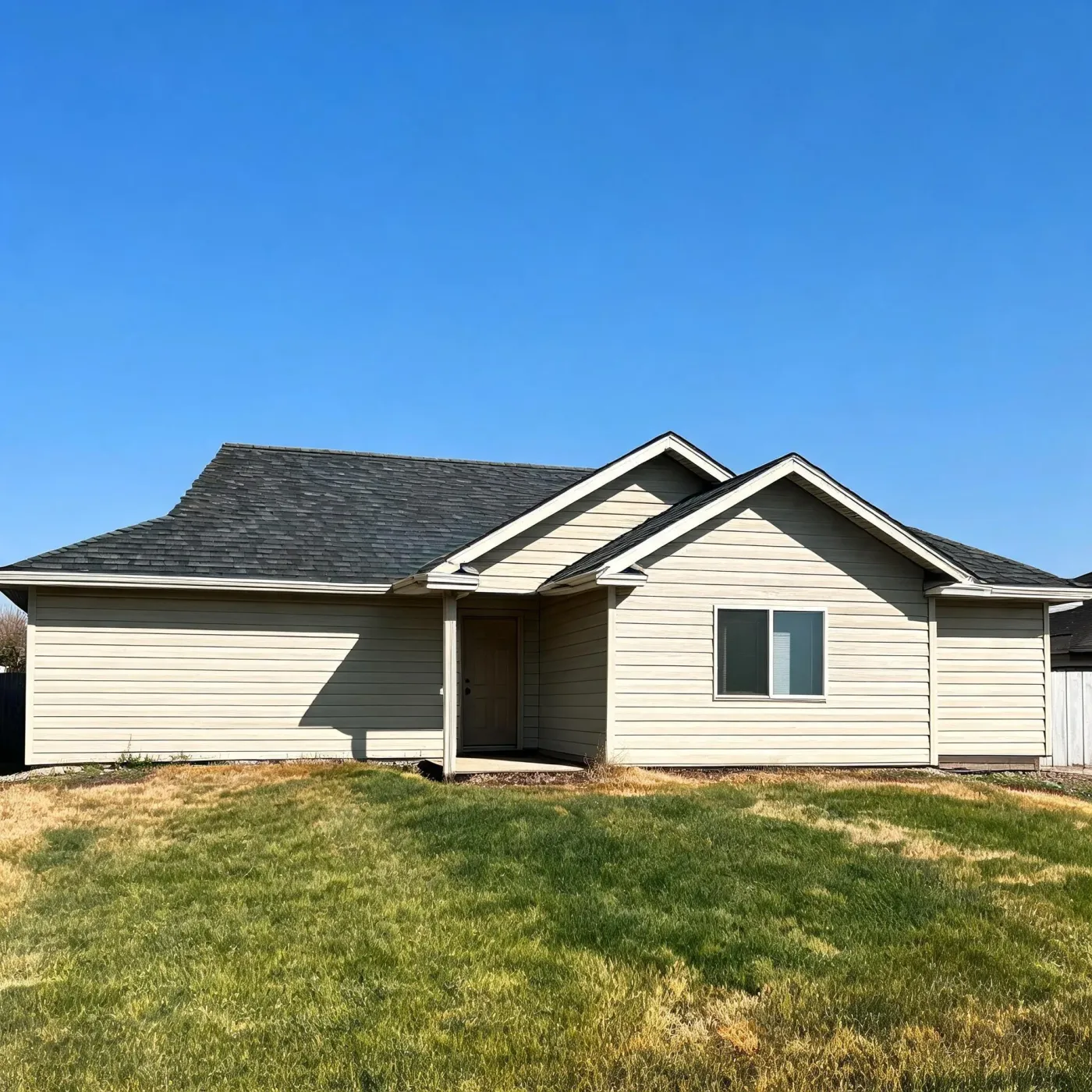
Single-story house with beige horizontal lap siding and a dark gray shingled gable roof, with a single window and a recessed front door, fronted by a patchy green and brown lawn under a clear blue sky.

A National Weather Service summer dew point average of 64°F for Kansas is the kind of mugginess that doesn't let your air conditioner catch a break. At that level, the air itself is heavy, so the coil inside has to pull more moisture out before the house actually feels cooler. That's extra runtime your system logs on top of the heat it's already fighting. You'd notice it as a unit that cycles on more through the evening, even after the sun's down and the temperature has dropped some. The compressor doesn't get the usual overnight rest, and over a full summer that adds up to wear a dry-climate system of the same age would never see.

NASA POWER T2MDEW county cells weighted by homes

A central air conditioner in Kansas generally lasts 12 to 15 years, and the sticky summers here tend to push units toward the shorter end of that range. If yours is already past that mark and showing some of the signs covered above, you're not wrong to be thinking about what comes next. If it's younger and running clean, there's no reason to rush a decision you don't need to make yet. Either way, you don't have to work out which situation you're in alone or spend your afternoon calling around for quotes. Send in the form and the job of finding someone qualified to look at your system stops being yours to carry. A contractor who knows Kansas summers and what they do to a unit like yours will be the one reaching out, not the other way around. That's one less thing on your list this summer.

An outdoor air conditioner condenser unit on a concrete pad beside a house with horizontal lap siding, with an electrical disconnect box and conduit on the wall and dark mulch and shrubs around it.

An air conditioner pro near you

New system or replacementCentral ACKansas
Step 1 of 2

What ZIP code is the job in?