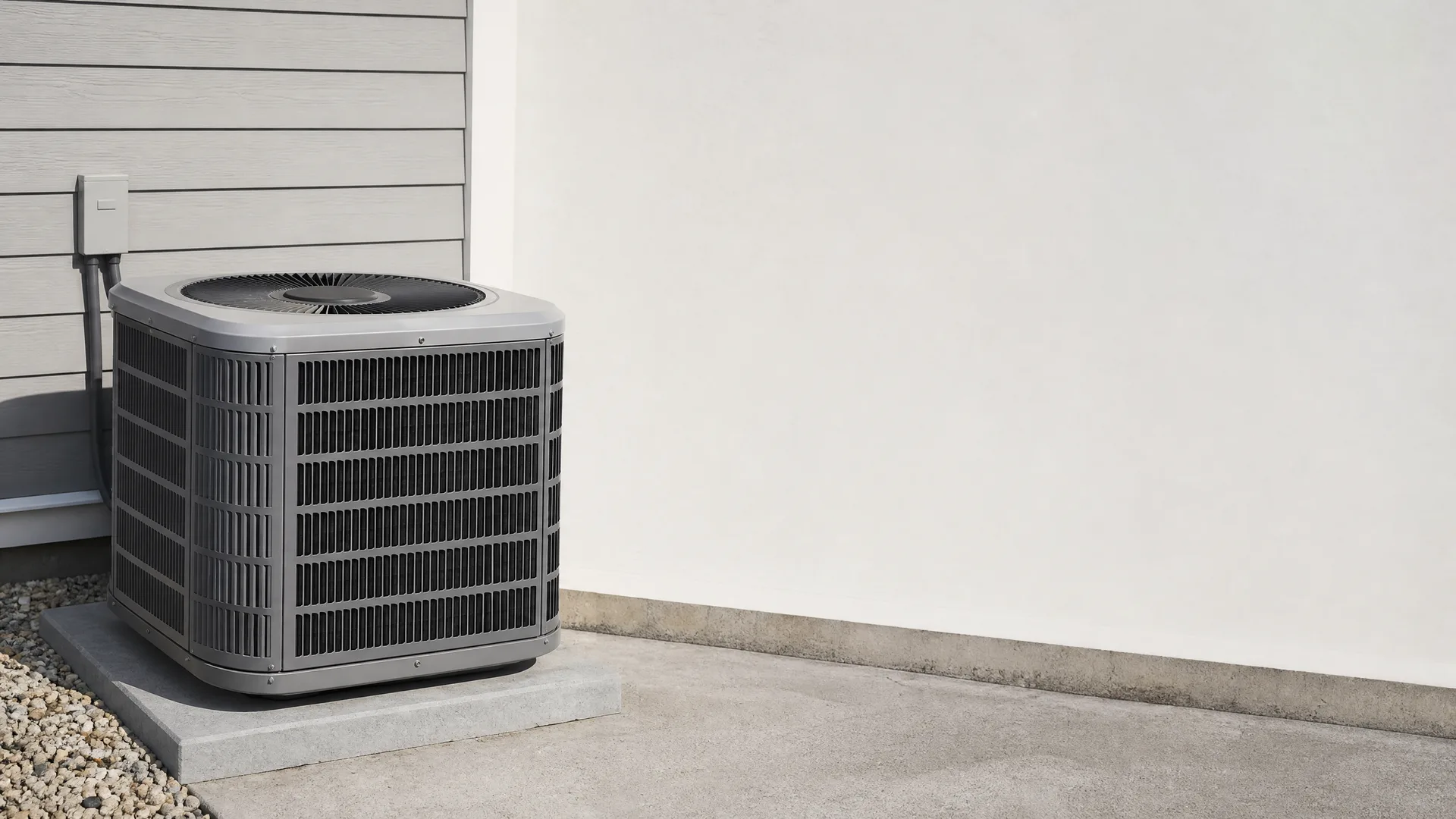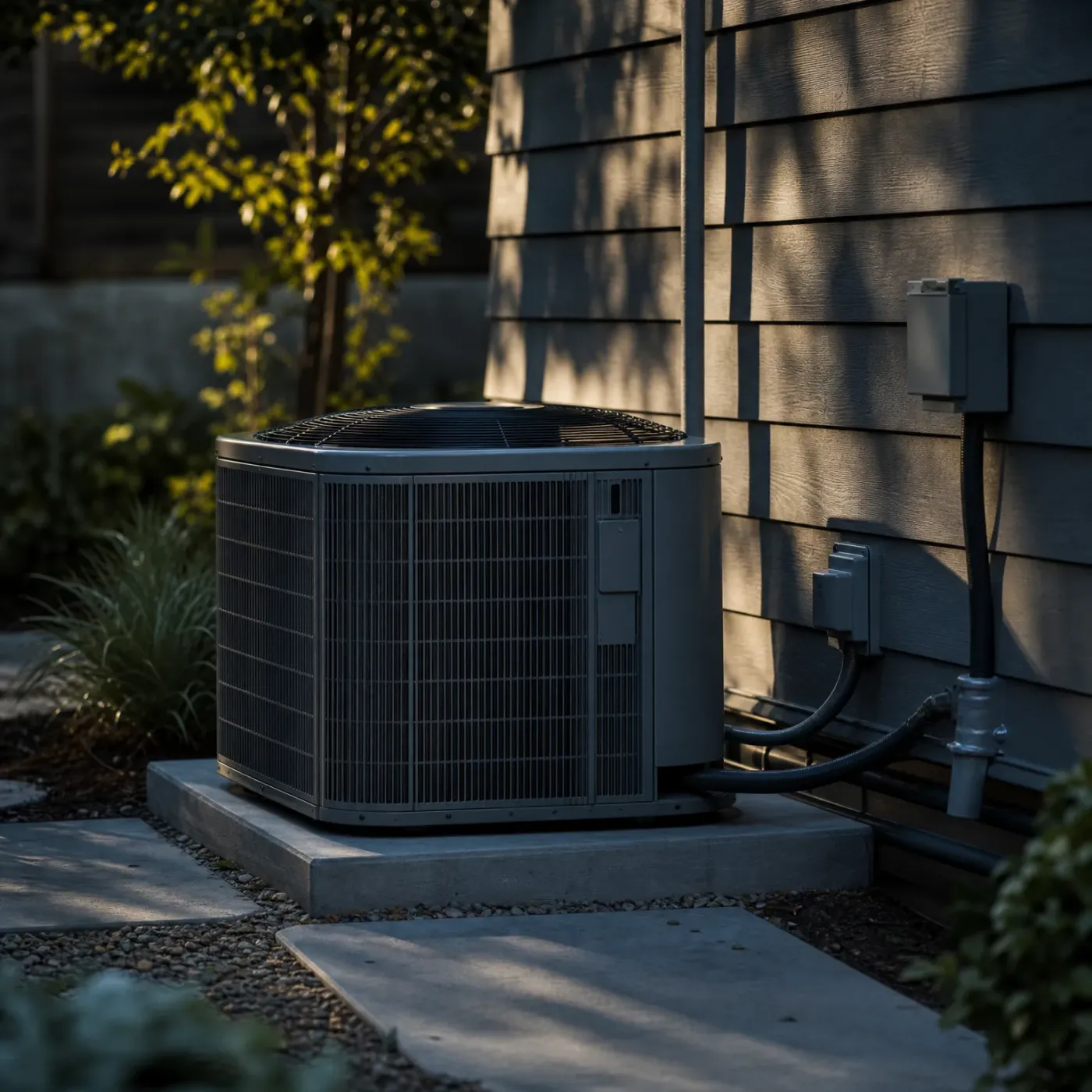

An outdoor air conditioner condenser unit on a concrete pad beside a house with horizontal lap siding, with a wall-mounted disconnect box, conduit and refrigerant lines, gravel and plants nearby.

Get matched with an air conditioner pro in Miami County

When to replace an AC unit in Paola, KS

Your AC has to work hard through a long, sticky Miami County summer, and at some point repairs stop making sense next to a new system. This page walks through the signs that mean it's time, from its age to what it's costing you to keep running. Answer a few questions and a contractor who knows Paola homes will reach out, so you skip the searching and calling around.

Get matched

Most central air conditioners last 12 to 15 years. If yours is in that range, age alone is a reason to start planning, because the compressor and coil wear down after that many summers and the odds of a major breakdown climb each year you keep it. Miami County summers run long and muggy, and a weak system has to run longer to keep up, which shows up as a bill that climbs even when the unit still blows cold. Watch what repairs are costing you too. A single repair that costs close to half of what a new system runs, or a second breakdown in the same summer, usually means the unit is done paying its way. Rooms that stay warm no matter where you set the thermostat, or a system that short cycles on and off, point the same direction. None of these alone is a verdict, but a 15 year old unit that just broke down for the second time this summer is not one worth fixing again.

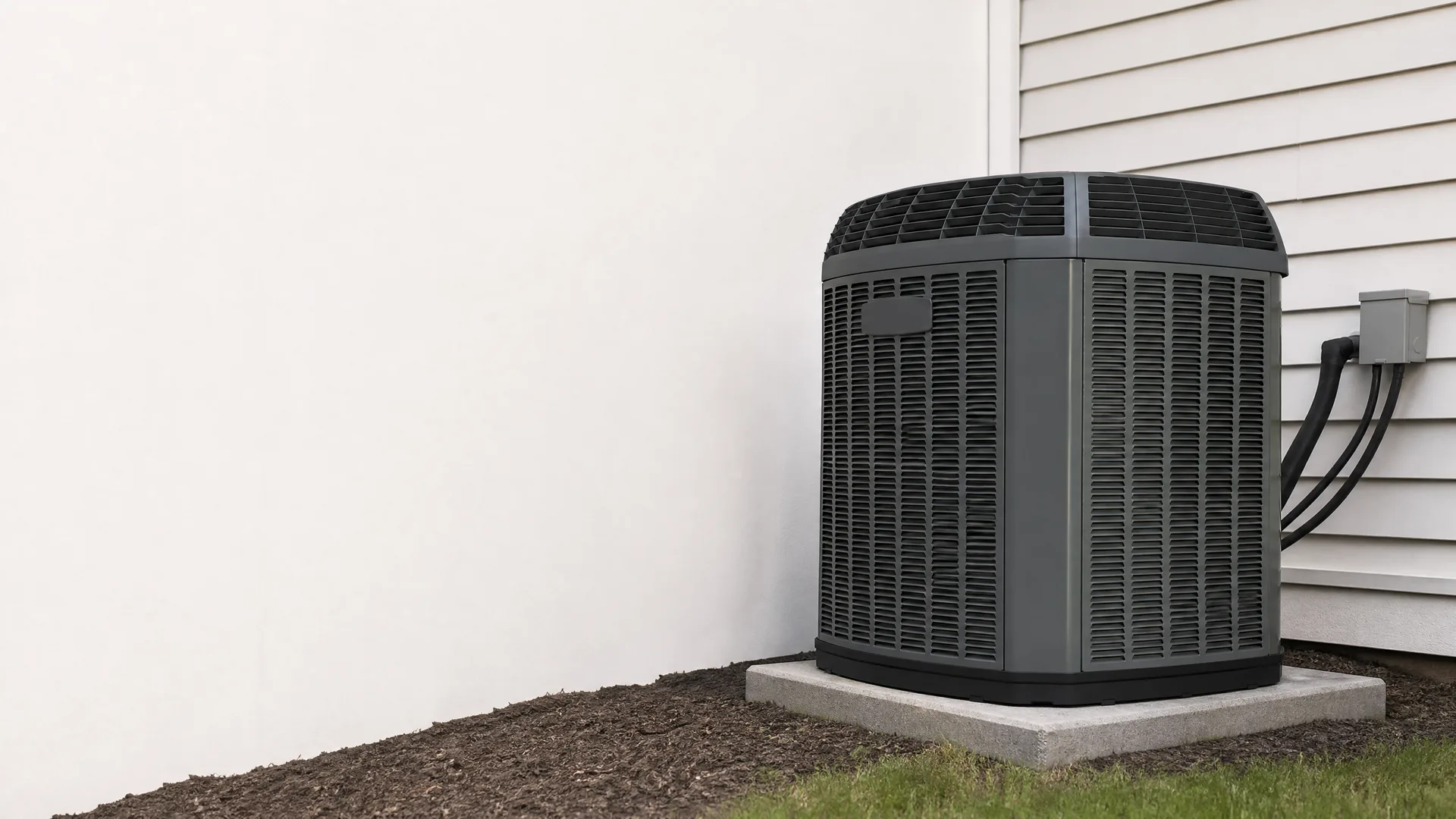
A gray outdoor air conditioner condenser unit on a concrete pad beside a house with horizontal lap siding, with a wall-mounted disconnect box and conduit, mulch bed, shrub, and lawn nearby.

Running the way it should

This is a condenser doing its job. Refrigerant lines run clean up the wall to the disconnect box, the pad is level, and nothing around it is straining. If yours looks like this and keeps the house cool through a Miami County summer, repairs still make sense.


An outdoor air conditioner condenser unit sits on a gray pad beside a light vinyl-sided wall, on a concrete slab next to a gravel bed.

Signs something's wrong

Look at the conduit and refrigerant lines running up the wall here. Corrosion on the lines, ice on the copper, or a unit that cycles on and off too often all point to a system losing ground. Once that starts, replacement costs you less over time than another summer of repairs.

An older man with gray hair and a beard, wearing a dark snow-dusted jacket and scarf, stands smiling in a warmly lit interior hallway with a lit table lamp, a vase of dried branches, and a framed picture in the background.
An older man in a dark snow-flecked overcoat and scarf stands smiling in a warmly lit home entryway, with a glass-paned door showing darkness outside and a lamp-lit room visible through a doorway behind him.
An older man with grey hair and a beard, wearing a dark coat dusted with snow, stands in a dimly lit entryway with a ceiling lamp, a side table with two shaded lamps, and a lit fireplace visible in a room beyond.
An older man with gray hair and a beard, wearing a dark coat dusted with snow, stands smiling in a doorway of a warmly lit home with a sofa, lamp and window visible behind him.

12 to 15 years

That is the working life of most central air conditioners. Once yours is in that range, the compressor and coil have logged enough Miami County summers that a breakdown gets more likely every season.

Start one form

A system kept up

Clean refrigerant lines, a level pad, and a condenser that isn't straining mean fewer surprises. If yours still looks like this, replacement can wait until it stops.

Start one form
A man in a navy polo and khaki pants walks up a curved concrete path toward a stone-faced house where a woman stands in the open front doorway, with shrubs, flowers and potted plants flanking the entry steps under a cloudy sky.

What an aging AC costs you in a Miami County summer

When a central air conditioner gets old, you feel it in the rooms farthest from the thermostat first. The upstairs bedroom stays warm into the evening. The system runs longer to hold the same temperature, and your power bill moves with it even though power here is cheap. A unit working that hard through a long, sticky summer is also a unit more likely to quit on the one week you need it most.

There's a cost to figuring this out on your own too. Calling around to different contractors, explaining the same problem each time, waiting on quotes that are hard to compare because nobody looked at the same thing. Answer a few questions here and that part is handled. You get matched with a contractor who knows Miami County systems and who will reach out to you directly, so you can spend your time deciding instead of searching.

A speckled beige ceramic vase holding thin dried branches sits on a round wooden table near a window with sheer curtains, with a dark upholstered chair and draped blanket blurred in the background.
An outdoor air conditioner condenser unit on a concrete pad beside a light-colored stucco wall, with horizontal siding and a small electrical box to the left and gravel at lower left.

Fixing it one more time

A repair makes sense when the part is cheap and the system is young enough to make good use of it. A new capacitor or a contactor on a ten-year-old unit is money well spent. You get the summer back for a fraction of what a new system costs, and nothing else about the unit tells you it's near the end. If the compressor and coil are still sound, repair is the right call.

A dark gray outdoor air conditioning condenser unit on a concrete pad beside a house with light siding and a stucco wall, with mulch and grass in the foreground.

Replacing it instead

Replacement makes sense once the repairs start adding up or the system is old enough that the next breakdown could be the compressor itself. A compressor replacement on a unit already past 12 years often costs close to a new system, without the part being new. At that point you're paying twice for the same outcome. A new system also comes with a warranty, so the next few summers aren't a gamble.

Is your AC actually keeping up this summer?

You notice it most in August. The thermostat says 72 but the house doesn't feel like it. The unit outside runs almost constantly and still loses ground on the hottest afternoons. Inside, you might hear it cycling on and off more than it used to, or catch a musty smell when it kicks on. Some rooms cool fine while others lag behind no matter how long it runs. None of this means the system is done, but it does mean it's working harder for less result, and a unit that runs long and hard all summer is a unit more likely to fail on the day you need it most.

A dim bedroom with a bed in the foreground, a radiator against the wall, and a box fan set in a sunlit window with sheer curtains and green trees outside.

It's almost nine and still hot upstairs. The box fan in the window is just moving the same warm air around the room. You've got a sheet kicked to the foot of the bed and the hallway light off so it doesn't add to the heat. Downstairs the thermostat says 72. Up here it doesn't feel like it. You can hear the condenser outside still running, same as it's been since four this afternoon. Miami County does this every June, keeps the air thick past dark, and the house doesn't let go of the heat it pulled in during the day until well past bedtime.

The right pro for this job

Once you've gone through the signs and your AC is landing on the wrong side of them, the next step is getting someone out to look at it in person. That means finding a contractor who works in Miami County, calling around to see who can come out, explaining the age of the unit and what it's been doing all over again with each call, then waiting on quotes to compare. A system that's struggling now isn't going to hold up better while you sort through that. Summers here run long and the house still has to stay livable while you decide. Handing the search off lets you move straight to having someone look at the unit and tell you what it needs, instead of spending the next week tracking down who's available.

A gray outdoor air conditioner condenser unit sits on a concrete pad beside a house with horizontal lap siding, with conduit and an electrical disconnect box on the wall, dark mulch and a shrub to the left, and a concrete walkway in the foreground.

Working the way it should

This condenser runs quiet and even through a Miami County afternoon. The lines are clean, the pad is level, and the grille is clear. Air moves through it the way it was built to, and the house holds 72 without a fight.

An outdoor air conditioning condenser unit on a concrete pad beside a house with horizontal lap siding, with a shrub and mulch bed to the left and conduit and a small electrical box on the wall to the right.

Struggling to keep up

Dirt has built up on the grille and the cabinet shows its age. A unit in this shape runs longer to do the same job, and that strain shows up on the power bill before it shows up as a breakdown. It is worth having someone look at it before it quits on the hottest day of the year.

Cooling runs May through September

Five months of cooling is a long stretch to ask one system to carry. From May through September, your AC is the only thing standing between you and a house that's unlivable by afternoon. Every one of those months adds wear that a shorter season wouldn't.

NOAA nClimDiv 1991-2020

An outdoor air conditioner condenser unit on a gray composite pad beside a house with horizontal siding, a concrete foundation, a basement window, and a conduit and disconnect box on the wall.
Before you get your air conditioner installation
A gray outdoor air conditioning condenser unit on a concrete pad beside a house with horizontal lap siding and a stone veneer base, with a disconnect box and conduit on the wall, mulch bed and shrub to the right, and mowed grass in the foreground.
After you get your air conditioner installation

Why does my AC freeze up in the middle of summer?

Why does my AC freeze up in the middle of summer?

Low refrigerant or weak airflow, not the heat

A frozen coil in the middle of a hot Miami County afternoon seems backward, but it has nothing to do with the heat outside. The evaporator coil needs steady airflow across it to stay above freezing. A dirty filter, a blocked return, or a blower that isn't moving enough air lets the coil get too cold, and ice builds up where moisture in the air should just condense and drain off. Low refrigerant does the same thing from the other direction. Either way, the fix isn't more cooling, it's finding what's starving the coil of airflow or charge. On an older system, this kind of freeze-up tends to come back, and that repeat is often the sign a replacement is worth pricing out.

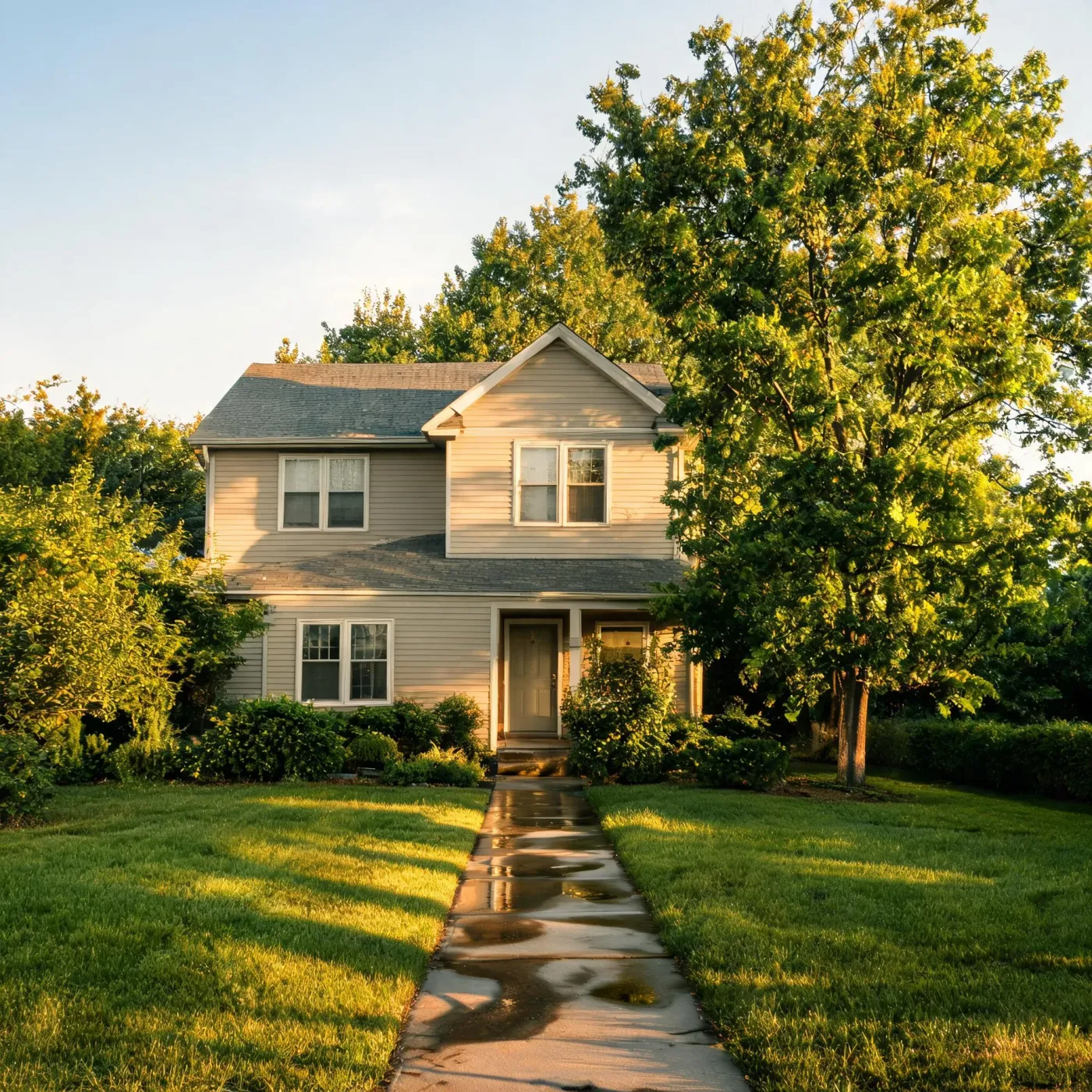
A two-story house with light beige siding and a gray shingled roof, fronted by a mowed lawn, shrubs, a large leafy tree at right, and a wet concrete walkway leading to the front door in low golden sunlight.

A dew point tells you how the air actually feels, not just what the thermometer says, and in Miami County it averages 66°F through June, July and August, according to NOAA. At that level the air holds a lot of moisture, and your AC has to pull that moisture out before the house feels cool at all. That's extra work on top of just lowering the temperature. You notice it as a system that runs longer than you'd expect and a house that still feels damp even when the thermostat hits its number. Over a summer that stacks up as real wear on the compressor.

NASA POWER T2MDEW

A woman wrapped in a thick fleece blanket sits on a sofa holding an open book, beside a lit table lamp and a frost-covered dark window.
An older woman with short blond hair in a cream turtleneck sweater stands smiling and looking off-camera in a kitchen, with a loaf of bread, a lit candle, a window showing darkness outside, and wood cabinets behind her.

Where that leaves your AC

  • Most central air conditioners wear out somewhere between 12 and 15 years, and that clock runs faster in a Miami County summer.
  • A unit that short-cycles, freezes up, or can't hold 72 on an August afternoon is telling you the same thing age does.
  • Cheap repairs on a young system are worth doing; the math changes once the compressor or coil is the part failing.
  • Rooms that stay warm into the evening and a system that runs almost constantly both point to a unit losing the fight.
  • Five months of hard running every year is what pushes most systems here from fine to failing.
  • Skipping the search for a contractor, the calls, and the back and forth on quotes is what gets you to a straight answer faster.

By now the picture is pretty clear. Age tells you a lot on its own: somewhere past 12 years, the compressor and coil have been through enough Miami County summers that the odds start turning against you. What the unit is doing tells you the rest. A system that short-cycles, freezes up, or just can't hold 72 when it's hot out is wearing down the same way the calendar says it should. The repairs you've made so far might have made sense at the time, a new capacitor or contactor on a system with years left in it. But once it's the compressor or the coil asking for money, you're paying a lot to keep an old system limping through one more summer instead of putting that money toward one that'll actually make it through the next five months without a fight.

None of this is complicated once you look at it straight. What takes the time is everything after you've decided to act: finding a contractor who actually works in Miami County, calling a few to see who can come out and when, explaining the same problem to each one, then sitting with a handful of quotes trying to tell what's actually different between them. That part doesn't tell you anything about your AC. It's just work you have to do before someone shows up to look at the thing. Getting matched with a contractor skips straight past that part, so the person who calls you is already someone who can take the job, not one more call you have to make yourself.

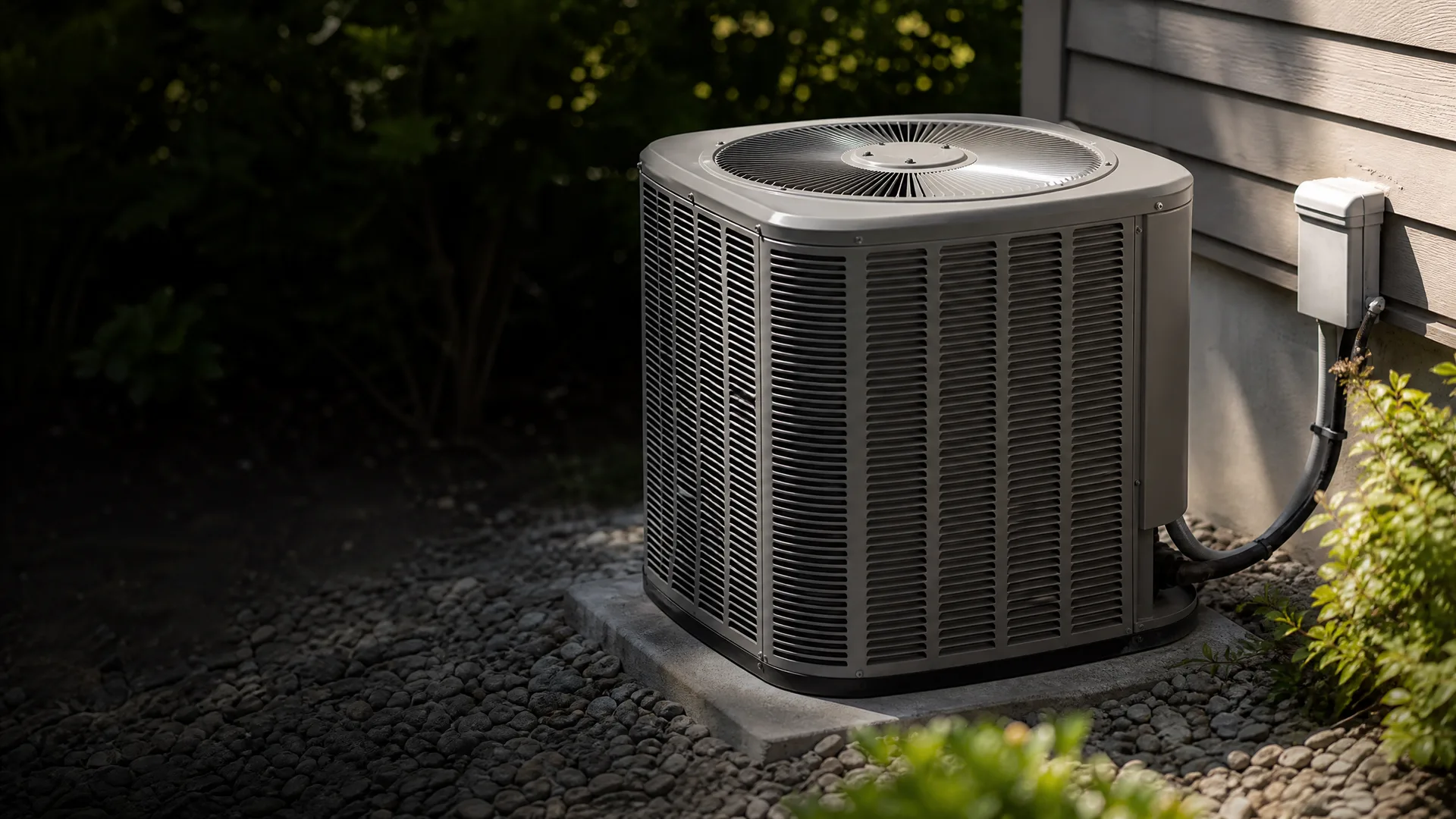
An outdoor air conditioner condenser unit on a concrete pad surrounded by gravel, next to a house wall with horizontal siding, an electrical disconnect box, and conduit, with shrubs nearby.

Matched to your air conditioner job

New system or replacementCentral ACMiami County, KS
Step 1 of 2

What ZIP code is the job in?