Is a mini split good for an older Kansas home

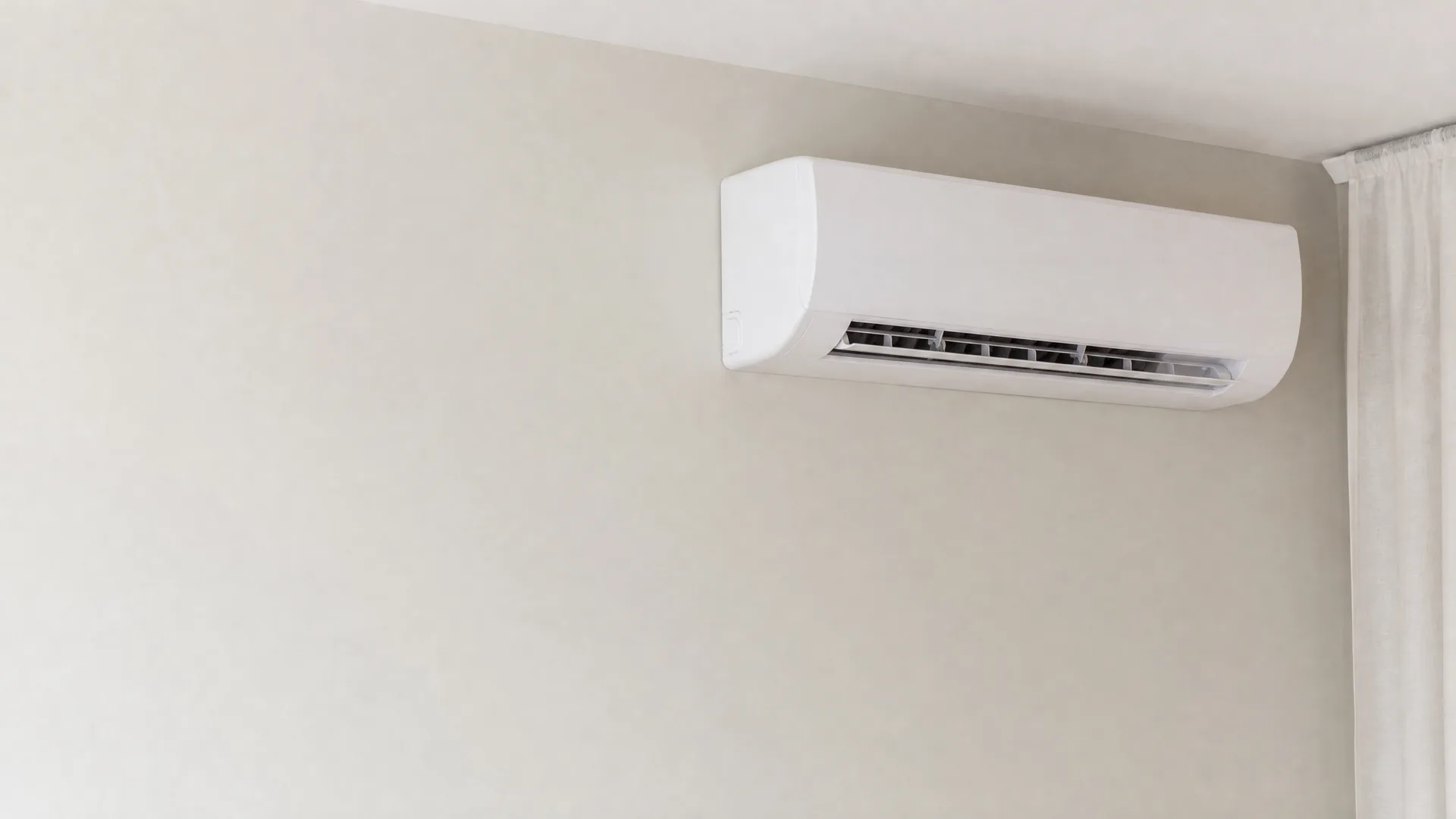
A white wall-mounted mini-split air conditioner indoor unit shown straight-on against a plain light gray background.
Get my match

Is a mini split good for an older home in Kansas?

An older Kansas home often has no ductwork, or ducts too small or leaky to add central air to easily. You're probably thinking about this because your gas furnace handles winter fine but summer is another story, especially once things get sticky from June through August, and you want cooling without tearing into walls or planning years ahead.

Yes, a mini split works well in an older Kansas home

A mini split runs on refrigerant lines that pass through a small hole in the wall, not ductwork, so it fits homes where adding or extending ducts would mean opening up ceilings and walls. It can go in room by room, which suits additions, converted attics, or bedrooms that always run hot in a Kansas summer. Keeping your gas furnace for winter and adding a mini split for cooling is a common setup here, since power is priced in the normal range and running one or two indoor units through the muggy months doesn't compete with heating costs. The compressor sits outside, the indoor unit mounts on a wall or ceiling, and nothing has to tie into your existing system at all.

A white wall-mounted mini-split indoor unit installed high on a gray interior wall, with a window at left and part of a light gray sofa with a dark cushion at lower right.

Sized and installed right

A mini split matched to the room keeps up on the stickiest July days without straining. The line set runs through a small hole in the wall, so there's no ductwork to fight. Installed well, it runs quiet and holds the room steady whether it's 95 outside or 15.

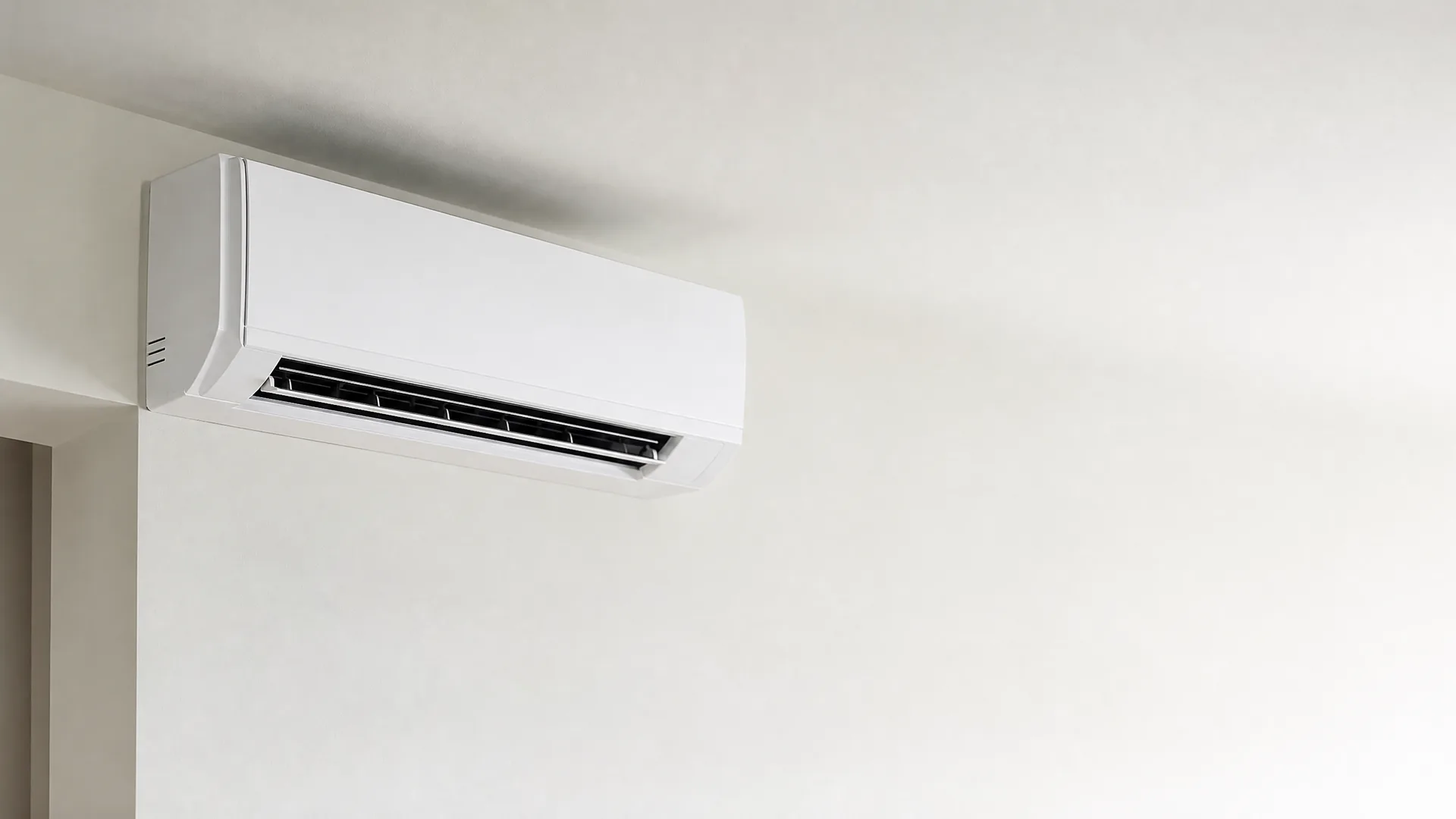
A white wall-mounted mini-split air conditioner indoor unit with visible dust and staining along its lower vent, installed on a plain pale wall.

Neglected and struggling

Dirt and mold on the coil and vents block airflow, so the unit works harder to cool the same room. It can start running longer, pulling more power, and blowing air that smells musty. The filter needs regular cleaning, and the outdoor unit needs clearance to breathe.

Ducted Air or a Mini Split

Ducted central air

  • Adding ducts to an older Kansas home usually means opening walls or ceilings to route them, since the house was never built for them.
  • A contractor has to size the whole system for the house at once, so the upfront job is bigger before anything turns on.
  • Once ducts are in, every room on that system cools together, which can mean running air to rooms that don't need it.
  • Leaky or undersized ducts lose cooled air along the way, so the equipment works harder to keep up on a muggy July afternoon.
  • Your gas furnace keeps handling winter the same way it always has, since central air only adds the cooling side.

Mini split

  • A mini split skips ductwork entirely, running a line set through a small hole in the wall to the outdoor unit.
  • Each indoor head cools only the room it's in, so a bedroom that stays shut most of the day isn't paying to stay cold.
  • Installation is smaller in scope than a full central air retrofit, since there's no duct network to design or fit into the house.
  • It handles cooling on its own while your gas furnace keeps doing the winter heating it already does.
  • More indoor heads mean more spots to install and more to keep track of if one room needs service later.
A white wall-mounted mini-split air conditioner unit near the ceiling on a plain light-colored interior wall with open space to the right.

Heat pump side keeps working in winter

A mini split moves heat instead of burning gas to make it, and it still does that when it's cold outside. Most homes here lean on the gas furnace once temperatures drop, and that can stay the main plan. The mini split in the room it serves can carry the shoulder months on its own, which means the furnace runs less in October and March and kicks in fully once it actually gets cold.

A white wall-mounted mini-split air conditioner unit installed near the ceiling on a plain beige interior wall, with a light curtain at the right edge.

Each room has its own thermostat

A central system cools or heats the whole house to one setting. A mini split only answers for the room or rooms it's installed in, and each indoor head has its own control. A spare room or a sunroom can be set warmer when no one's in it, then brought down fast before the sticky part of a Kansas summer afternoon hits. Power here runs at typical rates, so a room left off costs nothing while it sits empty.

Power costs 14.44 cents per kilowatt-hour statewide

That 14.44 cents a kilowatt-hour is about typical for the state, not high and not low. A mini split only pulls from your meter when it's actually running, so a unit sized right for the room won't push your summer bill into a bad surprise.

EIA-861 2025 statewide residential average

How a mini split actually runs

  • A mini split has two main parts: the outdoor compressor unit and the indoor air handler mounted on the wall.
  • Refrigerant runs between the two through a line set, the small insulated tubing that passes through that wall hole.
  • The indoor unit has its own blower and a washable filter, separate from anything on the furnace.
  • A sensor in the room tells the compressor to speed up or slow down rather than just switching on and off.
  • Running at a lower, steady speed most of the time uses less power than cycling on full blast and shutting off.
  • The compressor has a defrost cycle that briefly reverses itself to clear frost when it's cold out.

A mini split works differently from the gas furnace and any window unit you've had before, and that's worth understanding before a contractor shows up. Outside, the compressor does the work of moving heat rather than making it. Inside, the wall-mounted air handler has its own blower pulling room air across a coil, with a filter you can slide out and rinse yourself. The two talk to each other through the line set, a run of insulated copper tubing about the width of a garden hose, carrying refrigerant back and forth through that one hole in the wall. What makes it feel different from the furnace cycling on and off is the sensor in the indoor unit. It reads the room temperature continuously and tells the compressor to ramp up or ease back, so most of the time it's running at a low steady speed rather than slamming on at full power and shutting off. That steadier operation is part of why it can hold a room so evenly. In winter, when frost builds up on the outdoor coil, the system briefly reverses itself to melt it off before going back to heating. You might notice the outdoor unit pause or seem to blow cool air for a few minutes. That's the defrost cycle doing its job, not a malfunction, and it's normal in cold weather.

A woman with long gray hair wrapped in a checked blanket sits on a sofa by a window with yellow autumn foliage outside, with a lamp, framed picture and plant in the background.
An older woman in a cream knit sweater sits on a sofa by a window, looking out at sunlit trees with yellow and orange autumn leaves, with a bookshelf and lamp behind her.
A woman with gray shoulder-length hair in a dark knit sweater sits on a cushioned seat by a window, looking out at yellow autumn foliage, with a living room, armchair, houseplant and framed picture behind her.
An older woman with gray hair in a bun, wearing a cream knit sweater, sits on a sofa with a gray blanket and looks out a large window toward yellow-green autumn trees, with a lit table lamp and dark armchair behind her.
A white wall-mounted mini-split indoor unit on a pale interior wall above a gray sectional sofa with cushions, next to a potted leafy tree and a floor-to-ceiling window showing green trees outside.

A local pro for your mini split installation

Skip collecting and comparing quotes for the new mini split.

A local pro who knows mini splits gets your details and gets in touch.

Request a pro

Sending the form costs nothing.

Why does the upstairs stay hot every summer?

You've probably got a room or two the ducts never reach the way they should, an add-on, a finished attic, a bedroom at the end of the line that's always a few degrees warmer. You run a window unit in it, or a fan, or you just close the door in July. At night the floors creak more in an older house, and if that room sits over an uninsulated space, the cold comes through the same way the heat does in summer. None of that is a crisis. It's just the gap between what your furnace was built to do and what the house needs now, and it's the reason you're looking at a mini split instead of trying to force central air into a house that wasn't built for it.

A white wall-mounted mini-split air conditioner installed high on a light gray interior wall below a white crown molding and ceiling with a recessed light.

Running clean

This is what a mini split looks like doing its job. The casing stays white, the vents sit flush, and it holds the room at temperature without noise you notice. Nothing about it should stand out day to day.

A dusty, discolored white wall-mounted mini-split air conditioner unit installed on a plain beige interior wall below a molding strip.

Running neglected

Dust and discoloration on the casing usually mean the filter behind those vents hasn't been pulled and rinsed in a while. The unit still moves air, but it's working harder to do it, and that shows up in what it pulls off your meter.

A smiling man in a denim shirt and white t-shirt stands in an open dark doorway of a stucco house, facing a woman with long brown hair and a green jacket seen from behind in the foreground.

What a mini split changes in your house

Right now that hot room probably gets a window unit propped in for July and August, or a box fan running all night that still doesn't fix it. A mini split mounted on that wall holds the room at whatever you set, and you stop thinking about it. No more hauling a unit up in spring and back down in fall, no more patching the window frame where it never quite sealed.

It also changes what you're dealing with if something goes wrong. One wall unit and one outdoor compressor is a smaller system to diagnose than ductwork hidden in walls that were never built for it. The part that matters most for an older Kansas home is finding someone who's installed enough of these to size and place yours right the first time, not just available this week. That's the search this saves you, calling around and explaining the same hot room to three different contractors before one of them can actually tell you what it needs.

Interior corner with a beige sofa holding a dark green and a light cushion and a textured throw, a potted small-leaved tree beside a white-framed window, and a dark shallow bowl on a wooden coffee table in the foreground.
A two-story house with gray and light gray siding, white-trimmed windows and a white front door, flanked by deciduous trees, with a partly browned lawn in front under a clear blue sky.

A dew point of 64°F is where Kansas summers sit on average across June, July and August, per NOAA. That's the sticky kind of air, the kind where a room feels warm even after the thermostat says it should be comfortable. A mini split pulls moisture out of the air as it cools, not just heat, which matters more than the temperature number most days. In the room it's installed, you'll notice less of that clammy feel by evening, even on the muggiest stretch of July.

NASA POWER T2MDEW county cells weighted by homes

A woman in a cream knit sweater sits in an armchair with her eyes closed and a slight smile, beside an open window showing orange autumn foliage, with a mug, books and a lit candle on a small side table.
An older man with gray hair and a beard leans back on a beige sofa with his eyes closed, in a sunlit room with potted plants, a wicker chair and large windows behind him.

A mini split fits an older Kansas home because it skips the ductwork the house was never built for, and it handles the muggy stretch of summer without you propping a window unit in the room that always runs hot. The gas furnace keeps doing winter. The mini split picks up the part of the year your house has never handled well, at a power cost that stays predictable because it only runs when the room needs it. Installing one still means finding someone who can size it right for your room and mount it correctly, and that's the part worth handing off. Instead of calling around, explaining the hot room and the duct problem to every contractor who answers, then sitting with a stack of quotes trying to tell them apart, you answer a few questions once and a contractor who installs these in homes like yours gets in touch. The system stays the same either way. What changes is whether you spend your evenings chasing that answer yourself.

At dusk, a dark board-and-batten house with a standing-seam metal roof and lit entry walkway of stone pavers, with two large outdoor heat pump units on a stone-walled pad at right and trees and hills in the background.

Mini Split Installation

Get the right pro for your mini split

New system or replacementMini-splitKansas
Step 1 of 2

What ZIP code is the job in?

  • A brown leather and wood armchair with a cream knit throw sits in a corner beside a woven basket holding a dark cushion, under a framed mountain photograph, with a wood-trimmed window showing yellow and green foliage.
    • Describe your mini split job, and a local pro who handles it gets in touch.
    • Say what's going on with your mini split, and a pro who works on them reaches out.
  • A dark wood dresser against a pale wall holds a ceramic vase of eucalyptus branches, a stack of books with a wooden bowl, and a woven basket, with a framed landscape painting above and a woven basket holding a knit blanket on the floor beside a window.
    • Send the form and stop researching installers for the new mini split.
    • One request ends the search for a mini split installer.
  • A window seat with beige linen and brown textured cushions, a chunky knit blanket, and an open book, beside a window showing blurred yellow autumn foliage.
    • Describe the project once instead of to every installer.
    • One form replaces the calls you'd make to find a mini split pro.
  • A cream upholstered armchair with a rust-colored pillow and knit fringed throw sits beside a window with a ceramic vase of orange-leafed branches on the sill, overlooking autumn trees and leaf-covered ground.
    • One installer gets your project, so there's no bidding war over it.
    • The pro who reaches out is licensed in Kansas.