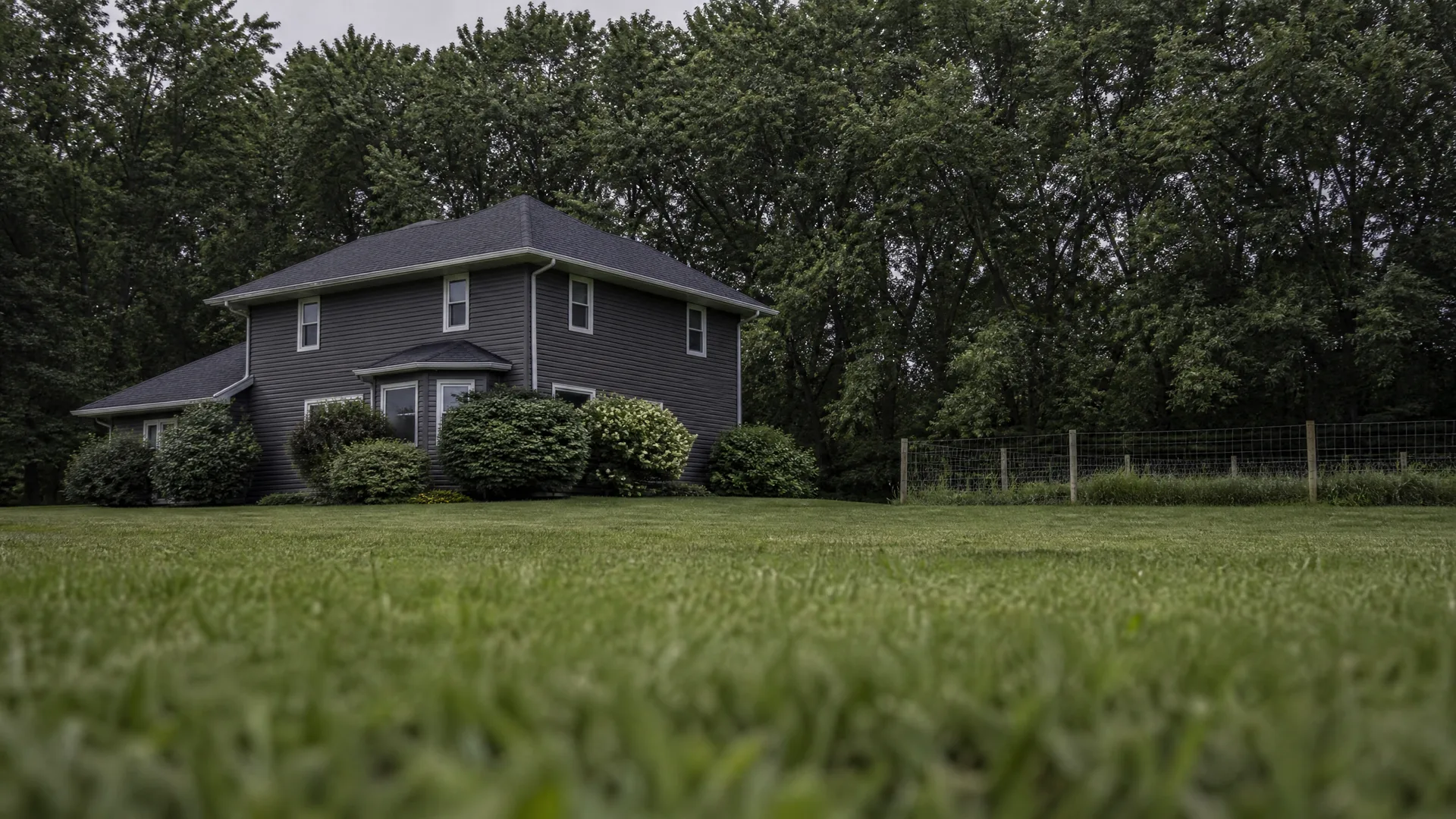





A two-story dark gray sided house with a shingled hipped roof stands behind shrubs and a lawn photographed from ground level, with dense green trees behind it and a wire fence to the right.

Mini Split Installation in Abilene, KS

Tell us about the job

Takes about a minute. No obligation.

New system or replacementMini-splitDickinson County, KS
Step 1 of 2

What ZIP code is the job in?

Half the homes in Dickinson County were built in 1956 or earlier. A mini-split going into a house that age isn't going into a blank slate. The walls, the windows, the way the place was built to hold heat and shed it, all of that came with whatever system was there before. A new unit still has to work with that house, not an imagined one. Sizing it right matters more here than it would in a newer subdivision where every home is built to the same spec.

7 months
October through April, your system heats
5 months
May through September, it cools
22°F
the average winter night it heats against
89°F
the average summer afternoon it cools against
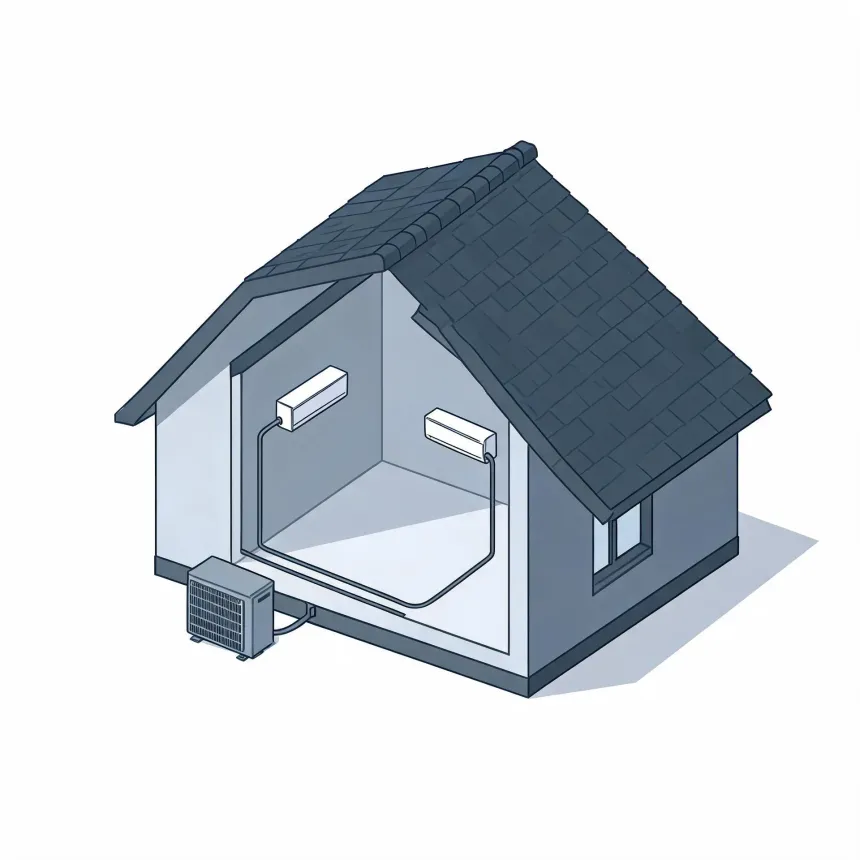
Isometric cutaway illustration of a small house with a shingled gable roof, showing two wall-mounted indoor air conditioning units connected by refrigerant lines to an outdoor condenser unit on the ground outside.
Your system heats October through April and cools May through September.

NOAA nClimDiv, 1991–2020 normals

A mini-split in Dickinson County runs five months straight, with afternoon highs near 89°F and heavy air on top of that.

That's a long, hard cooling season to size wrong, so the install has to fit this house, not a guess.

At 15.12 cents a kilowatt-hour, how much this system uses matters

Power here costs 15.12 cents per kilowatt-hour
Cooling runs May through September
Summer afternoons average 89°F
Get It In Before MayCooling starts in May here, so April is the month to have it installed, not the month to scramble.

Dickinson County falls under zone 4A, a mixed climate that works both a heating system and a cooling system hard over the year. Any split-system heat pump installed here, ductless included, has to meet the federal minimum for that equipment class if it was manufactured on or after January 1, 2023. That floor is 14.3 SEER2 for cooling and 7.5 HSPF2 for heating. It's not a local add-on, it's the standard everywhere, but it matters more in a climate that leans on the equipment in both directions. A unit that just clears the minimum will run more than one sized with this county's summers and winters in mind. A federal tax credit is available for qualifying heat pump installations, worth knowing before settling on a system.

Size It For What This County Asks Of It

Five months of 89 degree afternoons is a lot to ask of one unit every year. Get the sizing right at install and it won't be working harder than it has to for a system this age of house already asks a lot from.

Find a contractor
A white mini-split air conditioner outdoor condenser unit mounted on metal brackets against a beige stucco exterior wall, with a blue sky and scattered clouds in the background.

Sized For This House, Not the One Next Door

Half the homes in this county were built in 1956 or earlier. If yours is one of them, the mini-split going in now has to be sized off this house, not off a number pulled from its square footage. A load calculation looks at the rooms you're actually heating and cooling, how many windows they have, where the sun hits. That's how a contractor decides how many indoor units you need and where they go. Skip that step and you end up with a unit that short cycles in one room and can't keep up in another.

Ask for a Manual J, Not a Rule of Thumb

A sizing number based on square footage alone doesn't account for how a room actually loses or gains heat. A contractor doing it right measures each room, checks window area and orientation, and runs a load calculation before quoting equipment. If a contractor hands you a system size before walking the house, that's a sign they skipped the step that matters most.
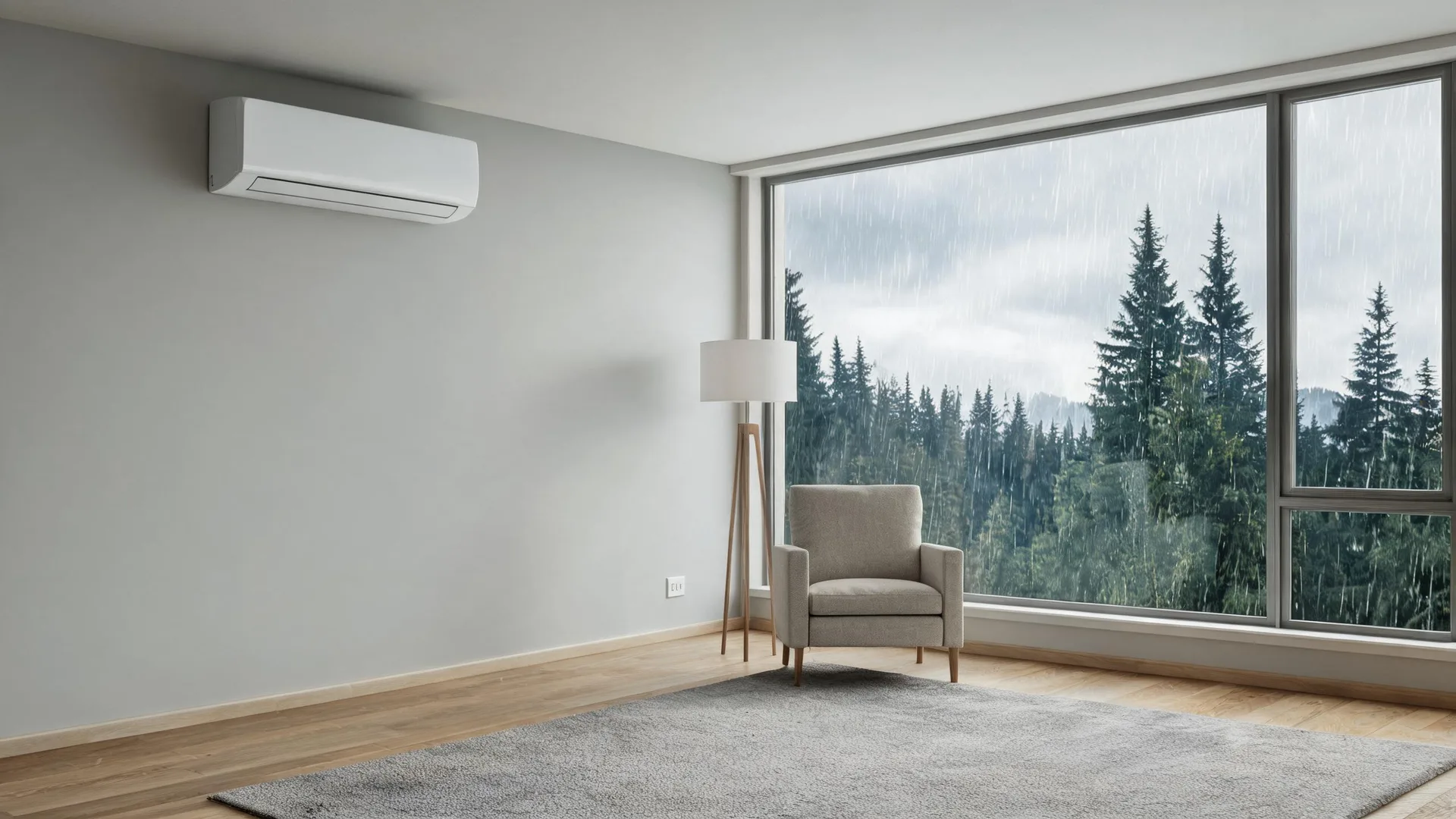
Ask How Many Zones This System Actually Needs

A single indoor head can only condition the room it's in well. Open floor plans and small additions change how many heads a system needs and where they go. A contractor comparing systems with you should be able to say why one indoor unit covers a space and why another space needs its own, not just quote a total capacity and call it done.

Taking out the old system is its own job, separate from putting in the new one. A window unit or an old ducted system has refrigerant in it, and that refrigerant has to be recovered properly, not vented, so plan on the installer handling that as part of the work rather than something you deal with yourself. If the old setup used ductwork, a switch to ductless doesn't mean that ductwork vanishes. It stays in the walls unless someone takes it out, and if the plan is to cap it off or abandon it, that's worth asking about before install day, not after. Mounting brackets, old line sets, an outdoor pad or condenser cage all need to come out or get reused, and a contractor who's done this before will tell you which parts of the old install are staying and which are going before they start. The last thing worth asking is where the old equipment ends up. Refrigerant-bearing equipment can't just go to the curb, and a contractor who installs mini-splits regularly already has a way to dispose of it correctly.

Dickinson County saw 200 severe weather events between 2015 and 2024, and 96 of those were hail. An outdoor condenser sits outside year-round, so where it goes matters. A spot under eave cover or away from the open yard holds up better than one out in the clear. Damaging wind hit the county 84 times in that same stretch, and seven tornadoes touched down, so a mounting pad that's actually secured isn't optional. Power is part of this too. Nearly one in five Kansas households went at least a day without power in 2024, and a mini-split won't run heat or hot water through an outage any better than the system it replaced. Worth asking the installer how the unit handles a power blip and whether a surge protector is part of the job.