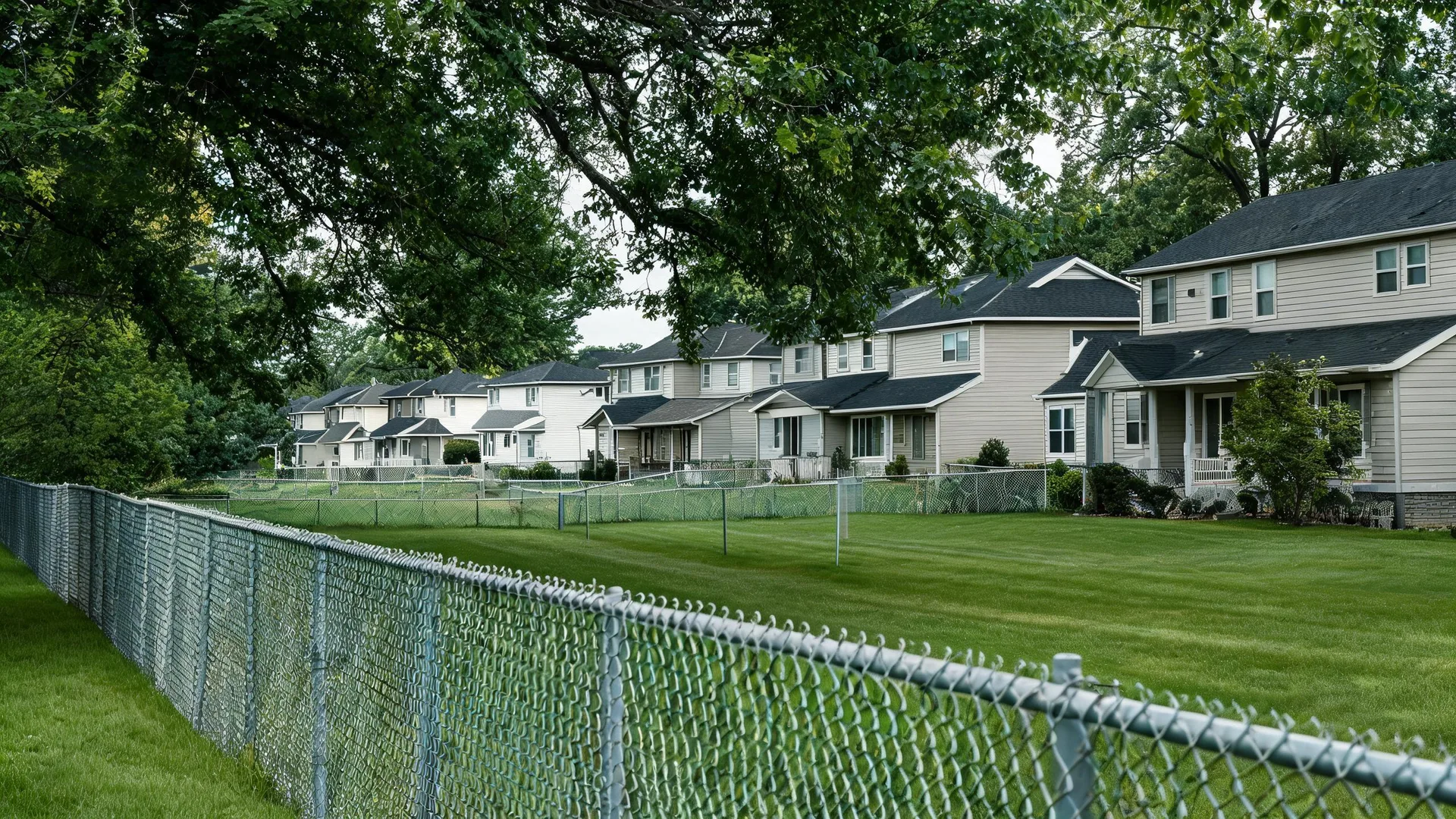
A chain-link fence runs along a mowed lawn beside a row of two-story houses with light siding and dark roofs, framed by large leafy trees.

Mini Split Installation in Dodge City, KS

Tell us about the job

Takes about a minute. No obligation.

New system or replacementMini-splitFord County, KS
Step 1 of 2

What ZIP code is the job in?

Ford County sees its share of severe weather

Ford County logged 484 severe weather events between 2015 and 2024. That includes 251 cases of damaging wind, 163 hail events, 37 winter storms, and 33 tornadoes. A mini split's outdoor unit sits exposed to all of it.

Outages here run long enough to matter

Nearly one in five Kansas households went at least 24 hours without power in 2024. A mini split won't heat, cool, or help with hot water during that stretch, so an outage of that length is worth planning around before the install, not after.

7 months
October through April, your system heats
4 months
June through September, it cools
21°F
the average winter night it heats against
90°F
the average summer afternoon it cools against
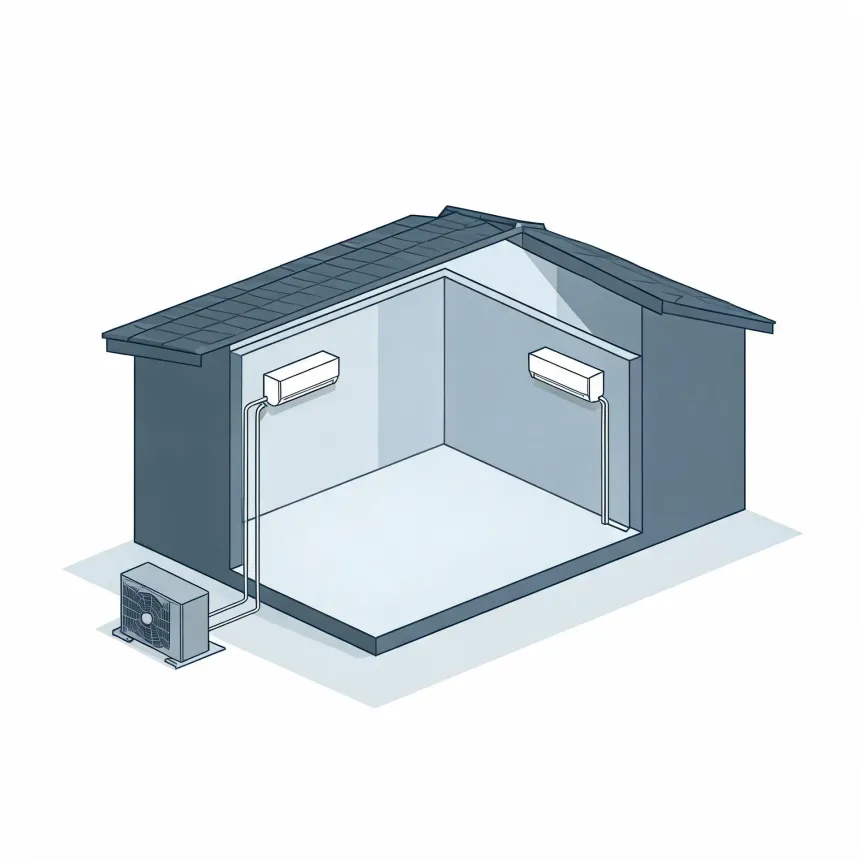
Cutaway isometric illustration of a small building interior showing two wall-mounted indoor air conditioning units connected by line sets running down to a single outdoor condenser unit on the ground outside.
Your system heats October through April and cools June through September.

NOAA nClimDiv, 1991–2020 normals

Cooling season here runs June through September.

May is the month to get a mini split installed, before the first hot stretch hits and installers book solid.

Four months of 90-degree afternoons means this system earns its keep every summer

Cooling runs June through September
Summer afternoons average 90°F
251 damaging wind events from 2015 to 2024

Most houses in Ford County heat with gas, about seven in ten. A mini split still fits into that setup. It runs as the cooling system and takes over heating in the shoulder months, while the furnace carries the coldest stretch of winter. That pairing is already common here, so an installer sizing your mini split will likely ask what your furnace does and let the mini split handle the rest. About one in five homes here heat with electricity alone, and for those the mini split carries more of the load, which changes the sizing question from the start.

Plan for the outage before the install, not during it

Where the outdoor unit goes and how it's mounted is part of the install, not an afterthought. Ask the installer about placement that keeps it clear of falling branches and ice, and talk through what happens to heat and hot water if the power goes out for a day or more. Settling that now means one less thing to figure out when a storm actually comes through.

Find a contractor
A man in a gray t-shirt and tan work pants, seen from behind, carries a worn canvas tool bag up wooden steps toward a red front door of a gray clapboard house with a potted plant beside it.
A white outdoor air conditioner condenser unit mounted on metal wall brackets against gray horizontal siding, with a blue sky and white clouds behind it.

This system has to work with a house built decades ago

Half the homes in Ford County were built in 1972 or earlier. A house that old was fitted for whatever heating and cooling it started with, and the walls, the wiring, the room layout all followed from that. A mini split goes in differently than central air. It needs a place to run the line set between the outdoor unit and the indoor heads, and in an older home that path isn't already there waiting. This doesn't mean more work everywhere. It means the install plan has to start from the house you actually have, not a generic one, and that's something to walk through with the installer before they quote the job.

The rating tells you the ratio, not the bill

The number on the label compares the heat moved to the power drawn to move it. A higher number means the system squeezes more out of each watt. It doesn't tell you what any given month will cost, because that depends on how hard the system has to work, how well it's sized, and how it's set up to run. Two homes with the same rated unit can see different results if one is sized and installed right and the other isn't.

A mini split earns its rating by running differently than central air

Central air tends to run at one speed until the thermostat is satisfied, then shut off. A mini split's compressor ramps up and down to match the load, holding steady instead of cycling on and off. That's where a lot of its efficiency comes from. It only shows up if the system is sized to the room and installed so the refrigerant lines and indoor head are set up the way the manufacturer rated them for. An oversized or poorly installed unit won't deliver the number on the label, no matter how good that number looks on paper.

Comparing mini splits mostly comes down to how the system is built, not just the number on the spec sheet. Ask how many indoor heads one outdoor unit can run, since a system sized for the whole house works differently than a few single-zone units added over time. Ask what happens if one indoor head needs service, whether the rest keep running or the whole system shuts down. Ask about the compressor type, because a system that modulates holds a room's temperature more evenly than one that just switches on and off. Ask where the line set will run and how long it can be, since every added foot of refrigerant line is a place a joint can fail later. Ask what controls come with it too. A unit with a thermostat you can actually program for the day is worth more than one that only offers a remote you have to point at it.

Ford County falls under zone 4A, a mixed climate code that expects a system to pull real weight in both directions, not just summer. Under the federal standard, a mini split counts as a split-system heat pump, so any unit built from 2023 onward has to clear 14.3 for cooling and 7.5 for heating, measured in Btu of heat per watt-hour of electricity. That's the floor, not a target to shop for, since anything sold new already has to clear it. A federal tax credit is available for qualifying heat pump installations, worth checking against the unit an installer is quoting. The label will tell you if a given model clears the minimum by a little or by a lot, and that gap is worth asking about before you settle on one.