






A two-storey black-clad house with a chimney stands in front of a row of tall deciduous trees, viewed low across a blurred grassy lawn under an overcast sky, with a wire fence to the right.

Mini Split Installation in Fort Scott, KS

Tell us about the job

Takes about a minute. No obligation.

New system or replacementMini-splitBourbon County, KS
Step 1 of 2

What ZIP code is the job in?

Most homes in Bourbon County heat with utility gas, just over half of them. Electricity is next at close to a third, and a smaller share run on bottled or LP gas. A mini split doesn't fit neatly into that picture, since it heats and cools from the same unit instead of pairing a furnace with separate AC. For a home that already runs on electric heat, adding one is a straightforward swap in how a room gets warm or cool air. For a gas-heated home, it usually goes in alongside the furnace, taking over a room or a zone the ductwork doesn't reach well. Either way, the question worth asking is what the mini split needs to cover, not what the rest of the house already runs on.

7 months
October through April, your system heats
5 months
May through September, it cools
26°F
the average winter night it heats against
88°F
the average summer afternoon it cools against
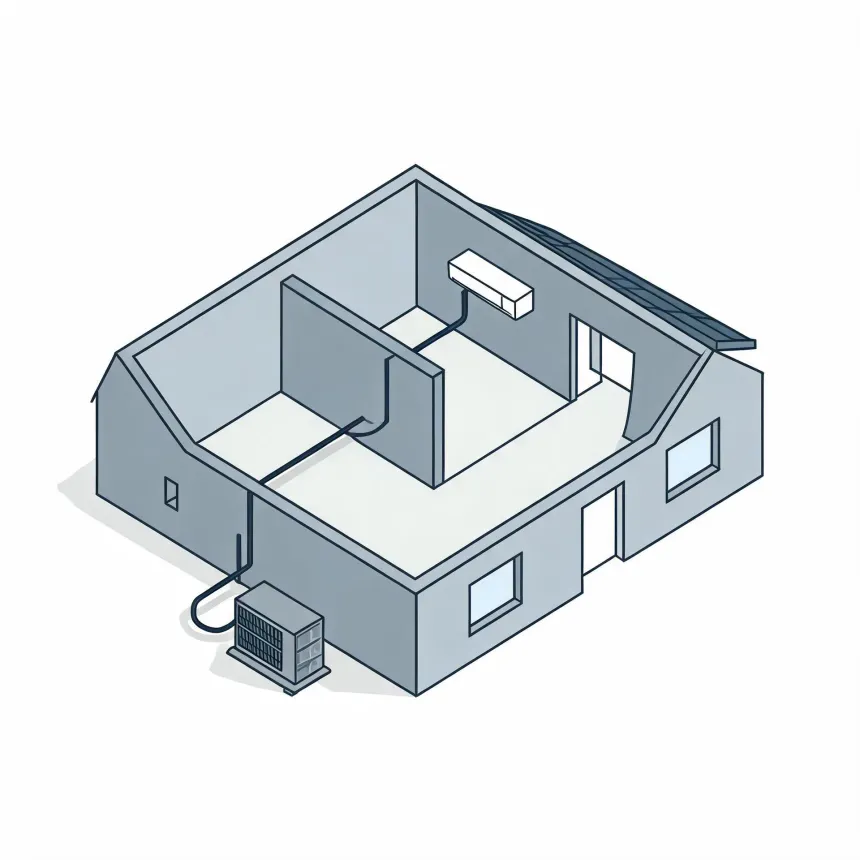
Isometric line illustration of a cutaway house showing an interior wall-mounted air conditioning unit connected by a line to an outdoor condenser beside the exterior wall.
Your system heats October through April and cools May through September.

NOAA nClimDiv, 1991–2020 normals

A mini split's efficiency rating matters more in a state where electricity runs 14.15 cents a kilowatt-hour.

A standard size sized correctly for the room keeps that cost down without paying for capacity this job doesn't need.

Half the homes in Bourbon County were built by 1957, before anyone thought about where a mini split would go

Half the homes here were built by 1957
Cooling runs May through September
Summer afternoons average 88°F
Sized for Fort Scott summersCooling runs May through September, with afternoons averaging 88°F.

Cooling starts in May here and runs through September. An install finished in April means the unit is ready for that first warm day instead of catching up to it. Mini splits take some setup, mounting the indoor units, running the line set, checking the charge, and April gives that work room to happen without a heat wave pushing the schedule. It also gives you time to run it before the season matters, walk through each room it's supposed to cover, and have anything that needs adjusting handled while it's still just a test, not a problem.

A new mini split here has to meet both sides of a mixed climate

Any mini split going in here has to meet 14.3 SEER2 for cooling and 7.5 HSPF2 for heating, the federal minimum for split-system heat pumps. Bourbon County's zone 4A rating is part of why those minimums matter, since the system has to handle real heating and real cooling, not just one or the other. That rules out the low end of the market. Ask what's eligible for the federal tax credit before you settle on a unit.

Find a contractor
A man in a dark jacket, tan pants and a cap, seen from behind, carries a worn canvas tool bag up wooden porch steps toward a red front door.
A beige split-system air conditioner outdoor condenser unit mounted on metal wall brackets atop a stucco wall.

What the house decides before the unit does

That means finding out what's already there before an installer shows up to mount anything. Where the electrical panel is, what the wall is made of at the spot the indoor unit would hang, whether there's a clear path for the line set to reach the outdoor unit. None of that was decided with a mini split in mind if the house dates to the older half of the county. Walk the room yourself and point to where the indoor head would go and where the line would have to run before anyone drills. A problem caught on that walk is easy. A problem caught after the bracket is up is not.

Most old systems leave through the same opening they came in by

A furnace goes out the way it came in, and the line set and refrigerant from a central AC get recovered and hauled out with it. If the old system used ductwork the mini split won't need, that ductwork can usually stay in place or get sealed off rather than torn out. An installer should tell you which parts of the old setup are coming out and which are just getting disconnected.
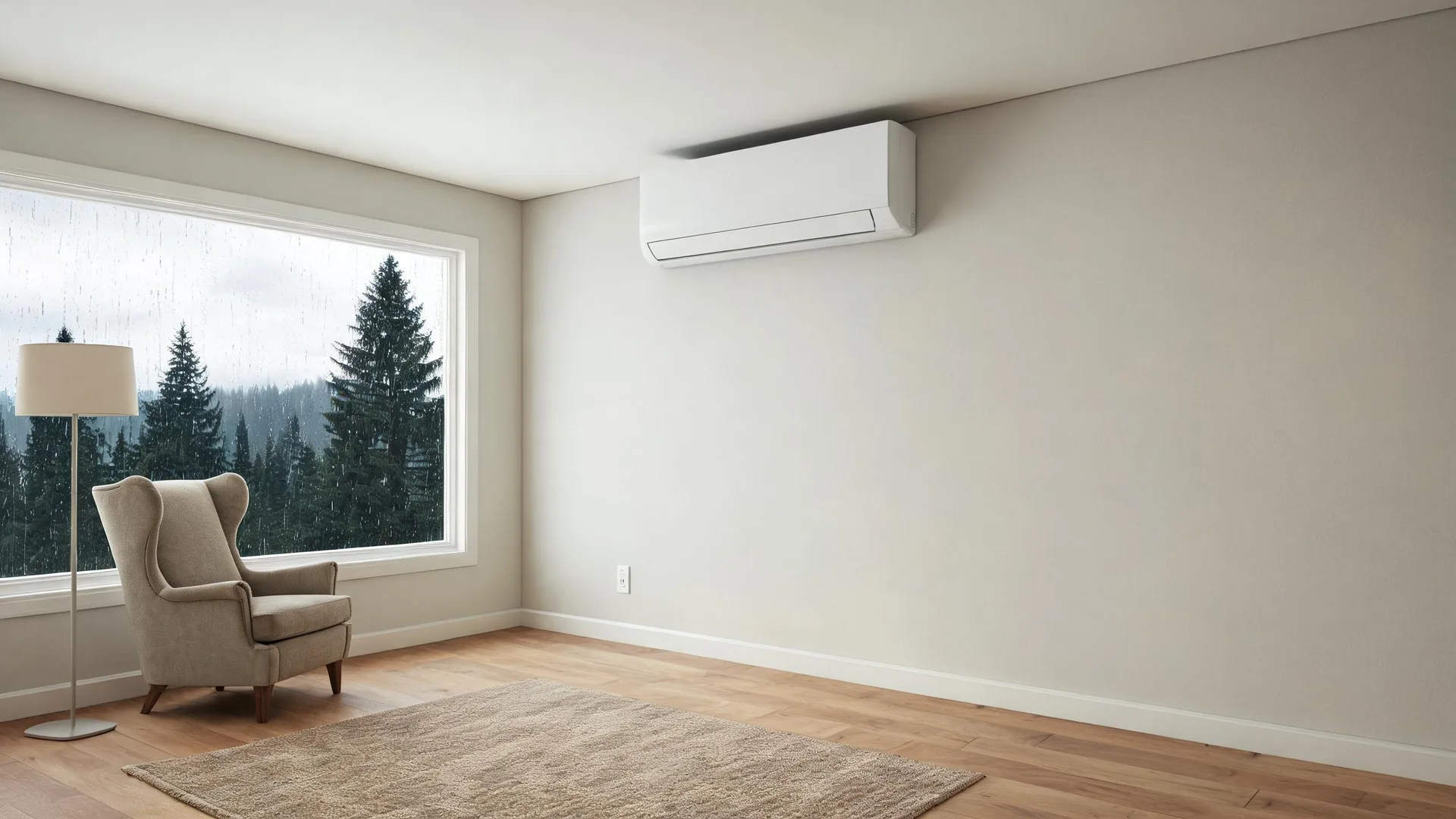
A gas furnace needs its line capped, not just switched off

If the old system ran on gas, the gas line feeding it has to be properly capped once the furnace is gone, not left shut at the valve. That's a job for whoever is disconnecting the furnace, not an afterthought. Ask directly whether that's part of the removal before the work starts, so it doesn't get treated as a separate call later.

What drives the price on a mini split job is mostly the number of zones and how far the lines have to run. One indoor head paired with one outdoor unit costs less than a system built to cover several rooms, since each added zone means another indoor unit, more line set, and more labor to run it cleanly through walls and framing. Distance between the indoor heads and the outdoor unit matters too. A short run is quick work. A long run, or one that has to cross through finished walls or up multiple floors, takes more time and more material. The brand and the efficiency rating of the unit itself factor in, but the labor to get it mounted, wired, and charged correctly is usually the bigger piece. A straightforward single zone replacing something that was already there is a different job than a multi-zone system going into rooms that never had one before.

Install day starts with the outdoor unit, set on a pad or brackets somewhere the condensate can drain and air can move freely around it. Inside, the mounting plate goes up first, then the indoor head hangs on it once the wall is opened for the line set. That line runs refrigerant line, a condensate drain, and wiring through a single hole in the wall, so the hole only gets drilled once it's marked and checked from both sides. After the lines are connected, the system gets vacuumed down to pull moisture and air out of the lines before any refrigerant moves through them. Skipping that step is what leads to a system that runs weak or trips out early. Once it holds vacuum, the charge goes in, the unit powers on, and the crew checks airflow and temperature at the head before calling it done.