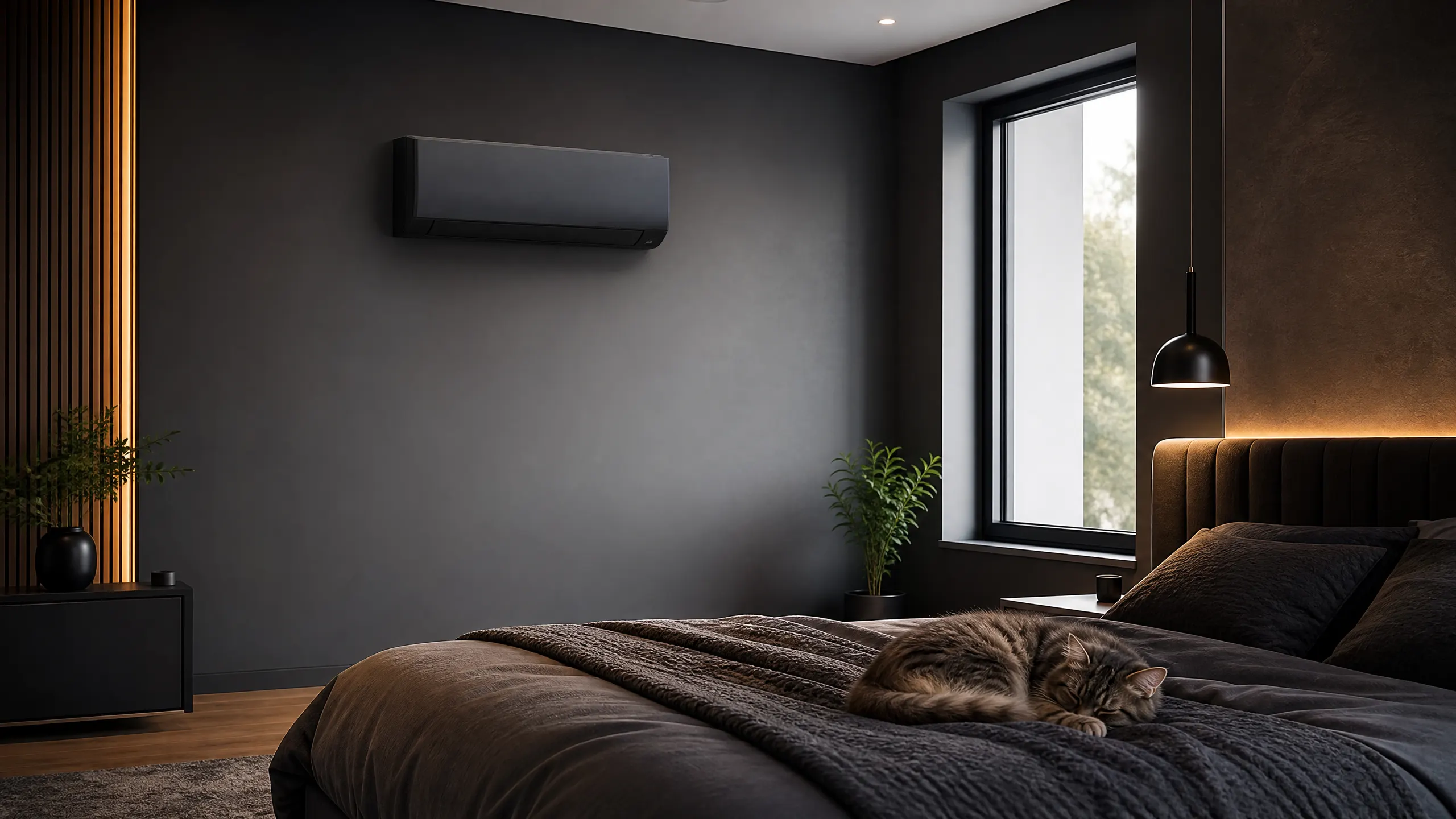




A tabby cat sleeps on a dark quilted bed in a moody, minimalist bedroom with a black wall-mounted air conditioning unit.

Mini Split Installation in Hillsboro, KS

Tell us about the job

Takes about a minute. No obligation.

New system or replacementMini-splitMarion County, KS
Step 1 of 2

What ZIP code is the job in?

Half the homes in Marion County were built in 1957 or earlier. A house that age was never designed around a mini split. The wall cavity may not give a clear path for the line set, and the spot that made sense years ago for a window unit may not be the right spot for an outdoor condenser now. None of that rules out a mini split. It means the mounting location and the line run get worked out for your house, not assumed from a plan. Older framing and older wall construction change where drilling makes sense, so that gets checked before anything goes in.

7 months
October through April, your system heats
5 months
May through September, it cools
23°F
the average winter night it heats against
89°F
the average summer afternoon it cools against
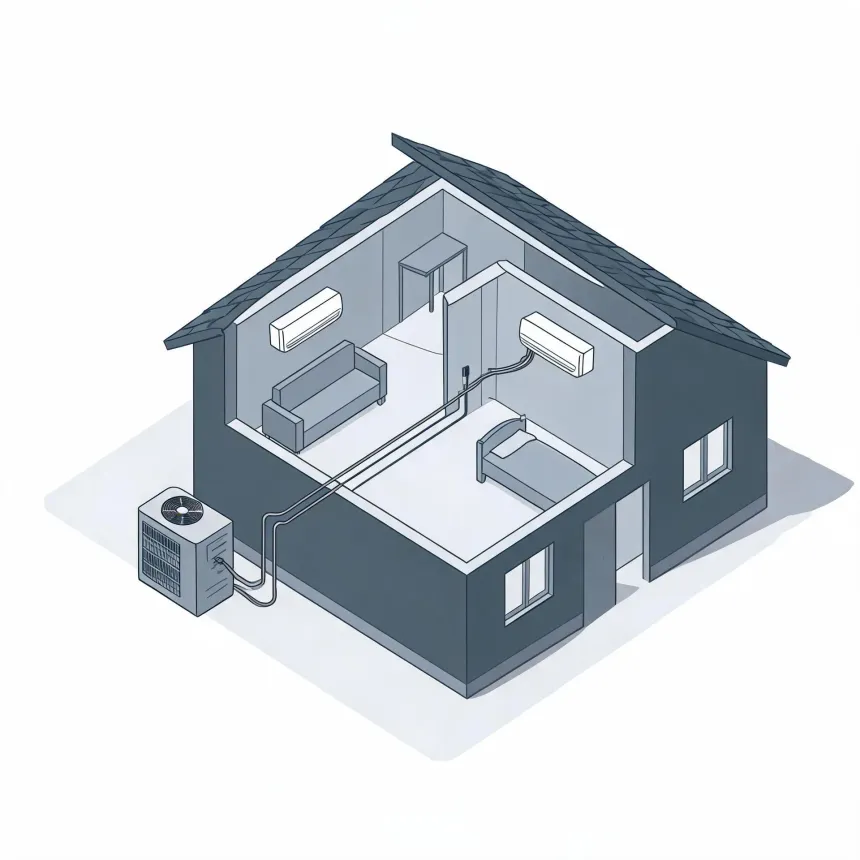
Isometric cutaway illustration of a small house showing two wall-mounted indoor air conditioning units connected by line sets to an outdoor condenser unit beside the exterior wall, with a sofa in one room and a bed in another.
Your system heats October through April and cools May through September.

NOAA nClimDiv, 1991–2020 normals

Marion County homes run cooling five months a year, and afternoons in June, July and August average 89°F.

A mini split here runs hard all summer, so the unit has to be sized to the house, not picked off a chart.

Marion County sees its share of storms, so think about where the outdoor unit sits and what happens to heat and hot water when the power drops.

159 severe weather events from 2015 to 2024
19% of homes statewide lost power a day or more in 2024
75 damaging wind events from 2015 to 2024

Gas heats 56.9% of homes in Marion County, more than electricity and propane combined. A mini split doesn't replace that. It runs alongside the furnace, handling cooling in summer and taking the load off the furnace in spring and fall. For the homes on electric heat, a mini split can carry more of the year on its own, since it's producing heat rather than burning fuel for it. Either way, the gas line or the electric panel already in the house has a say in how the installation gets planned.

Get it installed before May, not during it

Cooling starts in May here. A mini split installed now goes in on a normal schedule, with time to work out the mounting spot and line run properly. Wait until summer and that same work happens while the house is already warm and the old system is already struggling.

Find a contractor
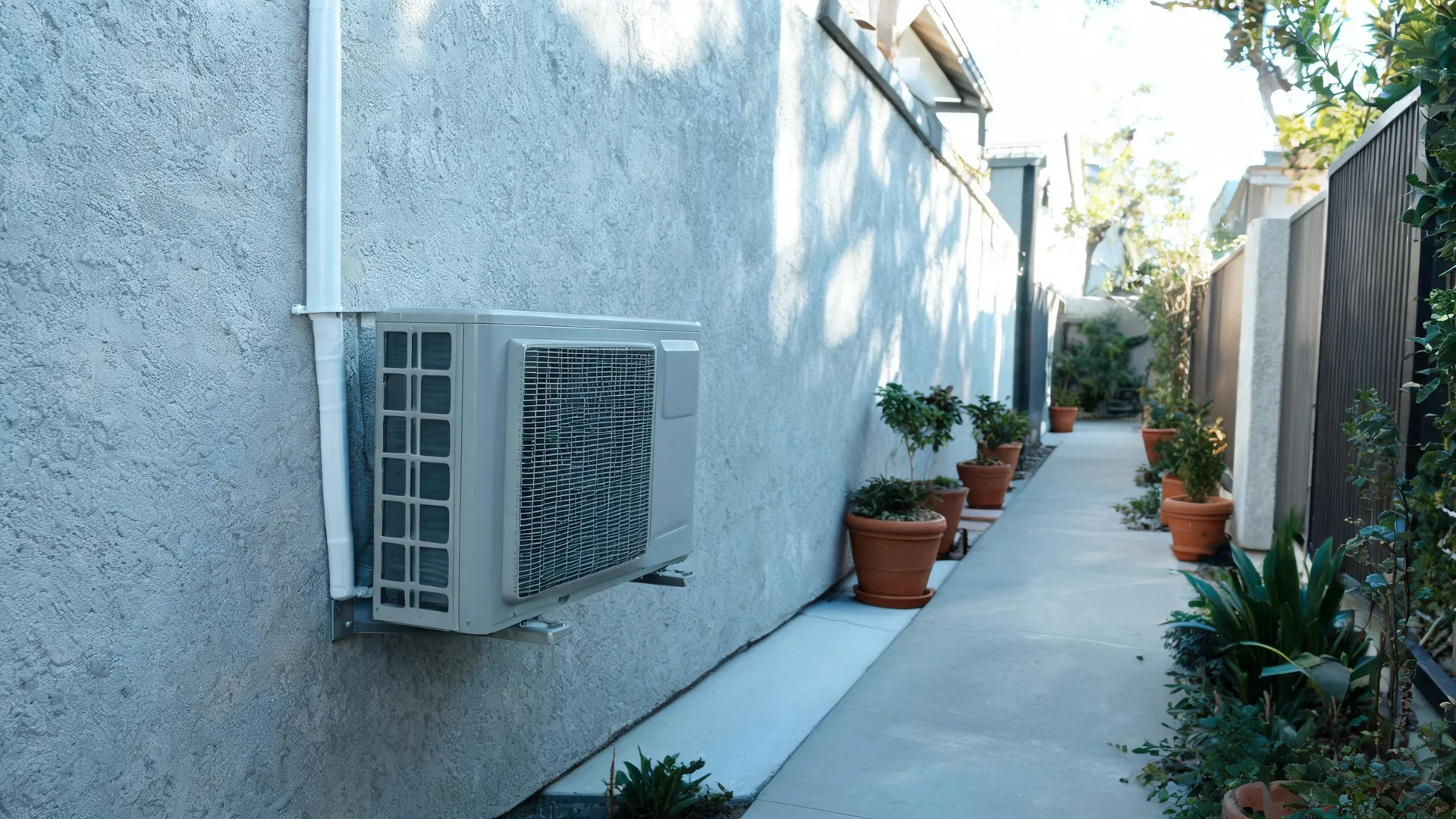
A white mini-split air conditioner outdoor condenser unit mounted on metal brackets against a beige stucco exterior wall, with a blue sky and scattered clouds in the background.

Sized for five months of 89 degree afternoons

Sizing a mini split means matching it to the square footage, the layout and how much sun the walls take, not picking the number that matches the room size on a chart. Too small and it runs flat out all summer without catching up. Too big and it cools the air fast without pulling the moisture out, so the room feels clammy even at the right temperature. A contractor works this out with a load calculation on your house, not a rule of thumb.

What happens to the old equipment

If a window unit or an electric baseboard is what's being replaced, it gets disconnected and hauled off. If the mini split is going in alongside the furnace, the furnace stays. It isn't being replaced, just relieved of some of the load it used to carry on its own.
What that means for the job

Removing an old unit is a small part of the work compared to running the line set and setting the new outdoor condenser. Most of the install time goes into the new system, not taking out the old one, so clearing it out ahead of time doesn't shorten the job much.

When you're comparing systems, ask how many indoor heads the outdoor condenser is rated to run. One condenser can support a single head or several, but every head added splits the total capacity between them, so a system meant to cover several rooms well will struggle if you load it up with more heads than it was sized for. Ask about the minimum and maximum operating range on the compressor too, not just the cooling output, since that tells you how the unit behaves on the hardest days of summer and winter rather than on a mild one. Ask what the warranty covers on the compressor versus the line set and the indoor head, since those often carry different terms, and a contractor should know the answer without looking it up. Ask who services the brand locally as well. A unit with a strong reputation but no nearby parts supply or trained techs turns a simple repair into a long wait.

The crew starts outside and in at the same time, running the line set through the wall before anything gets mounted. That hole through the wall is the one part of the job that can't be undone easily, so it gets measured and drilled before the indoor head or the outdoor condenser ever gets set in place. The line set carries refrigerant along with a drain line for condensation, so it has to run on a path that drains downhill the whole way. Once the lines are run, the outdoor condenser gets leveled on its pad or bracket and the indoor head gets mounted and connected. Then comes the part you can't see. The line set gets pulled down to a vacuum to clear out any moisture or air before the refrigerant is released into it. Skip that step and the system can run for a while before the trouble shows up, so a contractor checks the vacuum gauge rather than just trusting the clock.