Propane heats most homes here
Bottled, tank or LP gas heats 46.4% of occupied homes in Jackson County, more than any other fuel. Utility gas and electric heat make up most of the rest.
Takes about a minute. No obligation.
Bottled, tank or LP gas heats 46.4% of occupied homes in Jackson County, more than any other fuel. Utility gas and electric heat make up most of the rest.
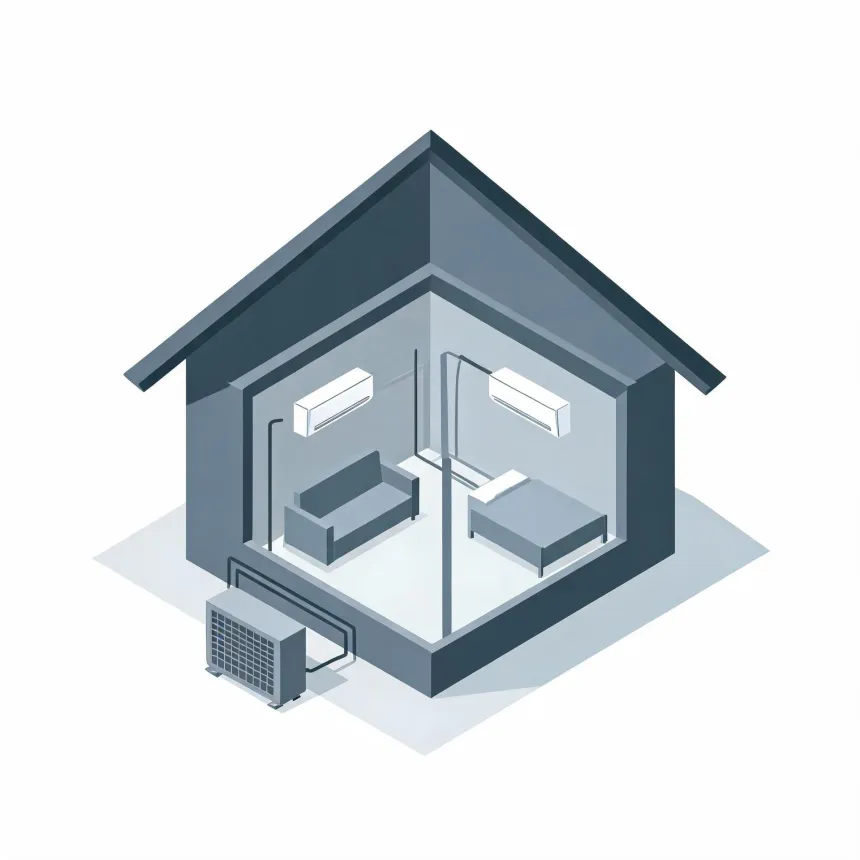
A mini split doesn't replace your furnace or propane tank. It adds cooling, or heat for the months your main system would otherwise have to work hardest, and runs on its own electric circuit.
NOAA nClimDiv, 1991–2020 normals
Cooling in Jackson County starts in June and runs through September.
May is the month to get a mini split installed, before the first warm week puts it to work.




Half the homes in Jackson County were built in 1976 or earlier, half in 1976 or later. That split doesn't call for anything special in a mini split. A standard single-zone or multi-zone system is sized off the room it's cooling or heating, not the age of the house. Older homes and newer ones both end up needing the same range of unit sizes once a contractor measures the space. If your home has unusual ductwork or wiring from when it was built, that's worth mentioning when you get quotes, but it changes the installation, not the equipment you need.
Replace it before the season starts, so it happens on your schedule, not in a hurry.
Find a contractor
The number on the label, SEER2 for cooling and HSPF2 for heating, tells you how much work the system gets out of the power it uses. A higher number means it's pulling less electricity to move the same amount of heat in or out of the room. That rating is measured over a full season, not a single hot afternoon, so it reflects how the system runs most of the time, at partial output, not just at its hardest moments. A mini split earns a high rating mostly because of the compressor. It isn't just on or off like older systems. It ramps up and down to match what the room actually needs, so it isn't running full blast when a lower speed would do. That matters more in a mini split than in a lot of other equipment because so much of its runtime is spent at partial load. The rating on the label is a lab number. What you actually get depends on the unit being sized right for the room and the installation being done right, especially the line set and the refrigerant charge. A correctly sized, well-installed standard system will run close to its rating for years with nothing more than regular filter cleaning and a yearly look at the outdoor unit.
A contractor works out the load by looking at the square footage, the ceiling height, how many windows face the sun, and what's on the other side of the walls. That calculation points to a specific unit size. Picking a bigger one because it sounds safer works against you here.
An oversized mini split cools the room fast, then shuts off before it's pulled the moisture out of the air. The room ends up cool and damp, and the compressor spends more time starting and stopping instead of running steady at a low speed, which is where it's most efficient.
The equipment on the spec sheet isn't what makes installations cost different amounts. The line set has to travel from the outdoor unit to the indoor head, and every wall it crosses is a hole that has to be cut, sealed and finished. A straight run through one wall is a different job than one that has to snake through an attic or drop down an exterior wall. Multi-zone systems multiply this. One outdoor unit feeding several indoor heads means a separate line set and a separate mounting spot for each zone, not just a bigger unit. The electrical side matters too. A mini split runs on its own dedicated circuit, and if the panel doesn't have room for one, that work has to happen before the system goes in. Ask a contractor to walk the path the lines will take and look at the panel before you compare quotes on unit size alone.
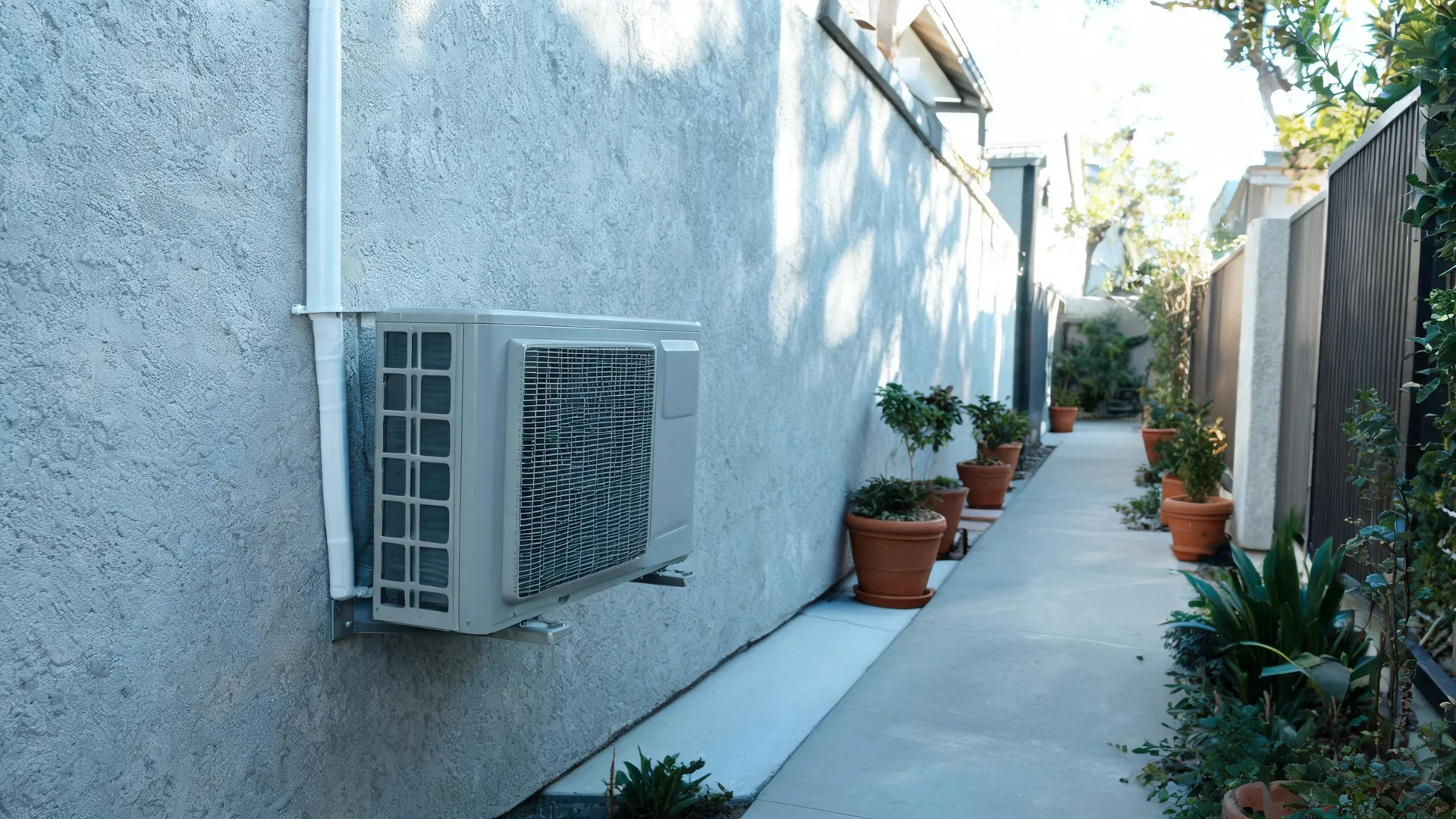
Installation day starts outside and in, at the same time. One crew member mounts the indoor head on its bracket while another sets the outdoor unit on its pad or brackets, usually against an exterior wall near where the line set will cross. The line set, the refrigerant lines, drain, and electrical, runs through a hole drilled through that wall, so the indoor and outdoor units are connected before either one is powered on. Once the lines are run and sealed, the system gets evacuated with a vacuum pump to pull out air and moisture, because either one left in the lines ruins the refrigerant charge. Only after that does the refrigerant go in, and the installer checks the charge against what the line length calls for rather than just filling it to a gauge reading. The last step is power and a test run in both heating and cooling, checking that the head is blowing where it should and that condensate is draining out instead of pooling.