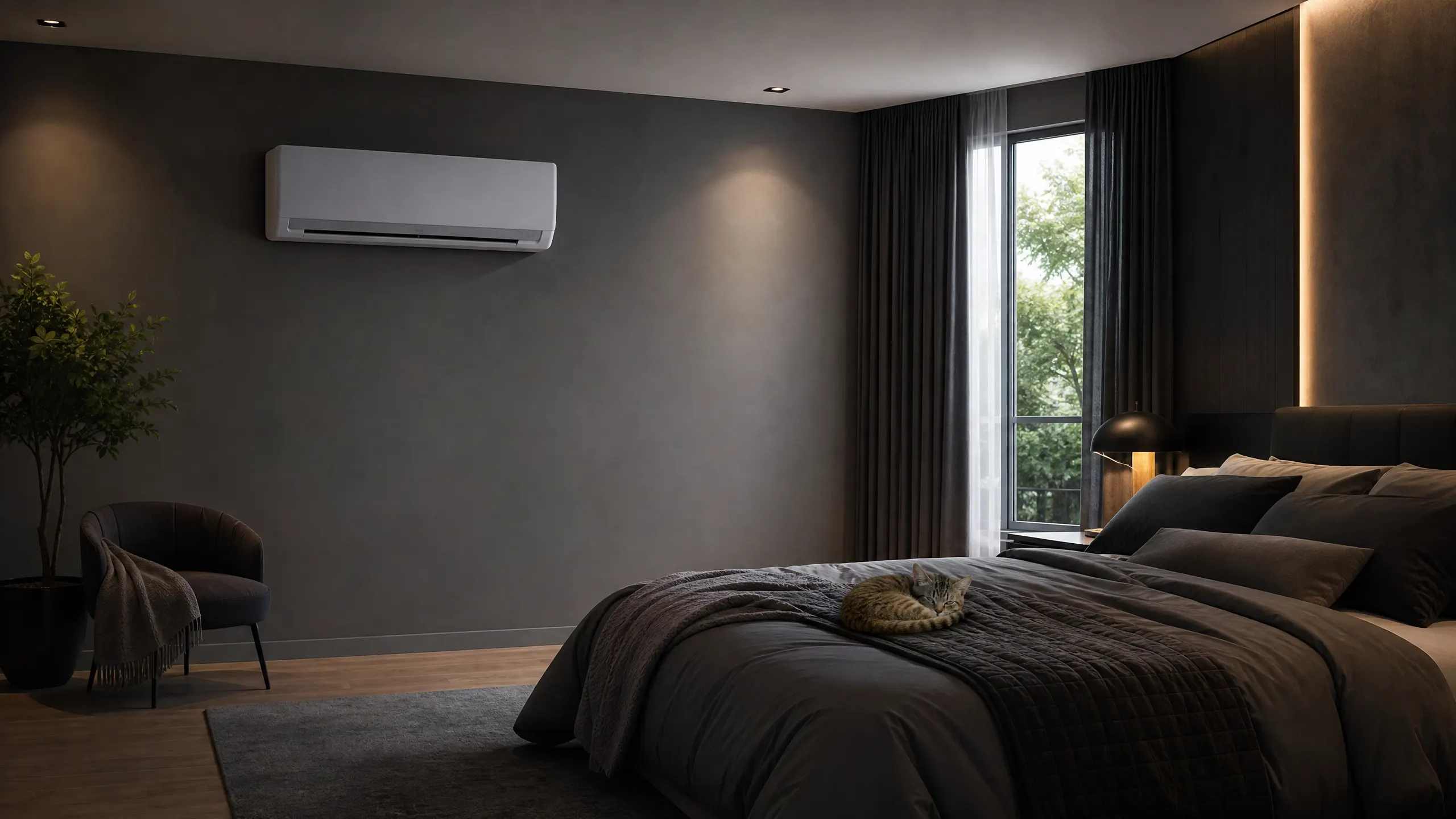





A tabby cat sleeps on a large bed in a dark, modern bedroom equipped with a wall-mounted air-conditioning unit.

Mini Split Installation in Hutchinson, KS

Tell us about the job

Takes about a minute. No obligation.

New system or replacementMini-splitReno County, KS
Step 1 of 2

What ZIP code is the job in?

Reno County saw 265 severe weather events between 2015 and 2024, with damaging wind behind most of them and hail close behind. A mini split's outdoor unit sits outside year round, so where it goes matters. Mounting it away from the roofline and clear of anything that can come loose in high wind gives it a better chance of staying out of harm's way. The county has also seen its share of tornadoes and winter storms with heavy snow and ice over that stretch. A lot of Kansas households lost power for a day or more last year, and a mini split won't run without it. If you want a way to keep heat through an outage, that's worth asking about before the system goes in, not after.

7 months
October through April, your system heats
5 months
May through September, it cools
23°F
the average winter night it heats against
90°F
the average summer afternoon it cools against
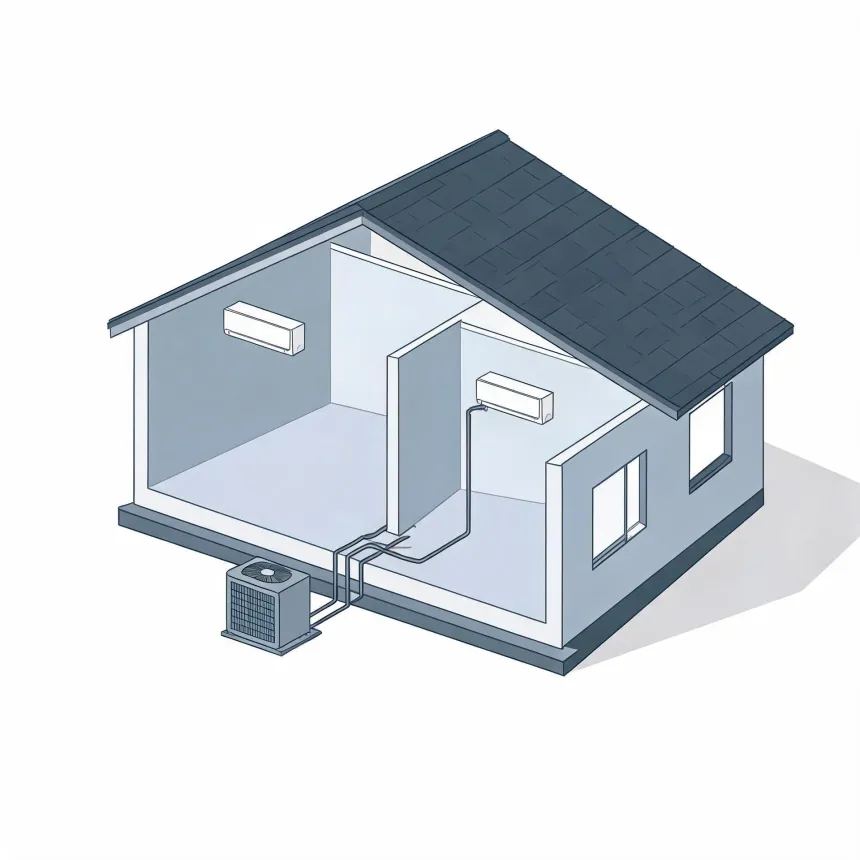
Isometric cutaway illustration of a small house with a dark shingled roof, showing two wall-mounted indoor units connected by lines running to an outdoor condenser unit beside the building.
Your system heats October through April and cools May through September.

NOAA nClimDiv, 1991–2020 normals

Half the homes in Reno County were built in 1962 or earlier.

A mini split going into a house that age has to be sized and placed for the rooms it actually has, not a standard layout.

Five months of summer, averaging 90°F, is what this system has to beat

Cooling runs May through September
Summer afternoons average 90°F
141 damaging wind events from 2015 to 2024
Built for Hutchinson homesGas heats most homes here. A mini split works alongside it instead of replacing it.

Electricity in Kansas ran 14.15 cents per kilowatthour in 2024, and a mini split's compressor is going to pull on that rate every time it cycles on. A system sized right for the rooms it's heating and cooling doesn't have to work as hard to hold the temperature, so it draws less. That matters more here than in a place with cheaper power, because the same inefficiency costs you more every single month. Ductless systems already avoid the losses that come with pushing air through ductwork, which is part of why they're worth the installation in the first place. Getting the sizing and placement right at the start is what decides whether that advantage shows up on your bill.

Get it in before May

Cooling starts in May here. Putting the mini split in during April means it's running on day one of the season instead of catching up once the heat's already on.

Find a contractor
A white outdoor air conditioner condenser unit mounted on metal wall brackets against gray horizontal siding, with a blue sky and white clouds behind it.

Decades running, not just years

The contractor sizing your unit should be measuring your rooms, not pulling a number off a chart built for newer construction. That matters most if your house went up in 1962 or earlier, which is true for half the homes in the county. Ask what the sizing is based on before you agree to a unit.

What comes out and what stays

If a mini split is going in alongside an existing furnace or boiler, that system stays put. A mini split is usually added capacity or a way to zone a room, not a swap. Where a mini split is replacing an older ductless system, the installer disconnects the refrigerant lines, pulls the indoor head off the wall, and takes the outdoor unit off its pad or wall bracket. The line set and mounting hardware usually come out too, since new equipment rarely reuses old lines.
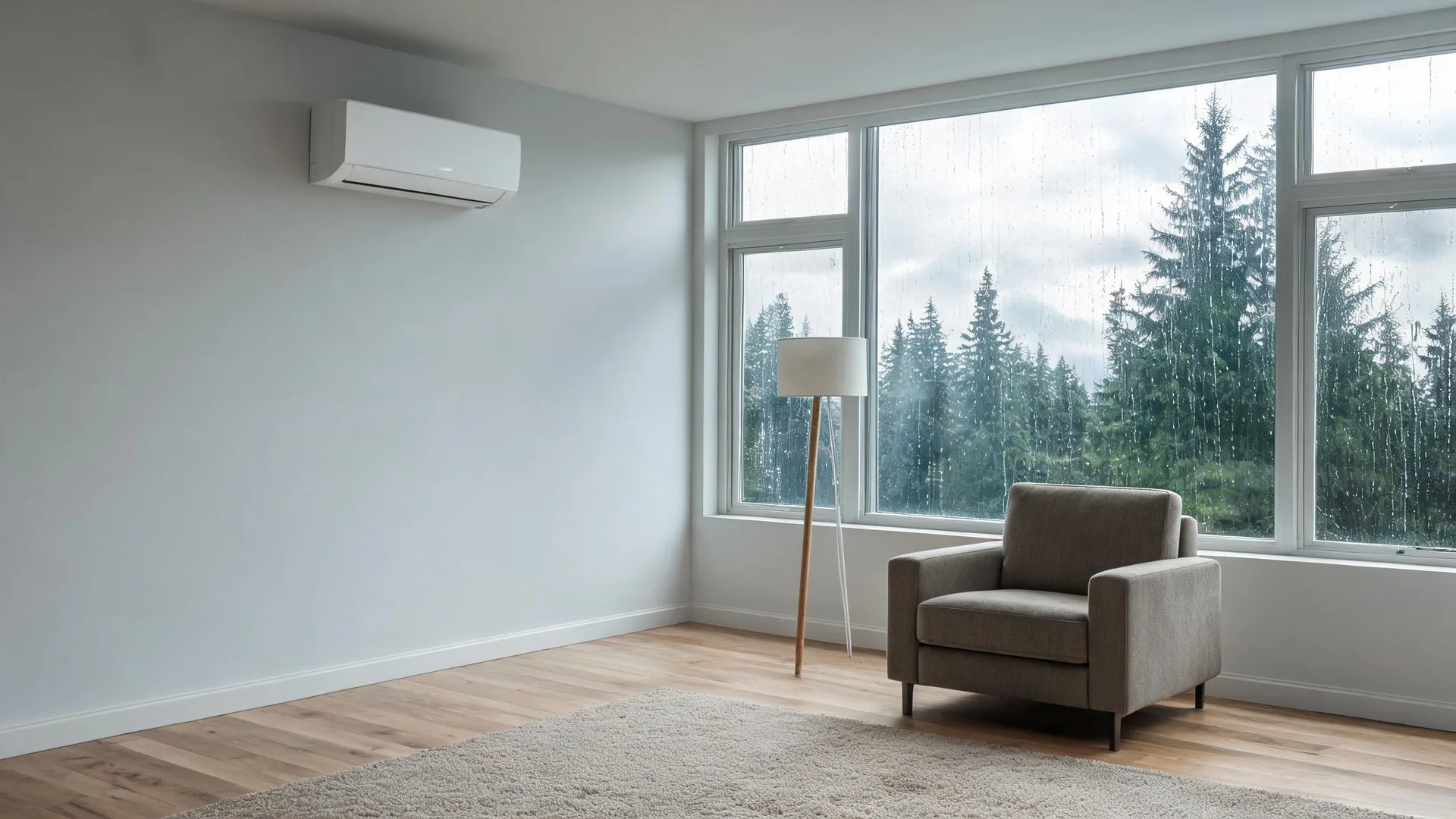
Refrigerant has to be recovered, not vented

A mini split's outdoor unit is full of refrigerant, and that can't just be released into the air. A contractor recovers it into a tank with certified equipment before any lines get disconnected. That step is required, and it's part of why removal isn't a quick unbolt job. It also means the old unit should be disposed of through someone who handles that properly, not set out with regular scrap.

Sizing a mini split comes down to the heat gain and heat loss of the room it's serving, not the square footage alone. A contractor doing it right works through window area, which direction the room faces, how much insulation is in the walls and attic above it, and the ceiling height, then runs those numbers to find the load. Guess too big and the unit short cycles, reaching the set temperature fast and shutting off before it's pulled the moisture out of the air, so the room feels clammy even when it's cool. Guess too small and it runs flat out on the hottest and coldest days and still can't keep up. Either mistake also wears the compressor harder over the long run, since it's cycling more or straining more than it was built to. The load calculation is what tells the installer which size head goes on the wall and whether one outdoor unit can carry more than one room or needs to stay dedicated to just one.

Install day starts with the lines, not the equipment. The indoor head and outdoor unit get mounted first, but nothing runs until the line set connecting them is in place, and that line set has to be pulled through a wall sleeve sized and sealed for it. Once the lines are connected, the system gets pressure tested to make sure every joint holds before any refrigerant moves through it. After that it's evacuated with a vacuum pump to pull out moisture and air, because either one left in the lines will cause problems down the road. Only then does the refrigerant get released to charge the system. The last part is dialing in the charge to match the line length and the manufacturer's spec, since too much or too little refrigerant will show up later as a system that won't hold its temperature right.