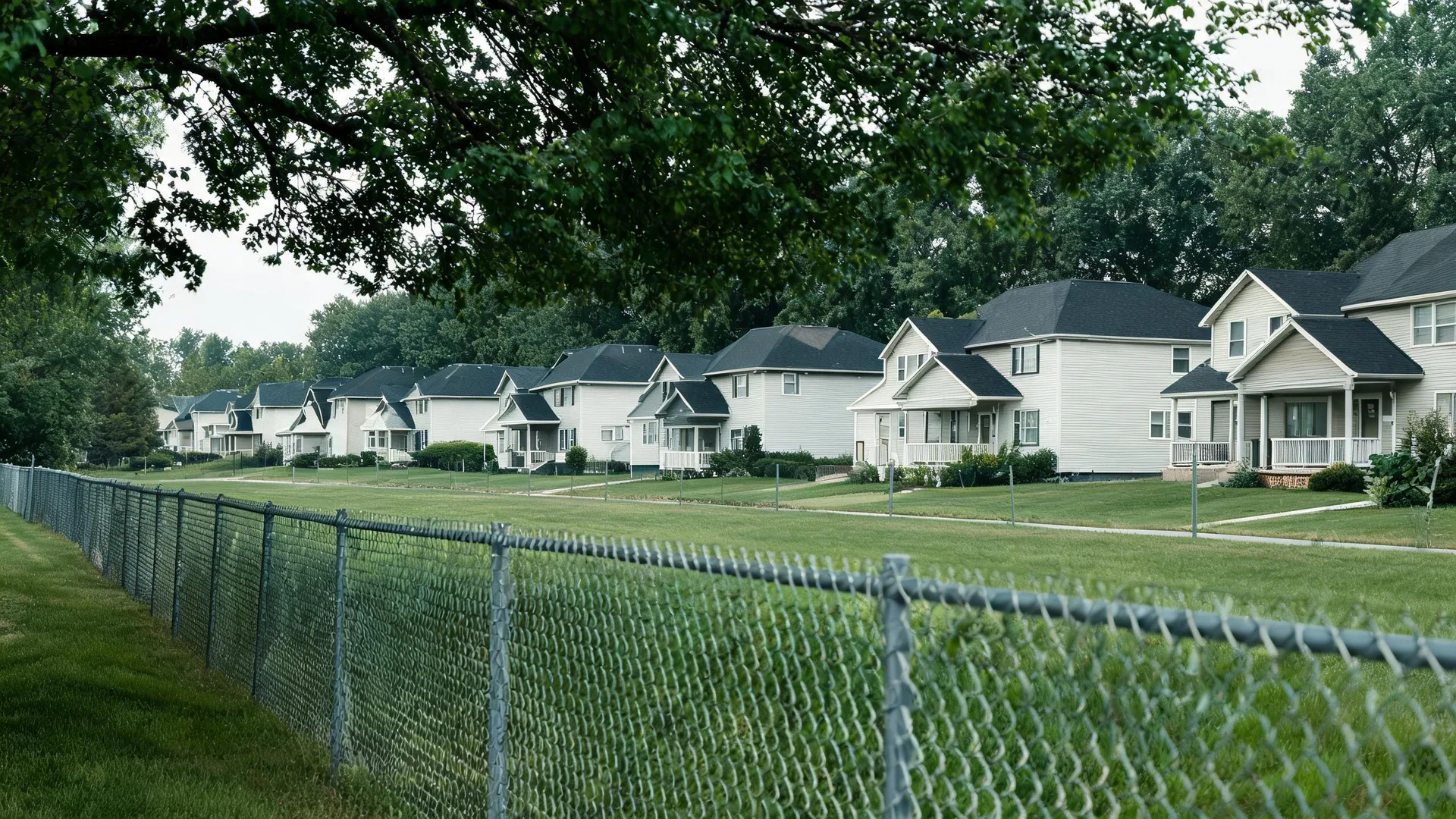






A chain-link fence runs along a mowed grass lawn in front of a row of similar white two-story houses with dark gabled roofs and porches, framed by leafy tree branches overhead.

Mini Split Installation in Iola, KS

Tell us about the job

Takes about a minute. No obligation.

New system or replacementMini-splitAllen County, KS
Step 1 of 2

What ZIP code is the job in?

Most homes in Allen County heat with utility gas, 58.2% of them. Electricity is a distant second at 27.4%, and another 10.9% run on bottled or LP gas. A mini split works differently from all of these. It doesn't burn anything and it doesn't rely on ductwork, it moves heat in and out of a room using refrigerant, the same way a window AC does but able to run in reverse for cold months. That makes it a common choice as an add-on, cooling or heating a room a gas furnace doesn't reach well, or as the whole system in a home with no ducts to begin with. Either way, it runs on electricity, so the gas line or propane tank already serving the house doesn't factor into the installation at all.

7 months
October through April, your system heats
5 months
May through September, it cools
25°F
the average winter night it heats against
88°F
the average summer afternoon it cools against
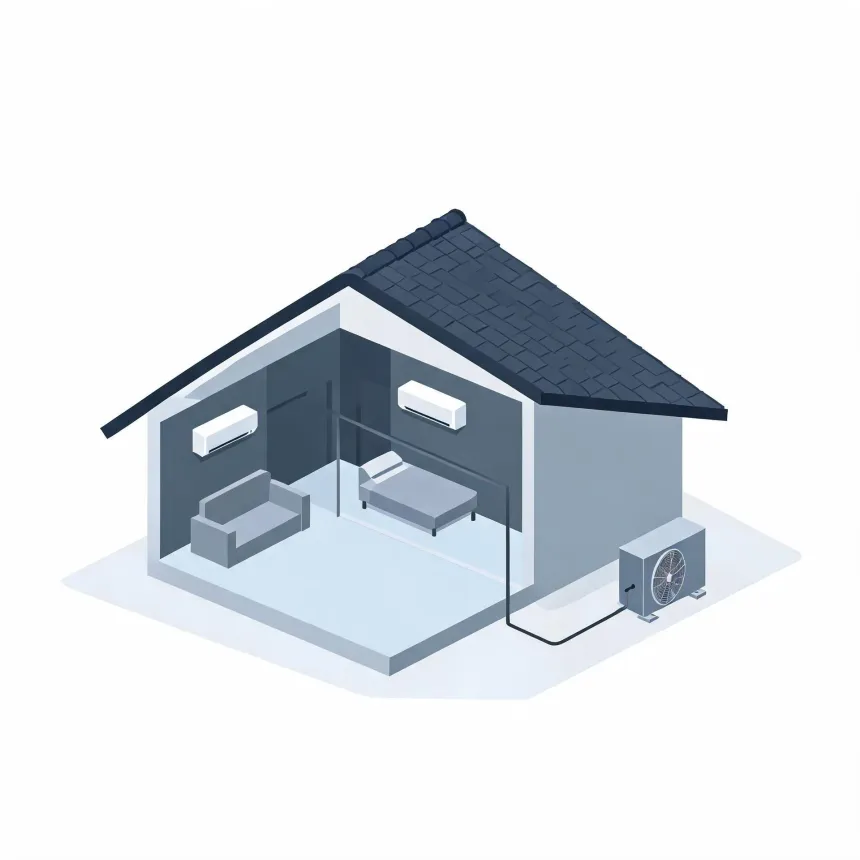
Isometric illustration of a cutaway house showing two wall-mounted indoor air conditioning units connected by a line to an outdoor condenser unit beside the building, with a sofa and bed inside.
Your system heats October through April and cools May through September.

NOAA nClimDiv, 1991–2020 normals

Half the homes in Allen County were built in 1965 or earlier.

A mini split going into a house that age has to match the rooms and walls it's actually heating and cooling, not a standard layout.

April is the month to have it in, before May's heat arrives

Cooling runs May through September
Summer afternoons average 88°F
47 hail events from 2015 to 2024
A standard size does the job hereElectricity here runs 14.15 cents per kilowatt-hour, so a mini split sized right for the room is what keeps the bill in line.

Allen County sits in climate zone 4A, which asks real work of both heating and cooling through the year. Any mini split installed here has to be a split system that meets 14.3 SEER2 for cooling and 7.5 HSPF2 for heating, the federal minimum for units built from 2023 on. That's the same standard a ducted heat pump has to meet, since the rule doesn't single out ductless systems as their own class. A contractor sizing a system for this county is choosing among models that already clear that bar, so the comparison comes down to how well a unit fits the room, not whether it meets the minimum.

Fit it to your house

If you're replacing a system in an older house, the new one has to fit the house you have.

Find a contractor
A man in a cap, blue long-sleeve shirt and tan pants climbs porch steps toward a red front door, carrying a canvas tool bag beside a red planter.
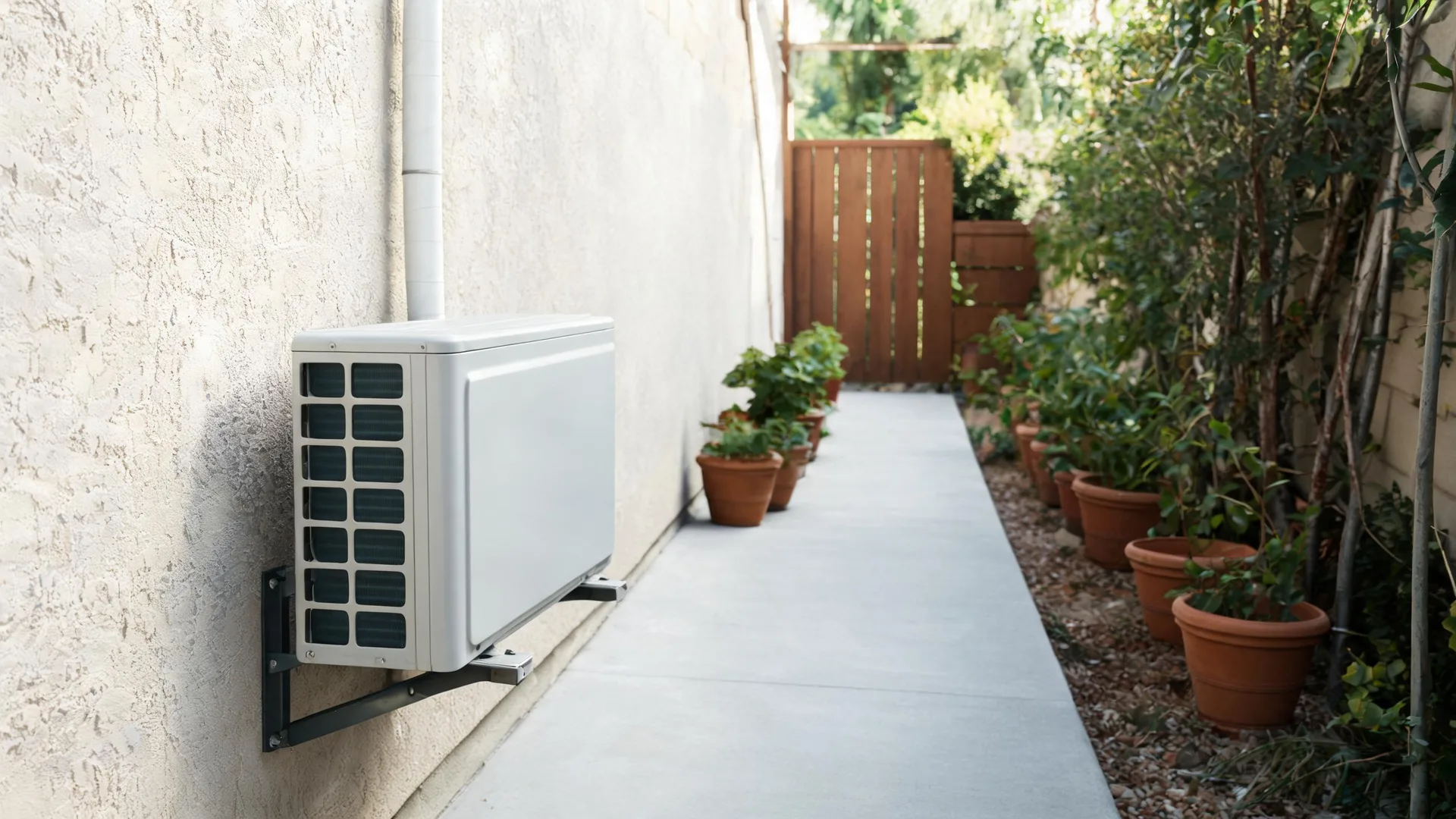
A white outdoor air conditioner condenser unit mounted on metal wall brackets against gray horizontal siding, with a blue sky and white clouds behind it.

Get a load calculation, not a guess

A contractor sizing the job should be measuring your actual rooms, wall by wall, not pricing off a floor plan that matches your square footage on paper. In a house built in 1965 or earlier, that means checking what each room is up against before settling on a unit and where the lines run.

Too big is its own problem

An oversized mini split cools the room fast and shuts off before it pulls the moisture out of the air. The room feels cold and clammy instead of comfortable, and the compressor is starting and stopping far more than a unit built to run longer, steadier cycles.
How a contractor sizes it

The load calculation weighs the room's square footage against its windows, insulation and exposure, then checks that against what each indoor unit and outdoor condenser is rated to handle. Window placement and which way a wall faces change the number as much as the size of the room does.

The install itself is what drives the cost, more than the equipment sitting in the truck. Every indoor head needs a line set run to the outdoor condenser, carrying refrigerant line, a condensate drain and electrical wiring, and that path matters. A straight shot through an exterior wall behind the unit costs less labor than a run that has to go up through an attic, across a chase, or down an exterior wall to reach where the condenser can sit. Multi-zone systems add another layer, since each indoor head needs its own line set back to a shared outdoor unit, and the more zones, the more runs. The condenser needs a pad or mount outside with clearance around it, and electrical work to bring power to both the indoor and outdoor units if the existing panel doesn't already have capacity for the new load. None of that shows up in the price of the equipment itself, but it's where a lot of the labor goes.

Install day starts outside and in at the same time. One contractor is mounting the indoor head on a wall bracket and checking it's level while the line set gets fished through the hole drilled behind it, straight through to the outdoor unit. That hole only gets drilled once the condenser's pad or mount is set and the crew knows exactly where the line needs to land. The refrigerant lines get connected at both ends, then the system gets pulled down to a vacuum to clear out any air and moisture before refrigerant ever flows through it. Skipping that step is how a brand new system ends up with a leak or a compressor problem months in. Once it holds vacuum, the lines get charged, the electrical hookup gets tied in, and the whole system runs through a cycle in both cooling and heating to check it's actually moving air where it should.