





A snow-covered small-town street at dusk, lined with illuminated two-story houses and a grain elevator on the horizon.

Mini Split Installation in Junction City, KS

Tell us about the job

Takes about a minute. No obligation.

New system or replacementMini-splitGeary County, KS
Step 1 of 2

What ZIP code is the job in?

Geary County saw 173 severe weather events between 2015 and 2024. Damaging wind caused 92 of those, hail came through 66 times, and 4 tornadoes touched down. An outdoor condenser sits outside year round, taking whatever hail and wind come through. Winter storms hit the county 11 times in that same stretch, and ice brings down power lines along with tree limbs. Statewide, almost one in five households went at least a full day without power in 2024. A mini split that's installed with that in mind holds up better and leaves you with fewer surprises when the weather turns.

7 months
October through April, your system heats
5 months
May through September, it cools
21°F
the average winter night it heats against
88°F
the average summer afternoon it cools against
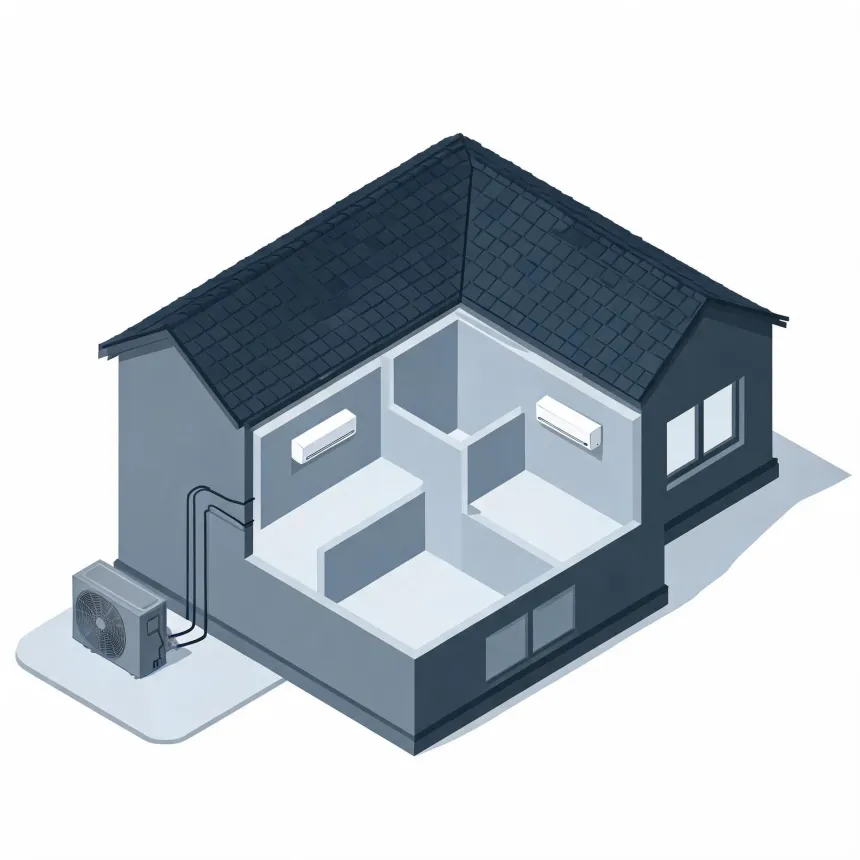
Isometric illustration of a cutaway single-story house with a dark shingled roof, showing two wall-mounted indoor air conditioning units connected by lines to an outdoor condenser unit on a pad beside the building.
Your system heats October through April and cools May through September.

NOAA nClimDiv, 1991–2020 normals

Cooling runs May through September here.

Installing before April closes out means your mini split is ready on day one, not mid heat wave.

Gas heats half the homes here, so a mini split usually joins a furnace instead of replacing it

50.2% of homes heat with gas
Cooling runs May through September
Summer afternoons average 88°F

Electricity here runs 15.19 cents per kilowatt-hour. A mini split earns that rate back by running on a fraction of what a window unit or electric resistance heat pulls for the same room. It moves heat instead of making it, so every kilowatt does more work in your house. That matters most on the days it runs longest, the stretch of summer that keeps the compressor going for hours at a time. Pick a unit sized right for the room it's heating and cooling, and the difference shows up on the bill every month, not just once.

Plan the installation around where power and weather can take it

Ask where the outdoor unit will sit and what will shield it, since it stays outside through hail and wind all year. Ask what the mini split does for you in an outage, since a good chunk of homes here lose power for a day or more at some point. Settling both before installation means you're not figuring it out after a storm already passed through.

Find a contractor
A man in a dark beanie, navy long-sleeve shirt and tan work pants climbs porch steps toward a red front door, carrying a waxed canvas tool bag in his right hand.
A beige split-system air conditioner outdoor condenser unit mounted on metal wall brackets atop a stucco wall.

Five months of long days, every year

Five months of cooling here means long runs, not just a handful of hot days. Afternoons in June, July and August average 88°F, and the dew point sits around 64°F, so the compressor is pulling moisture out of thick air for most of a season, not just fighting heat. That's steady work, day into night, for five months straight. A unit sized right for the space holds up under that load. One that's oversized or undersized works harder than it should, and the strain shows up early, in a capacitor or a coil that wears out before it ought to.

Ask what size the room actually needs

A mini split sized by square footage alone often comes out wrong. The right number comes from a load calculation that accounts for insulation, windows and ceiling height in that specific room. A unit too big short cycles, turning on and off before it pulls moisture out of the air, which leaves the room clammy even at the right temperature. A unit too small runs constantly and never quite catches up on the hottest or coldest days.
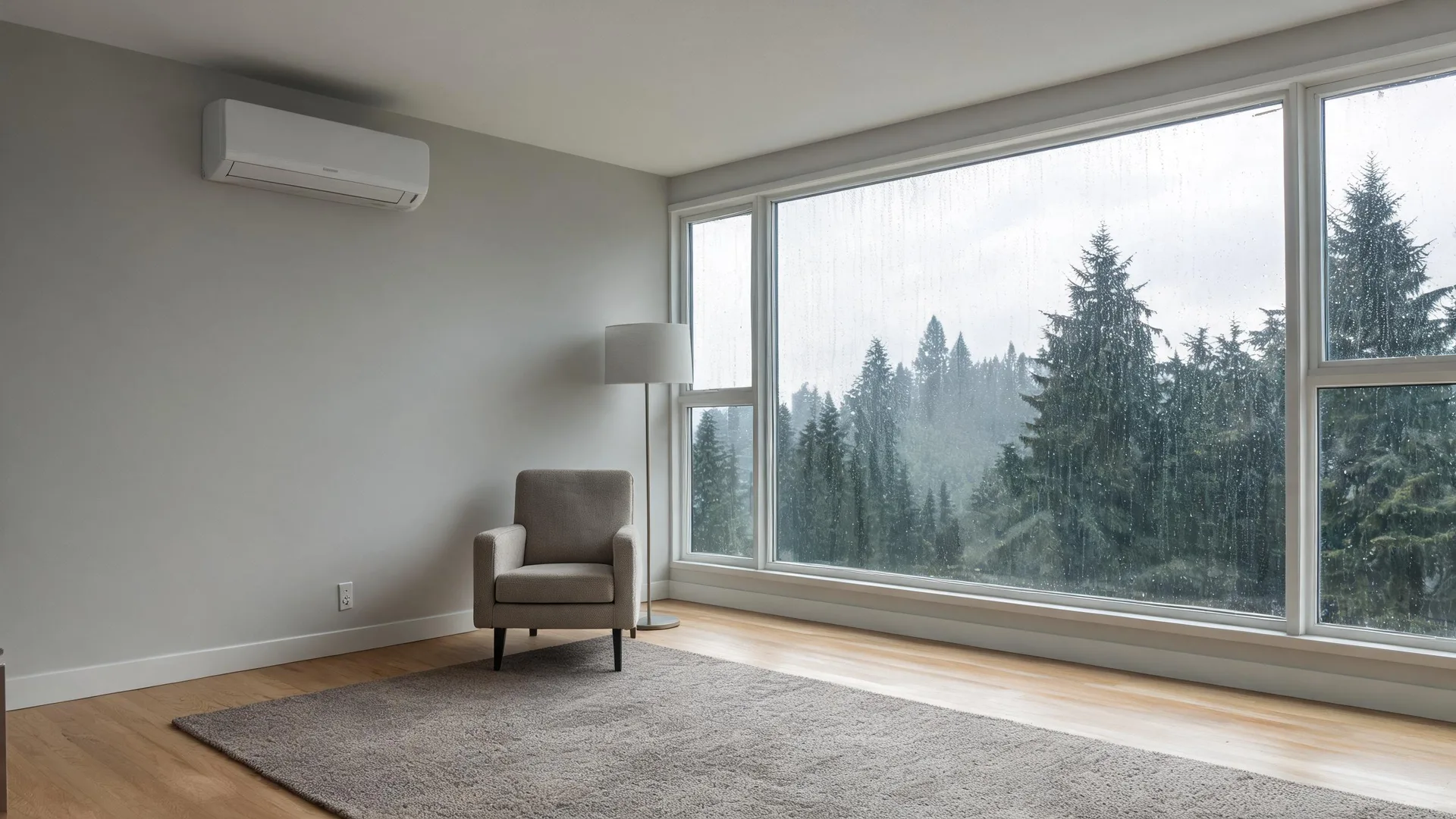
Ask how many zones the system supports

Some outdoor condensers run a single indoor head. Others split output across several heads in different rooms, each with its own thermostat. More zones on one condenser means lower cost per room, but it also means if that condenser fails, every zone tied to it goes down at once. A single zone per condenser costs more upfront but keeps one failure from taking out heat or cooling everywhere.

Sizing a mini split starts with a load calculation, not a tape measure. A contractor works out how much heat the room gains in summer and loses in winter, based on the windows, the insulation, the ceiling height and which way the room faces. Square footage alone leaves out all of that, which is how so many systems end up wrong. Too big, and the compressor short cycles, shutting off before it finishes pulling moisture out of the air, so the room feels cool but clammy. Too small, and it runs flat out without ever catching up on the hardest days of the year. The right size runs long steady cycles instead of starting and stopping, and that's what keeps the compressor and the coil from wearing out before their time.

Geary County falls in climate zone 4A, a mixed zone under the 2021 energy code that demands real work from both heating and cooling. Any split-system heat pump manufactured from January 1, 2023 onward has to meet a federal floor in that zone: at least 14.3 Btu of cooling for every watt-hour it draws over the summer, and at least 7.5 Btu of heating for every watt-hour over the winter. A ductless mini-split counts as a split system under that standard, so it has to clear the same bar as any other heat pump sold here. That rules out the lowest-efficiency units on the market before you even get to picking a size. A federal tax credit is available for qualifying equipment, on top of whatever that efficiency saves on the bill.