A snow-covered suburban street at dusk with lit houses and bare trees under a twilight sky.

Mini Split Installation in Liberal, KS

Tell us about the job

Takes about a minute. No obligation.

New system or replacementMini-splitSeward County, KS
Step 1 of 2

What ZIP code is the job in?

Weather here does real damage

Seward County logged 215 severe weather events between 2015 and 2024, including 126 damaging wind events, 70 hail events and 6 tornadoes. An outdoor mini-split unit sits exposed to all of it, unlike a furnace tucked inside.

Outages last longer than people expect

Almost one in five Kansas households went at least a full day without power in 2024. A mini-split won't heat or cool through that, and if it's your only source of heat, that gap matters more than it would with a backup system in place.

7 months
October through April, your system heats
5 months
May through September, it cools
22°F
the average winter night it heats against
91°F
the average summer afternoon it cools against
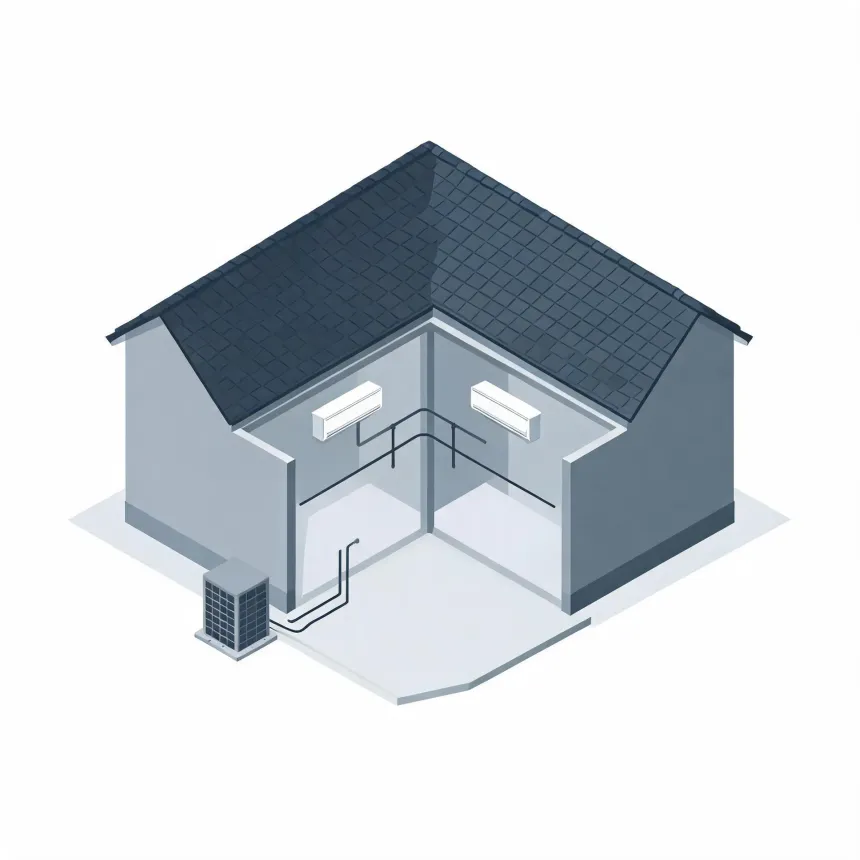
Isometric illustration of a cutaway gray house with a dark shingled roof, showing two wall-mounted indoor air conditioning units connected by piping to an outdoor condenser unit on the ground outside.
Your system heats October through April and cools May through September.

NOAA nClimDiv, 1991–2020 normals

Gas heats three out of four homes in Seward County.

Most mini-split installs here add cooling or shoulder-season heat alongside a gas furnace, not a system to replace it.

Half these homes predate modern wiring and insulation standards, and the install has to work with what's there

Half the homes here were built by 1973
Climate zone 4A
Power here costs 15.33 cents per kilowatt-hour
Five months of 91 degree afternoons, every yearSeward County homes run cooling May through September, with June, July and August averaging a 91°F high

Seward County falls under zone 4A in the 2021 energy code, a mixed climate that asks real work of both the heating and cooling side. Any split-system heat pump sold new here, ductless units included, has to meet the federal minimum tied to that standard: at least 14.3 SEER2 for cooling and 7.5 HSPF2 for heating, if it was built on or after January 1, 2023. That rules out the low-end units that might pass in a milder zone. It also means the efficiency rating on the unit isn't a marketing number. It's the floor the equipment has to clear before it can legally go in.

Plan where the outdoor unit goes before it goes in

Where the outdoor unit goes is part of the install, not an afterthought. A spot with some cover from wind and falling debris holds up better than one left wide open to both. If this mini-split is adding cooling or shoulder-season heat alongside your gas furnace, ask the installer where that outdoor unit will sit before anything gets mounted.

Find a contractor
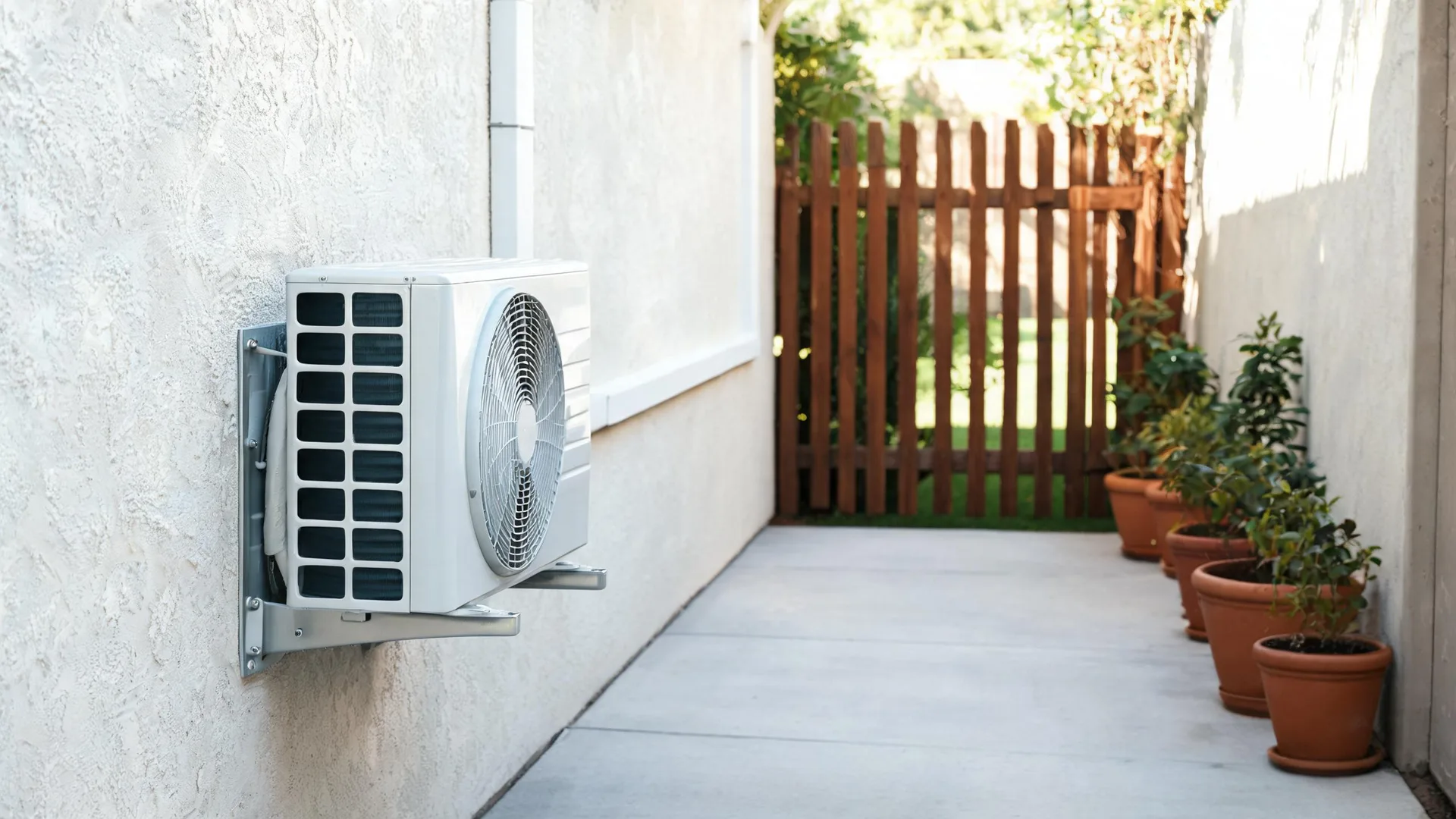
A white outdoor air conditioner condenser unit mounted on metal wall brackets against gray horizontal siding, with a blue sky and white clouds behind it.

Get it in before the season starts

Cooling runs May through September here. April is the month before it starts, and that makes it the month to get a mini-split installed. Put it in while the weather is still mild and the install gets done without anyone waiting on it to work. Wait until the heat is already on and you're scheduling around whatever slot is left, with the house uncomfortable in the meantime. Winter here is no easier on outdoor equipment, with overnight lows averaging 22°F across December, January and February. An install done in April gives the unit a full season to settle before that cold sets in.

The old unit doesn't just get unplugged

A window unit or old split system gets disconnected, and the refrigerant inside has to be recovered first. It's against the law to vent it into the air, so whoever pulls the old equipment needs the gear to capture it. Any line set staying in place gets checked over before new equipment ties into it, since old refrigerant oil or debris left behind can damage a new compressor fast.

What's worth keeping and what isn't

A line set in good shape can sometimes be reused if it matches what the new system needs, but older line sets are often the wrong diameter for a new unit and have to come out. The electrical disconnect and circuit feeding the old unit usually need a look too. A new mini-split may draw different power than what was there before, so that wiring isn't always a straight swap.

Sizing a mini-split isn't a matter of picking a bigger unit to be safe. Too large and it cools the room fast, shuts off, and leaves the air clammy because it never ran long enough to pull moisture out. Too small and it runs constantly, struggling to hold the temperature on the hottest or coldest days, and wearing itself out in the process. The right size comes from a load calculation, a room by room look at square footage, window area, insulation, ceiling height and what direction the walls face. A contractor doing this right measures the space rather than matching whatever size the old equipment happened to be. Equipment sized to the actual load runs longer, steadier cycles, and that's what keeps both temperature and humidity even through the room.

The outdoor unit on a mini-split sits outside, exposed, year-round, and Seward County doesn't go easy on anything left out in it. Wind hit hard enough to do damage 126 times between 2015 and 2024. Hail came down 70 times in that same stretch. None of that touches a furnace tucked inside a closet, but it's a direct hit on a compressor bolted to an outside wall. Sizing matters more here, not less, because a unit already working a full five months of summer has less room to absorb damage or run inefficiently afterward. Pay for the install quality and the mounting, not just the lowest number on the quote.