Storms come through often
Riley County logged 187 severe weather events between 2015 and 2024, including 88 damaging wind events, 78 hail events, and 7 tornadoes. Winter storms with heavy snow and ice hit the county 14 times in that same stretch.
Takes about a minute. No obligation.
Riley County logged 187 severe weather events between 2015 and 2024, including 88 damaging wind events, 78 hail events, and 7 tornadoes. Winter storms with heavy snow and ice hit the county 14 times in that same stretch.
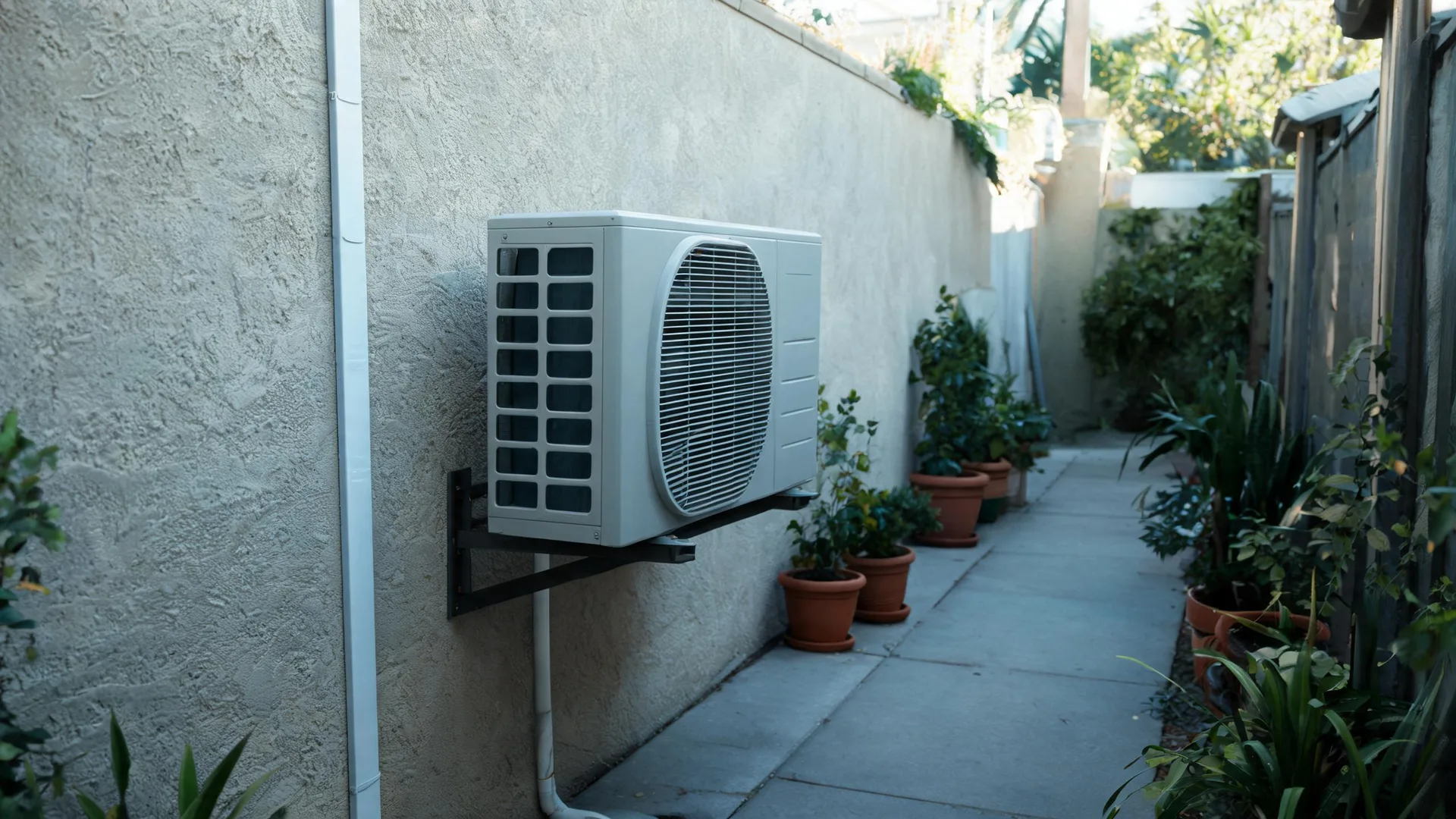
Nearly one in five Kansas households went at least 24 hours without power in 2024. An outdoor condenser sitting through hail and wind, and a system that has to come back on its own once power returns, are both things worth asking about before you pick a unit.
NOAA nClimDiv, 1991–2020 normals
Gas heats half the homes in Riley County.
A mini-split here usually works alongside that furnace, not instead of it.



Cooling runs June through September here, which makes May the month to get a mini-split installed. Done before the heat sets in, the contractor has room to size the system right and schedule the work without rushing it. Wait until the first hot week and you're taking whatever appointment is left. There's a winter side to this too. Overnight lows average 21°F across December, January and February, and a mini-split's heating side needs to be matched and set up to handle that alongside the furnace. Spring gives the contractor time to get both sides right before either one gets tested.
Where the outdoor unit goes and how it's protected from wind and hail is part of installing it, not something to settle later. Same with how the system behaves when the power comes back on. Get that worked out at install, while it's a planning question instead of an emergency one.
Find a contractor
Four months of running nearly every afternoon adds up over the years this unit sits outside. Ask the contractor about a unit built to handle that kind of duty cycle, not the cheapest one that technically fits the space. The install matters as much as the equipment. A properly sized line set, a condenser mounted where wind and hail can't get at it easily, and a system set up right from the start all make the difference between a unit that holds up and one that's calling for repairs by its third summer.
Taking out a window unit or a baseboard system means capping or removing whatever it used, patching the wall or the opening it sat in, and in some cases dealing with refrigerant that has to be recovered properly rather than vented. A contractor sizing the new mini-split needs to know what's coming out before deciding what goes in.
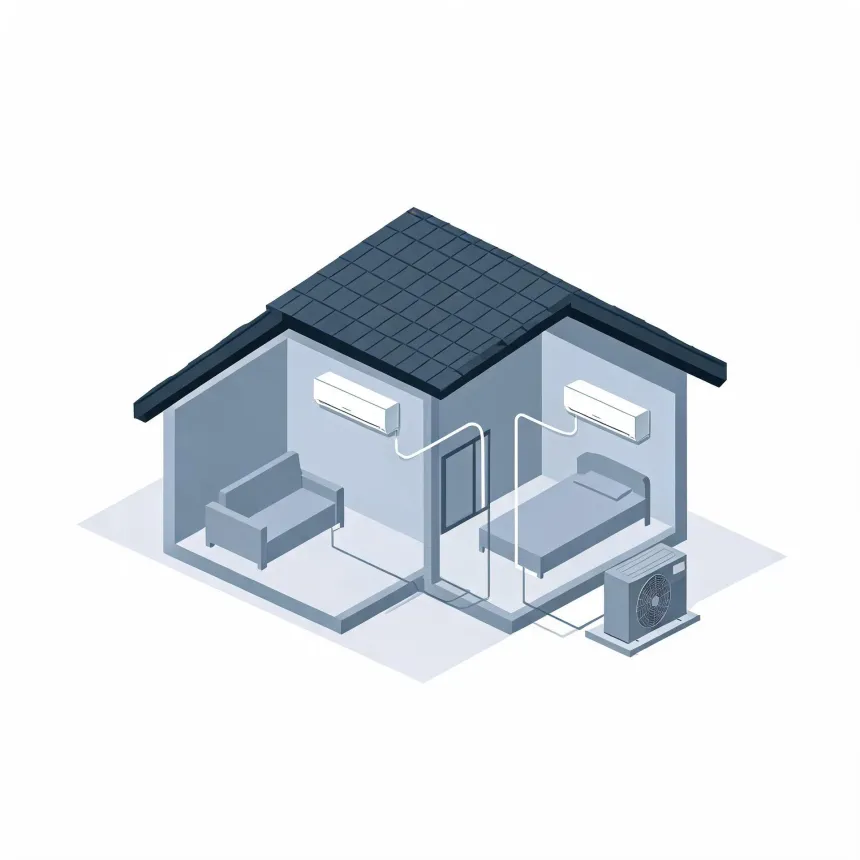
A mini-split is rarely a straight swap for the whole heating system. Most installs leave the existing furnace in place and bring the mini-split in as a second source, so the two need to be set up to work together rather than fight each other for the same room.
A mini-split's price comes down to what the job takes, not just the unit on the wall. The line set has to run from the outdoor condenser to each indoor head, and a longer run or one that goes through brick, siding, or more than one floor takes more time and material than a short straight shot. Every indoor head needs its own power and its own line, so a system with more zones costs more to put in than a single head cooling one room. The outdoor unit needs a pad or mount, and where it sits, how far from the electrical panel, whether the wall framing cooperates, all change how much work goes into getting it there. Matching the system's capacity to the space matters too. A unit sized wrong either runs constantly trying to keep up or short cycles and wears out early, and either way the homeowner ends up paying for it twice.
Riley County falls in climate zone 4A, which asks real work of both heating and cooling, and that shapes what can legally go on the wall. Any mini-split installed new has to meet the federal minimum for a split-system heat pump: at least 14.3 Btu of cooling for every watt-hour it uses over the summer, and at least 7.5 Btu of heat for every watt-hour over the winter. That standard applies to units built from January 2023 on, and it doesn't carve out an exception for ductless systems. A federal tax credit is available for qualifying equipment, which is worth asking the contractor about when comparing units. The efficiency floor narrows the field before price or brand ever comes into it.