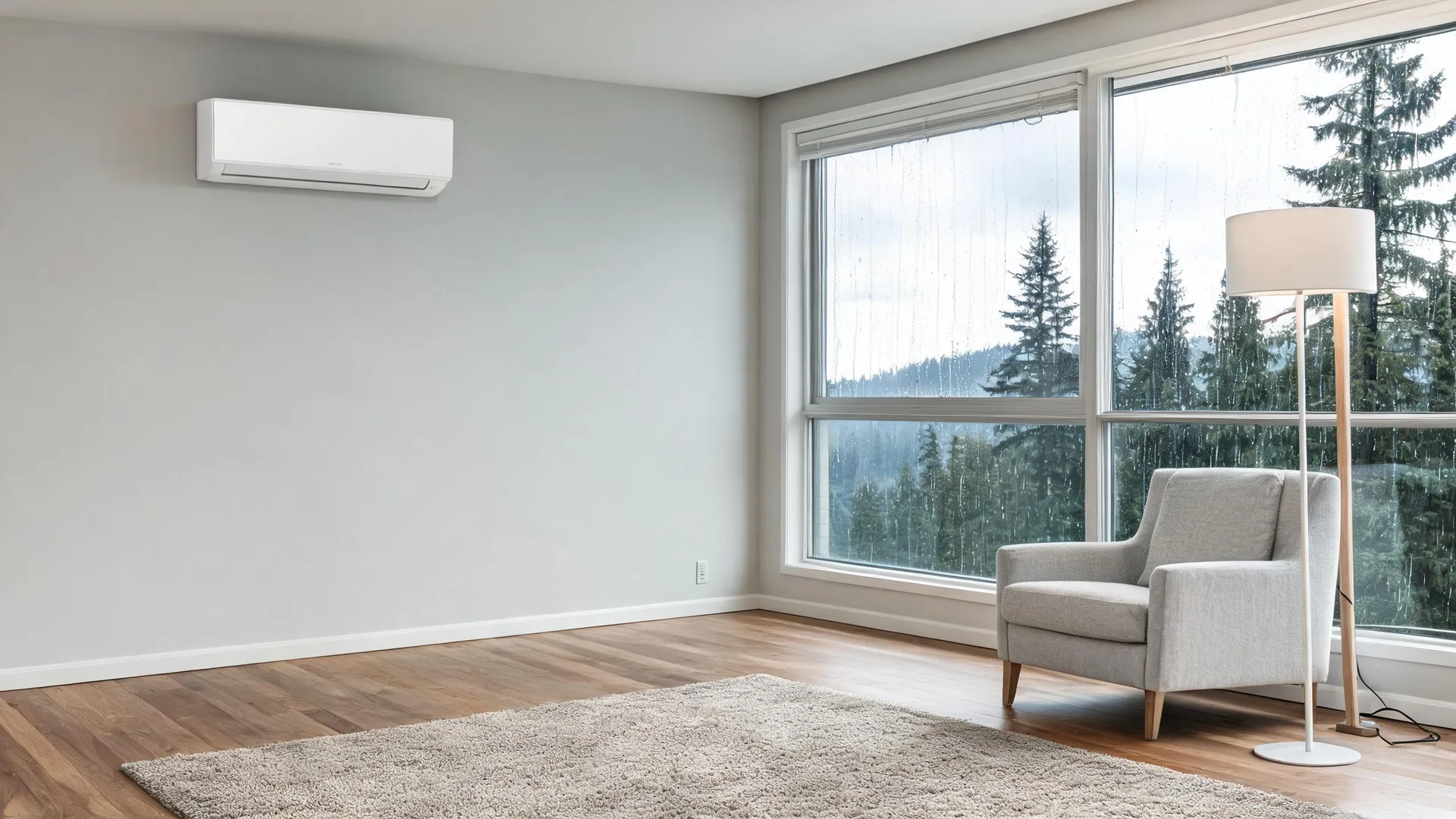
Weather here takes its toll
Marshall County recorded 172 severe weather events between 2015 and 2024, including 83 damaging wind events, 68 hail events, and 10 tornadoes. Winter storms with heavy snow and ice hit the county 11 times in that span.
Takes about a minute. No obligation.
Marshall County recorded 172 severe weather events between 2015 and 2024, including 83 damaging wind events, 68 hail events, and 10 tornadoes. Winter storms with heavy snow and ice hit the county 11 times in that span.
Nearly one in five Kansas households went at least 24 hours without power in 2024. A mini-split's outdoor unit sits exposed to wind and hail, and when the power goes, both your heat and your hot water can go with it.
NOAA nClimDiv, 1991–2020 normals
Half the homes in Marshall County were built in 1959 or earlier.
A mini-split going into a house that old has to work with the walls and layout already there, not a blank slate.




Marshall County falls in climate zone 4A, a zone that asks real work of both sides of a mini-split, the heating and the cooling. Any split-system heat pump sold new here, ductless units included, has to clear a federal efficiency floor: at least 14.3 SEER2 for cooling and 7.5 HSPF2 for heating, if it was built from 2023 on. That's not a target a contractor aims for. It's the minimum a unit has to meet before it can go in the box. A federal tax credit is available on top of that for equipment that qualifies, which is worth asking about when you're comparing systems.
Ask about where the outdoor unit will sit and what will shield it from wind and hail. If the power goes out, a mini-split heat pump stops like anything else electric, so talk through how you will cover heat and hot water until it comes back on.
Find a contractor
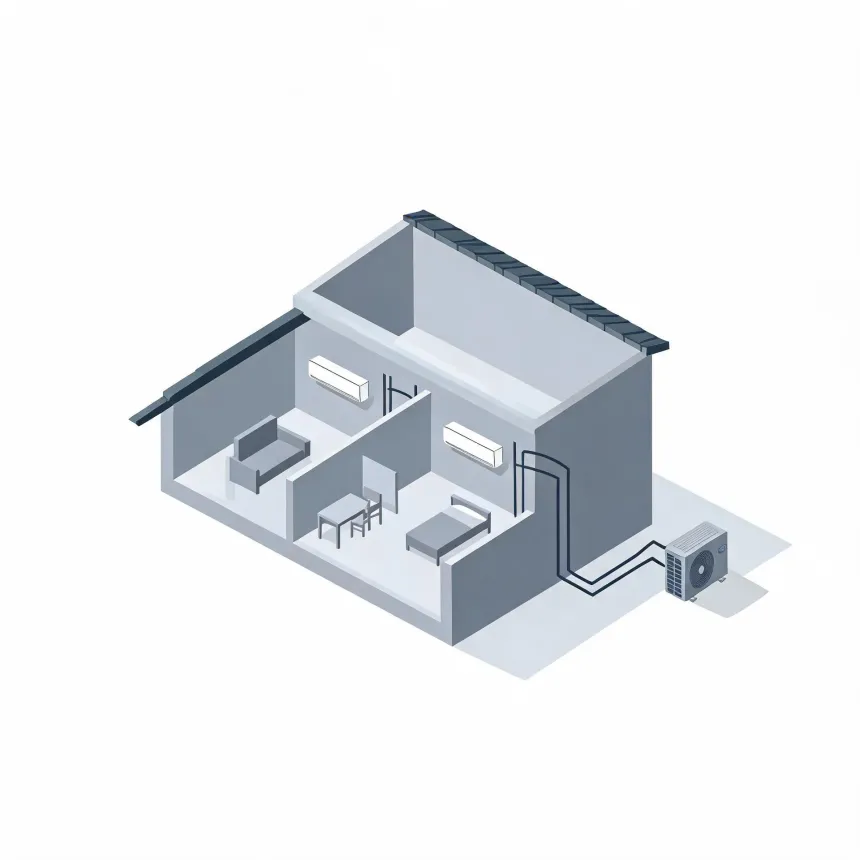
Before anyone mounts a line set or cuts a hole for one, get a look at how the house is built. Homes from 1959 and earlier weren't framed with a mini-split in mind, and running the line set from the outdoor unit to each indoor head has to work with the walls and the layout you've got. Where the indoor heads go matters too, since each one heats and cools the room it's in and nothing further. An installer who walks the house before quoting the job is the one who gets this part right.
A mini-split head only heats and cools the room it's in, so the sizing math has to be done for each room separately, not for the house as a whole. A contractor works out the heat loss and heat gain for every room getting a head: the square footage, how many windows it has, which way it faces, how well it's insulated. Add up the wrong numbers and you don't get one system that's a little off. You get some rooms that never feel right no matter how long the system runs.
An oversized head cools a room fast and then shuts off before it pulls the moisture out of the air, so the room feels cold and damp instead of comfortable. It also cycles on and off more, which wears the compressor harder over the life of the system. Undersized has its own problem: the system runs constantly and still can't keep up on the hottest or coldest days. The right size is the one that runs long steady cycles and holds the room there, not the biggest unit that fits on the wall.
Comparing systems comes down to a handful of questions that aren't about price. Ask what the minimum operating temperature is for heating, since not every heat pump keeps producing heat once it gets cold enough outside, and some lean on backup heat strips much sooner than others. Ask how many indoor heads the outdoor unit can run and whether it's rated to run them all at once, at full output, not just on paper. Ask what happens to the warranty if someone other than a licensed installer services the line set later on. Ask about sound, both the outdoor unit and the indoor head, since the number on a spec sheet doesn't always match what you hear standing in the room. And ask what the manufacturer actually covers on the compressor versus the rest of the parts, because that's usually the one that fails last and costs the most.
Installation day starts with the line set, not the equipment. A technician runs refrigerant lines and electrical wiring from the outdoor unit to each indoor head, usually through a hole drilled where the wall backs up to the outside. Each indoor head gets mounted to a bracket, leveled, and connected before anything gets charged with refrigerant. Once the lines are run and sealed, the system gets pressure tested to make sure there are no leaks, then evacuated to pull out any air and moisture before refrigerant goes in. The outdoor unit gets set on a pad or bracket with space around it for airflow. Last comes the startup: checking refrigerant charge, confirming each head is calling for heat or cooling correctly, and walking through the thermostat or remote with whoever's going to be using it.