McPherson County sees real storm damage
McPherson County recorded 221 severe weather events between 2015 and 2024. That includes 115 damaging wind events, 90 hail events, a tornado, and 15 winter storms with heavy snow or ice.
Takes about a minute. No obligation.
McPherson County recorded 221 severe weather events between 2015 and 2024. That includes 115 damaging wind events, 90 hail events, a tornado, and 15 winter storms with heavy snow or ice.
Close to one in five Kansas households went at least a full day without power in 2024. An outdoor mini-split unit sits exposed to wind and hail, and any outage takes your heat or your hot water with it.
NOAA nClimDiv, 1991–2020 normals
Electricity in McPherson County runs about 11.51 cents a kilowatt-hour, cheaper than most of the country.
A mini-split still has to earn its keep through fit and reliability here, not through shaving pennies off the power bill.


McPherson County falls under zone 4A in the 2021 energy code, a mixed climate that works both the heating and cooling side of a system hard over the year. Any mini-split installed here has to be built for that. Under the federal standard, split-system heat pumps manufactured from January 1, 2023 onward have to deliver at least 14.3 Btu of cooling for every watt-hour they draw, and at least 7.5 Btu of heat the same way. That floor applies to ductless systems too, since the standard treats them as split systems rather than a category of their own. A unit meeting that minimum qualifies for the federal tax credit on heat pump installations. Anything below it simply isn't sold new anymore, so the real choice is how far above the minimum to go.
Pick a spot for the outdoor unit that keeps it clear of falling branches and roof runoff, and ask about a surge protector and a cover for hail. Ask too what the indoor head does when the power comes back on, since a mini-split can't run through an outage even with gas heat backing it up elsewhere in the house.
Find a contractorFive months of cooling, May through September, with afternoon highs averaging 90°F through June, July and August. That's long enough and hot enough that a mini-split here doesn't get much downtime once summer starts. The dew point sits around 63°F across those same months, so the air stays heavy and the system has to pull moisture out along with heat, not just drop the temperature a few degrees. The outdoor unit runs through all of that with nowhere to hide from it, and the wind and hail this county sees adds its own wear on top. A system built for a calmer climate shows the strain here sooner.
A mini-split draws a specific amount of startup current, and that number decides whether a portable or standby generator can carry it alongside a furnace blower or a well pump. Ask the installer for that startup draw in writing, and ask whether the compressor has a soft-start feature built in. Without one, an undersized generator can trip its breaker trying to start the compressor even if it could run it fine once spinning.
The outdoor unit can sit on a ground pad, a wall bracket, or a roof mount, and each one handles wind and falling debris differently. A wall-mounted unit sits higher off the ground and clear of drifting snow, but it also catches more direct wind. Ask what mounting hardware comes with the system and whether a hail guard or storm cover is available for the coil, since a bent coil fin or a cracked fan blade can take the whole unit down until it's repaired.
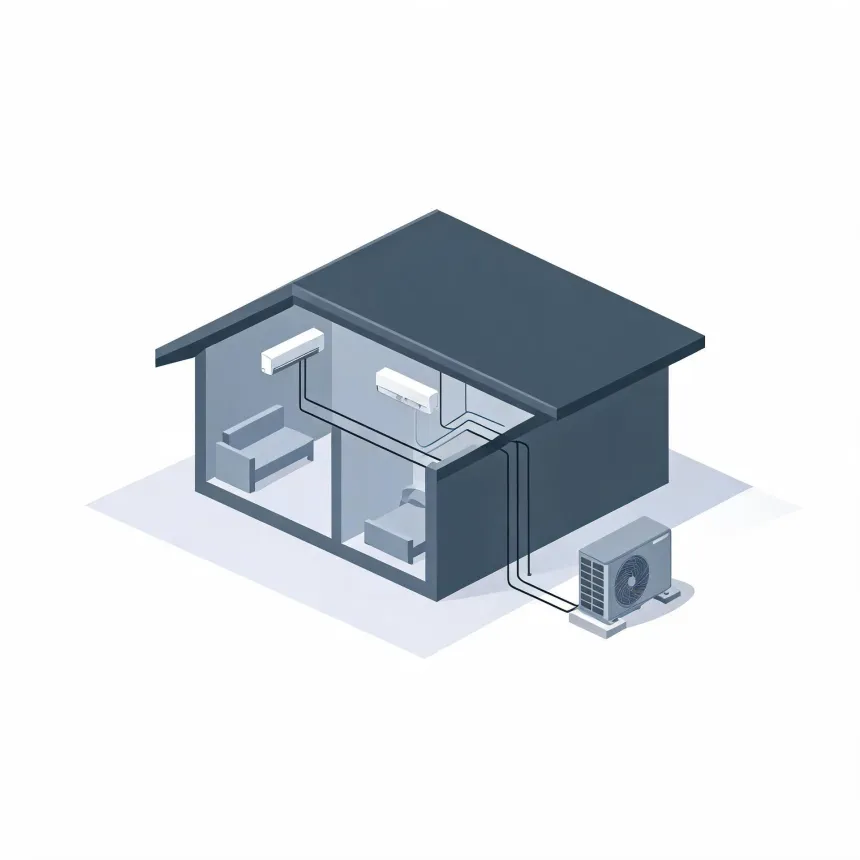
If a mini-split is replacing a window unit or an older ductless system, that equipment has to come out before the new one goes in. The outdoor condenser gets disconnected, the refrigerant lines get reclaimed rather than vented, since releasing refrigerant to the air is against the law, and the old line set usually comes out too rather than getting reused. Indoors, the wall-mounted head and its mounting plate come off, leaving a small hole where the line set and drain passed through the wall. That hole needs sealing, not just covering, or it becomes a path for air and moisture. If the old system had a condensate pump or drain line, those get capped or removed as well. None of this is hard work on its own, but it has to happen in the right order, and it has to happen before anyone can judge where the new lines and wiring should run.
Most homes in McPherson County heat with gas, 58.3 percent of them. Another 13.7 percent run on bottled or LP gas, so close to three out of four houses here already have a gas furnace doing the heavy lifting in winter. A mini-split added to one of these homes is almost never the only source of heat. It takes over cooling in summer and can handle the shoulder months, while the furnace stays in place for the cold stretch and for backup if the power goes out. That split matters here, since an outdoor unit that loses power loses heating along with it, and a gas furnace doesn't. Only about a quarter of homes here heat with electricity alone, and those are the ones where a mini-split's winter performance carries more weight in the decision.