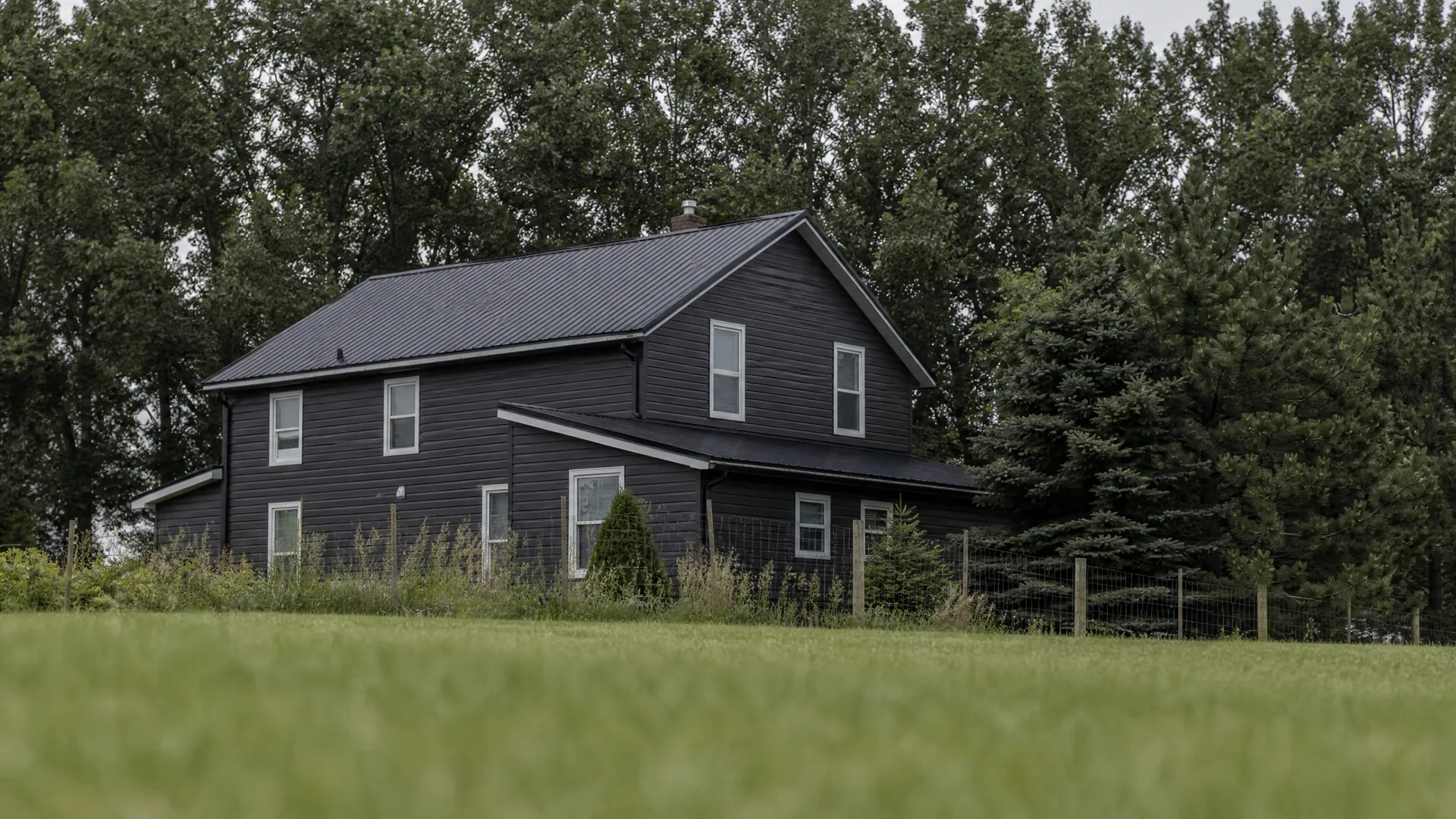





A two-story house with dark wood siding and a dark metal roof, with white-framed windows, set behind a wire fence and a mown grass field, surrounded by deciduous trees and a large spruce under an overcast sky.

Mini Split Installation in Ottawa, KS

Tell us about the job

Takes about a minute. No obligation.

New system or replacementMini-splitFranklin County, KS
Step 1 of 2

What ZIP code is the job in?

Half the homes in Franklin County heat with utility gas. Another 30.6 percent use electricity, and 14.6 percent run on bottled or LP gas. A mini split is electric heat, so if your house is one of the gas-heated ones, you're not replacing like for like, you're adding a second way to heat and cool part of the house. That works well for a room an existing furnace struggles to reach, or for a space without ductwork at all. If your home is already electric, a mini split can take over more of the job, since there's no gas line or combustion to work around.

7 months
October through April, your system heats
5 months
May through September, it cools
24°F
the average winter night it heats against
87°F
the average summer afternoon it cools against
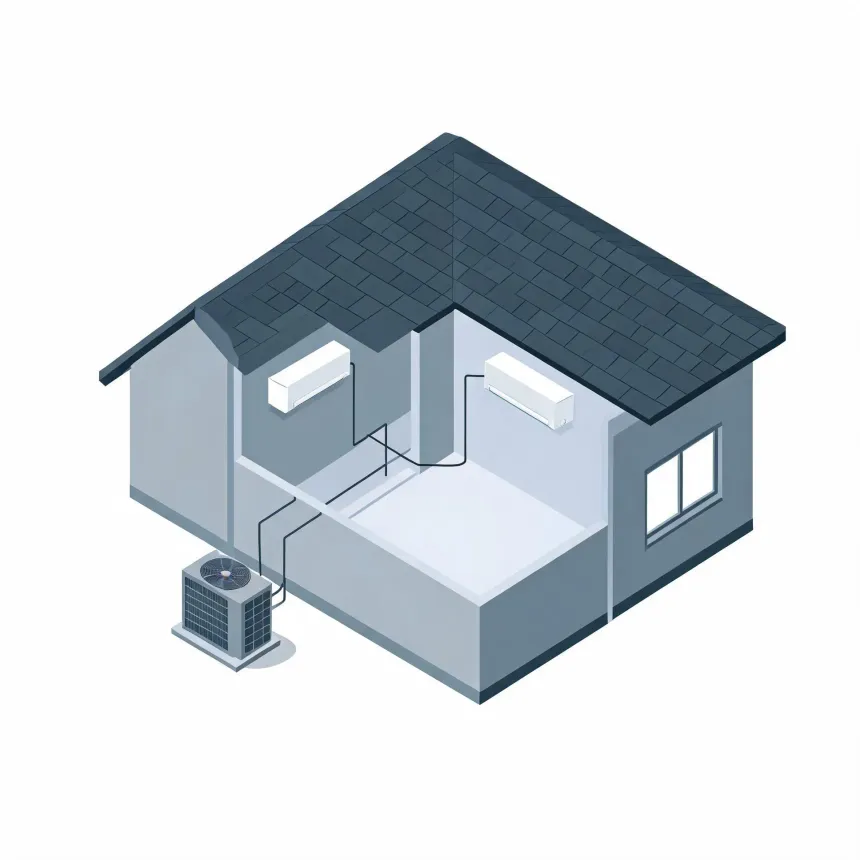
Isometric illustration of a cutaway gray house with a dark shingled roof, showing two wall-mounted indoor air conditioning units connected by lines to an outdoor condenser unit on the ground outside.
Your system heats October through April and cools May through September.

NOAA nClimDiv, 1991–2020 normals

Every quote should say how many indoor heads the system has and what each room needs for capacity.

A mini split sized for the wrong room runs all day without getting comfortable, or short cycles and leaves the air damp.

Cooling starts in May. Get the mini split in before then.

Cooling runs May through September
Summer afternoons average 87°F
71 damaging wind events from 2015 to 2024

If the mini split is going in alongside an old window unit or a space heater, that equipment usually just gets hauled off once the new system is running. There's nothing to drain or disconnect beyond unplugging it. If it's replacing an older mini split, the outdoor condenser and the line set running to it have to come out too, not just the indoor head on the wall. The refrigerant in that old line set gets recovered, not vented, so the old equipment needs to be removed by someone licensed to handle it. Whatever's patched into the wall where the old line set or power cord ran through should get sealed up, since that's a straight path for outside air otherwise.

A standard mini split handles Ottawa fine

Franklin County sees its share of wind and hail, and 19 percent of Kansas households lost power for a day or more last year. None of that calls for oversizing a mini split or paying more for extra capacity. A standard size and efficiency fit what this county actually needs.

Find a contractor
A man in a dark jacket and tan work pants, seen from behind, carries a canvas duffel bag up wooden porch steps toward a red front door, beside a large terracotta pot holding a shrub.
A white outdoor air conditioner condenser unit mounted on metal wall brackets against gray horizontal siding, with a blue sky and white clouds behind it.

A normal season, not a heavy one

Five months of cooling, May through September, with afternoon highs averaging 87 in June, July and August. That's a normal season's workload for a mini split, not a heavy one. The compressor cycles on through those months and the condenser sits outside taking whatever weather passes through, same as it would anywhere else running a standard summer. Nothing in that workload asks for bigger equipment or a higher efficiency tier than what's standard. Size it for the room, not for the season.

The rating tells you the ratio, not the room

The efficiency number on a mini split's label is a ratio of cooling or heating output to the power it draws over a season. It's how you compare one system against another before you buy. It doesn't tell you whether the unit fits the room it's going in. A high rating on a system that's the wrong size for the space still leaves you with a room that won't hold a comfortable temperature.
The number holds up when the install matches it

A mini split only hits its rated efficiency when the line set is the right length, the refrigerant charge is correct, and the indoor head is sized for the room it's heating or cooling. Add extra line length or an undercharged line, and the system has to work harder to do the same job, pulling more power than the label promised. The rating is a ceiling. What the system actually runs at depends on how it went in.

Sizing a mini split comes down to how much heat moves through the room, not how big the room looks. A tech works out the heat load from the floor area, the window glass, which way the room faces, and how well it holds a temperature. Skip that and go by room size alone, and the guess is usually wrong in one direction or the other. Too big, and the unit blasts the room to temperature and shuts off before it's pulled the moisture out of the air, so the room feels cool and damp rather than comfortable. Too small, and it never catches up on the hottest or coldest days, running flat out without closing the gap. Right sized, it runs longer at a lower output, which is where these systems actually do their best work.

Installation starts with the outdoor condenser going on its pad or wall bracket, then a tech drills a single hole through the wall for the line set, the power wire, and the condensate drain. That line set gets cut to length, connected at both ends with flare fittings, then pressure tested before anything gets charged with refrigerant. A loose flare fitting shows up in that pressure test, not after the system's already running. Once the lines hold, the indoor head goes up, the system gets evacuated to pull moisture and air out of the lines, and the refrigerant charge gets set to the weight the manufacturer specs for that line length. Last step is running it in both heating and cooling modes to check the head is actually pulling the temperature down and the condensate drain is clearing water the way it should.