



A gray cat sleeps curled up on a dark-made bed in a moody, minimalist bedroom with a wall-mounted air conditioning unit and warm accent lighting.

Mini Split Installation in Sabetha, KS

Tell us about the job

Takes about a minute. No obligation.

New system or replacementMini-splitNemaha County, KS
Step 1 of 2

What ZIP code is the job in?

Gas heats close to half the homes in Nemaha County, and LP gas covers close to another third, which means most houses here were built around a furnace and ductwork, not a mini split. That's not a reason to rule one out. A mini split works well in a room that furnace ducts never reached well, or as the only system in a space that was never heated or cooled at all. It also gives you cooling where the gas furnace gives you none. If you're adding one alongside an existing furnace, the two don't need to fight each other. The mini split can carry a single room on its own, while the furnace keeps doing what it already does for the rest of the house.

7 months
October through April, your system heats
4 months
June through September, it cools
19°F
the average winter night it heats against
86°F
the average summer afternoon it cools against
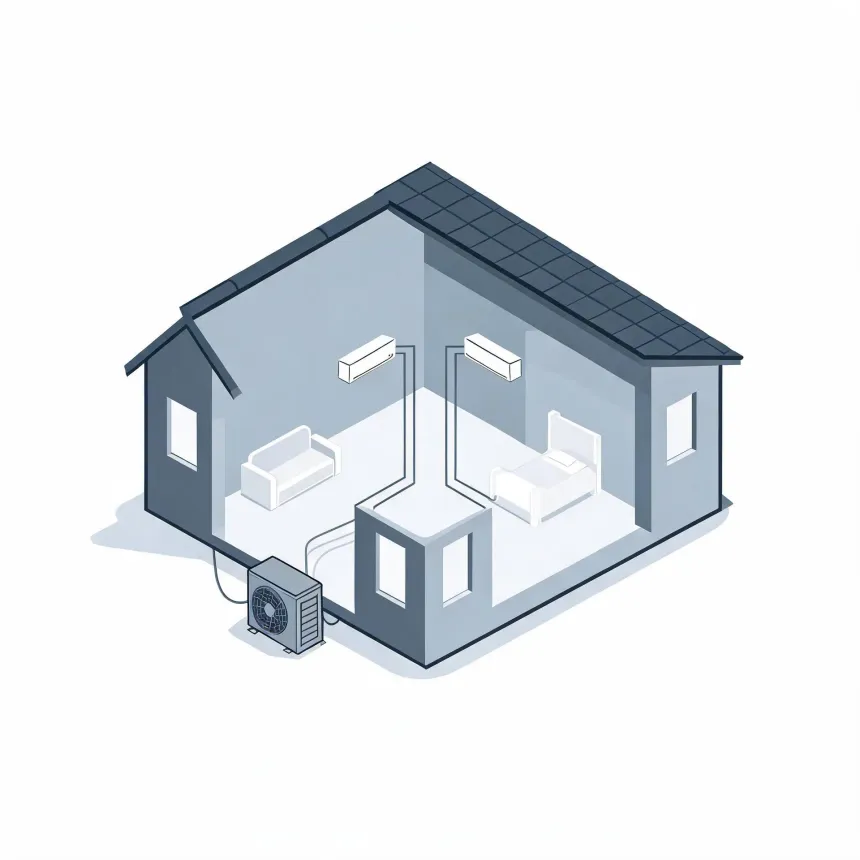
Isometric cutaway illustration of a small house showing two wall-mounted indoor air conditioning units connected by lines to a single outdoor condenser unit beside the building, with a sofa in one room and a bed in another.
Your system heats October through April and cools June through September.

NOAA nClimDiv, 1991–2020 normals

Kansas electricity ran 14.15 cents a kilowatt-hour in 2024.

A mini split sized right for the room it serves keeps that cost in line, no reason to size up.

Sabetha doesn't need an oversized mini split

Cooling runs June through September
Summer afternoons average 86°F
55 damaging wind events from 2015 to 2024

Cooling runs June through September here, so May is the month to get a mini split in place. Installed before June, it's ready the first warm day instead of partway through one. The work itself means running a line set and mounting an outdoor unit, the kind of job that goes better without a deadline attached to it. Wait until the room is already hot and you're picking from whoever still has an opening, not necessarily who you'd have chosen.

A mini split in Sabetha has to meet zone 4A's efficiency minimum

Zone 4A sets the efficiency floor for Nemaha County, and a new mini split has to clear it. The minimum is 14.3 SEER2 for cooling and 7.5 HSPF2 for heating. You won't need to shop for that number. It's the baseline a contractor can legally install, so whatever gets quoted to you already meets it. A mini split that clears that mark may also qualify for the federal energy efficiency tax credit, worth asking about before you settle on a unit.

Find a contractor
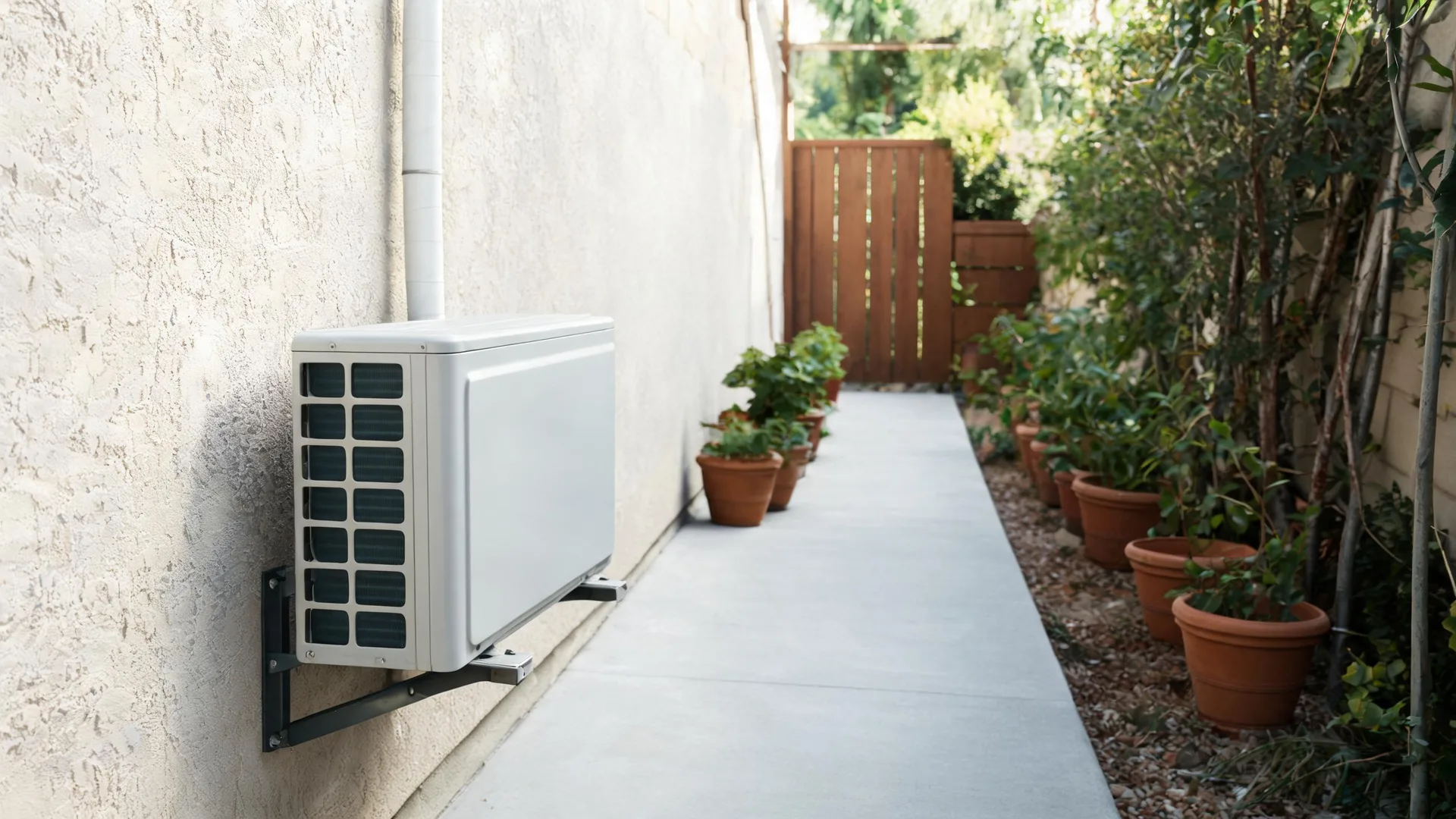
A white outdoor air conditioner condenser unit mounted on metal wall brackets against gray horizontal siding, with a blue sky and white clouds behind it.

The number on the label is a ratio, not a size

The SEER2 number on the label is a ratio, cooling output over the electricity it takes to produce it. A higher number means the compressor is getting more cooling out of the same draw of power. It says nothing about how big a room the unit can handle, that's a separate rating, so a high SEER2 unit sized wrong for the room still runs worse than a right-sized one with a lower number. The rating also assumes the system is maintained, the filter cleaned and the coil kept clear. A mini split with a clogged filter or a dirty coil won't hit the number on its label no matter how high it is. Heating works the same way through HSPF2, same idea, heat moved per unit of power spent moving it.

The furnace and ducts stay put

Adding a mini split doesn't mean touching the existing furnace. It keeps heating the rooms it always has, through the same ducts, on the same thermostat. The mini split only takes over the room it's installed in. Nothing about the old system changes unless you decide to change it.
An old mini split is a different job

If this is replacing a mini split rather than adding one, the outdoor unit and the indoor head both come down, and the line set gets checked rather than reused. Old refrigerant lines can have wear a new compressor shouldn't be connected to. A contractor will tell you whether the existing line set is worth keeping or whether it gets replaced along with everything else.

When you're comparing quotes, ask how they arrived at the size, not just the model number. A contractor should be measuring the room, checking window area and insulation, not matching what the old unit used or guessing by square footage alone. Ask how many indoor heads the outdoor unit will run, and whether this room is the only one it will ever serve. Ask what happens to the line set if a wall or ceiling needs opening up to run it. Quotes can show the same SEER2 number on the label and still mean different jobs, depending on how carefully each one was sized.

Installation day starts with the spots already marked out, so most of the time goes to the work itself rather than deciding where things go. The indoor head gets mounted on its bracket, the outdoor unit gets set on a pad or bracket outside, and a line set runs between them through a hole drilled in the wall. That line set carries refrigerant, so once it's connected, the lines get pressure tested before anything is charged, checking for leaks at every joint. After that the system gets evacuated to pull out air and moisture, then charged with refrigerant to the amount the unit calls for. A condensate line goes in alongside the line set to drain the water the indoor head pulls out of the air when it's cooling. Once it's wired in and powered up, the last step is running it in both heating and cooling to check airflow at the head and make sure the thermostat or remote is actually controlling it.