Shawnee County sees its share of severe weather
Between 2015 and 2024, Shawnee County recorded 351 severe weather events, including 224 damaging wind events, 108 hail events, 7 tornadoes and 12 winter storms with heavy snow or ice.
Takes about a minute. No obligation.
Between 2015 and 2024, Shawnee County recorded 351 severe weather events, including 224 damaging wind events, 108 hail events, 7 tornadoes and 12 winter storms with heavy snow or ice.
Nearly one in five Kansas households went at least 24 hours without power in 2024. A mini-split depends on electricity to run, so an outage that long stops it, along with anything else tied to the grid.
NOAA nClimDiv, 1991–2020 normals
Gas furnaces heat most homes in Shawnee County.
A mini-split works alongside that furnace, not in place of it, so the install has to fit a home already set up for gas heat.



Shawnee County falls in climate zone 4A, a mixed zone that asks real work of a system in both directions. Any mini-split installed here, ductless or not, counts as a split-system heat pump under the federal efficiency standard, and units built from 2023 onward have to clear 14.3 for cooling and 7.5 for heating. Those numbers set a floor. A contractor sizing a system for this county has to pick equipment that meets it, then weigh it against what this climate actually asks of a heat pump across a full year. A federal tax credit is available on qualifying equipment, which can offset part of that decision.
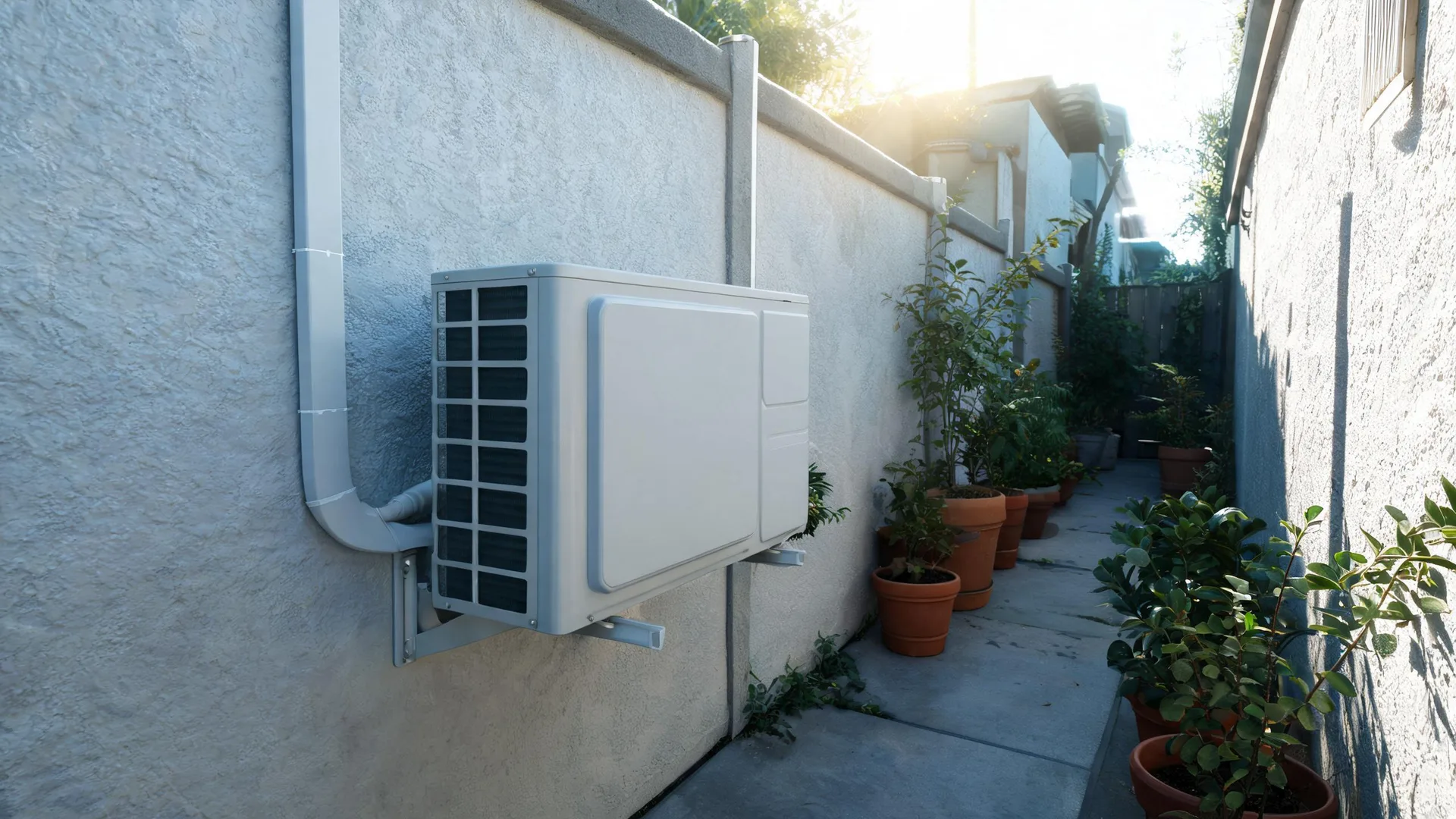
Where the installer puts the outdoor unit, and how it's mounted and guarded, matters in a county that sees hail and damaging wind most years. Ask about backup for the furnace's blower and any gas water heater's controls too, since those need power to run even though they don't run on it. A mini-split consult is the place to settle all of this before anything goes in the wall.
Find a contractorCooling runs May through September here, five months of the outdoor unit working every day. Get the install done in April and it's sized, mounted and tested before the first hot stretch, not scheduled around whatever week it breaks. Winter cuts the other way. Overnight lows average 22°F across December, January and February, which is well within what a mini-split can draw heat from, but a system going in cold, during a cold snap, gives the installer less room to get the setup right. Spring, before the heat and after the worst of the cold, is when there's slack in the schedule to do it properly.
Whatever's being replaced has to come out first: an old window unit, a baseboard system, or just wall space that's never had a line set run through it. The installer has to patch or seal whatever the old equipment leaves behind, whether that's a hole in the siding, exposed wiring, or a mounting bracket that doesn't fit the new unit.
Swapping out an existing mini-split means disconnecting the refrigerant lines before the old outdoor unit can be disposed of, since that refrigerant can't just be vented into the air. The indoor head comes down separately, and the line set and wiring running between them usually gets replaced rather than reused, since old connections don't always seal right against new equipment.
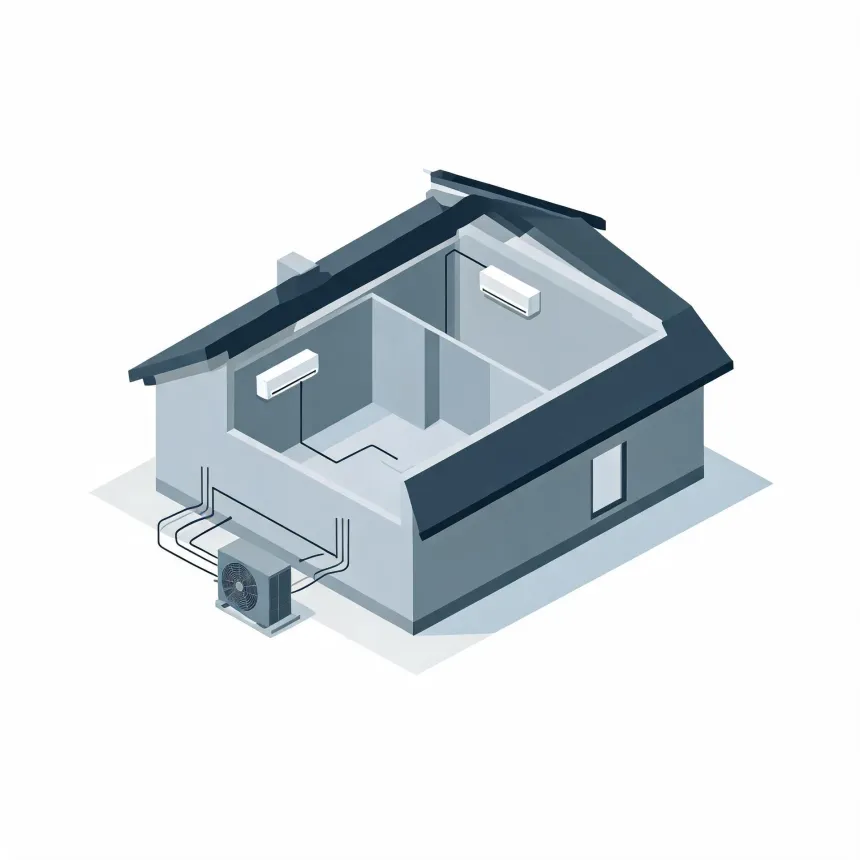
Sizing a mini-split starts with a room by room heat loss and heat gain calculation, not a guess based on square footage. An installer looks at window area, insulation, ceiling height and how many exterior walls a room has, because two rooms the same size can need different amounts of capacity. Too big and the unit short cycles, cooling the room fast then shutting off before it pulls any humidity out of the air, which leaves the space feeling damp and clammy even at the right temperature. Too small and it runs flat out all day without ever catching up on the hottest or coldest afternoons. For a multi-zone system, each indoor head gets sized to its own room first, then the outdoor unit gets matched to the total so it has enough capacity to run every zone at once without straining. Getting this right is what decides whether the system holds steady or struggles for as long as it's in the wall.
Half the homes in Shawnee County were built in 1972 or earlier. A house that age usually means whoever installed the mini-split can't run line sets through open stud bays the way they could in new construction. Walls are already finished, so the line hiding behind a wall or soffit, and sometimes a short run of exposed conduit is part of the job rather than a sign something went wrong. Electrical panels from that era were also built for a smaller load than a mini-split adds, and an installer checking the panel before quoting the job is normal here, not a red flag. None of this rules out an install. It just means the plan has to start from the house you actually have.