Profile view of a bearded man wearing a dark baseball cap and a dark gray T-shirt against a plain off-white background.

R-22 phase-out and older AC units in Kansas

New system or replacementCentral ACKansas
Step 1 of 2

What ZIP code is the job in?

Can I still get R-22 for my AC in Kansas?

If your central air system is more than a dozen or so years old, there's a decent chance it was built to run on R-22, the refrigerant everyone used to call Freon. Kansas summers put real hours on an AC, and when a unit starts low on refrigerant, the usual fix was to just add more. Now that's a harder question to answer, and a more expensive one.

No. R-22 production and import stopped in 2020.

The EPA phased out R-22 under rules that ended all US production and import of it on January 1, 2020. What's in reclaim and existing stockpiles is what's left, and there's no new supply coming. That's pushed the price of R-22 up a lot, and a repair that used to mean topping off refrigerant can now cost more than it's worth on an older system. If your outdoor unit runs on R-22, a leak or a failing compressor isn't a small fix anymore. Most contractors in Kansas will walk you through whether to keep chasing R-22 or replace the system with one that runs on a refrigerant still being made.

A gray-haired bearded man in a dark knit sweater sits on a light gray sofa in a sunlit living room, looking to his left, with a framed artwork, a potted palm, and a curtained glass door behind him.
A middle-aged man in a dark green sweater sits on a light grey sofa looking toward a sunlit window, with a wooden shelving unit, lamp and potted plants in the background.
A man in a dark green sweater sits on a light grey sofa in a sunlit living room, looking to his left, with a shelving unit, houseplants, framed art and a large window behind him.
A gray-haired bearded man in a dark green sweater sits on a light gray sofa in a sunlit living room with a potted plant, framed picture, and dark shelving in the background.

What's left of the R-22 supply is whatever was in tanks before 2020, when production and import for existing equipment stopped. None of it is being made new. That's why a leak matters more on these systems than it used to. A technician has to track down where the refrigerant is escaping and seal it first, because adding more to a system that's still leaking just drains the tank again. The refrigerant used to refill it comes from reclaimed stock, pulled from systems being retired or recovered during service, and it's still legal to use. None of this means an R-22 unit quits working the moment it runs low. It keeps cooling, but the compressor has to work longer to get the house to temperature, and that strain adds up. The part that usually ends the conversation is the compressor itself. When it fails on an R-22 system, the cost of sourcing parts and refrigerant for the old unit tends to pass what a new outdoor unit would run, and that's when most homeowners decide to replace rather than repair.

How R-22 Shortages Play Out

  • R-22 production and import for use in existing equipment ended in 2020, so the supply left is whatever was already in tanks.
  • A unit built for R-22 cannot simply be switched to a modern refrigerant like R-410A without replacing the compressor and other parts.
  • When an R-22 system develops a leak, a technician has to find and seal it before adding any more refrigerant, since topping off a leaking system just empties the tank again.
  • Reclaimed and recycled R-22 is still legal to use and gets drawn from systems being retired or recharged from recovered stock.
  • A failing compressor on an R-22 system is usually the point where replacing the whole outdoor unit costs less than keeping the old one running.
  • Low refrigerant alone won't make an R-22 system stop cooling right away, but it forces the compressor to run longer and harder to hit the same temperature.
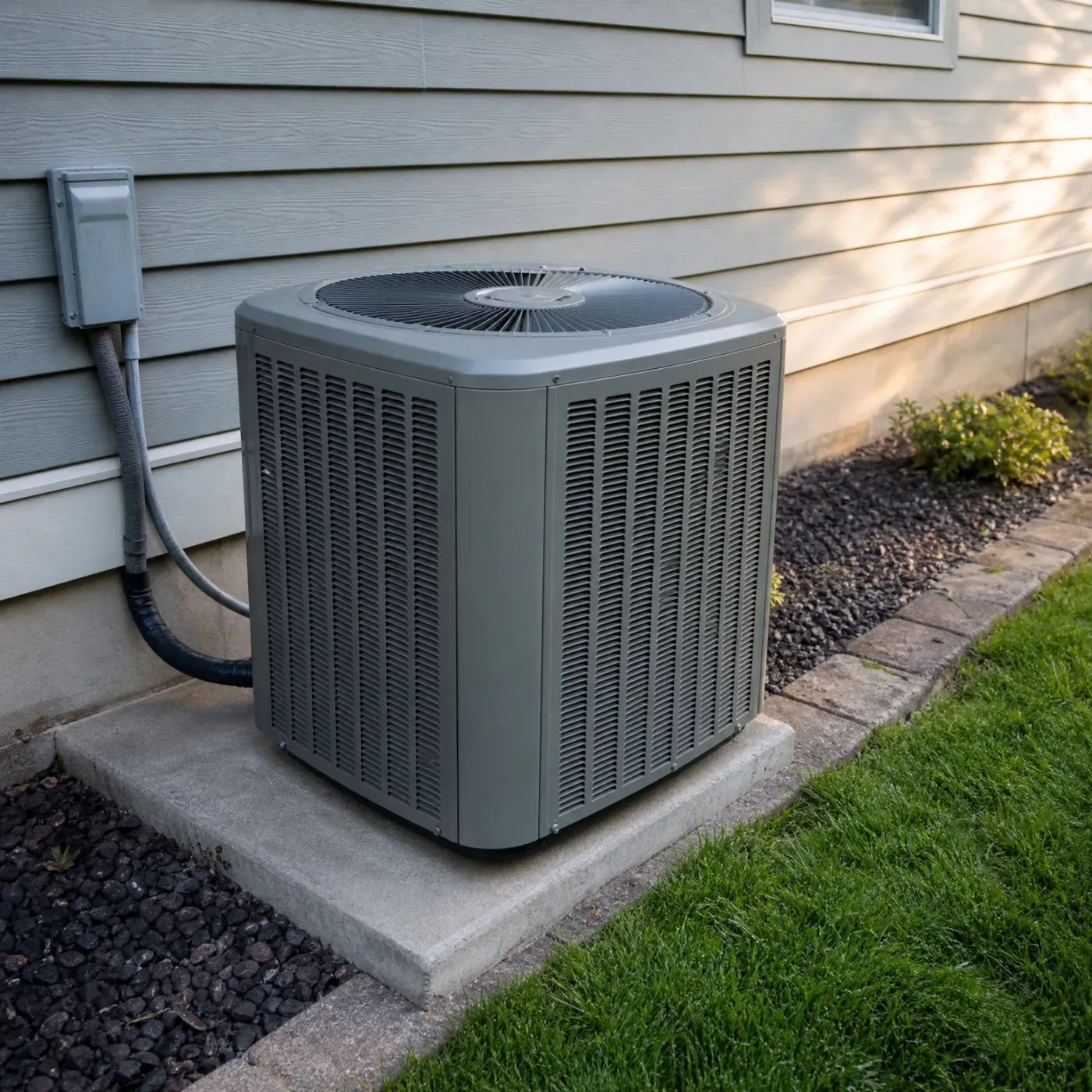
A gray outdoor air conditioning condenser unit sits on a concrete pad beside a house with horizontal siding, connected by insulated lines to a wall-mounted disconnect box, with a shrub and gravel bed to the right.
A system still running on its original charge can hold for years if nothing leaks and the compressor stays sound.
An outdoor air conditioning condenser unit sits on a concrete pad beside a house with horizontal vinyl siding, with a gray electrical disconnect box and insulated refrigerant line on the wall above, surrounded by bare mulched ground.
Dirt packed into the coil fins makes a dying R-22 unit work harder to move heat, and harder to find a repair for.

Is my old AC quietly costing me more each summer?

You might not see anything wrong yet. The unit still kicks on, the house still cools down, but it runs longer to get there, and your power bill shows it. Some homeowners hear a hiss near the outdoor unit or the lines, or notice ice forming on the copper line even on a hot Kansas afternoon. Both point to a slow refrigerant leak, and with R-22 that leak gets more expensive to chase down every year, since the gas to recharge it is scarcer than it was. If the system keeps losing charge and keeps running low, the compressor is the part doing the extra work, and a compressor that fails on a system this old usually means the whole unit needs replacing, not just a recharge.

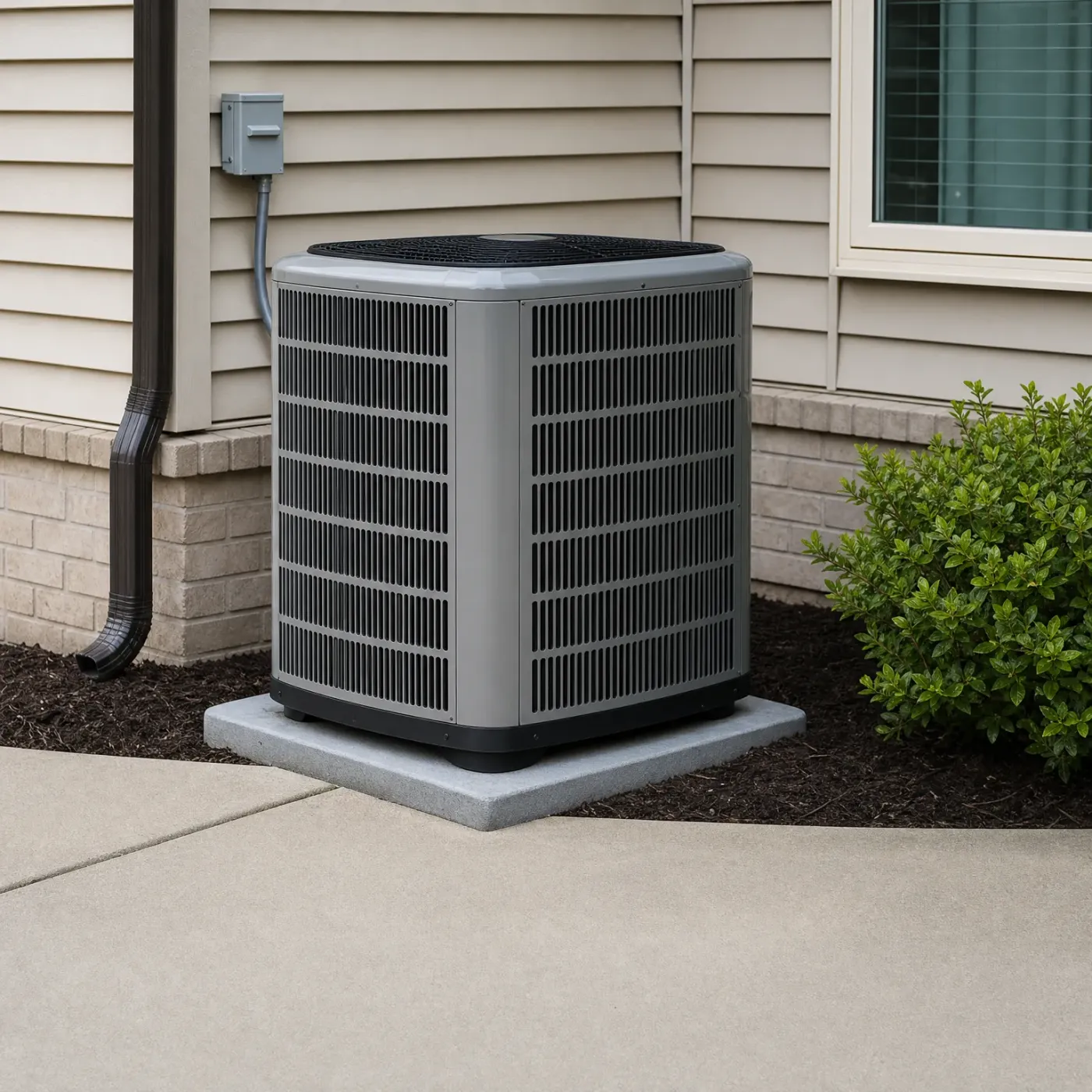
A gray outdoor air conditioning condenser unit on a concrete pad beside a house with horizontal vinyl siding, a brick foundation, downspout, electrical disconnect box, mulch bed and a green shrub.

Running clean on its original charge

This is what a healthy R-22 system looks like from outside. The pad is clear, the fins are open, and the disconnect box is easy to reach if a technician needs to shut it down. Air moves through it the way it was designed to.
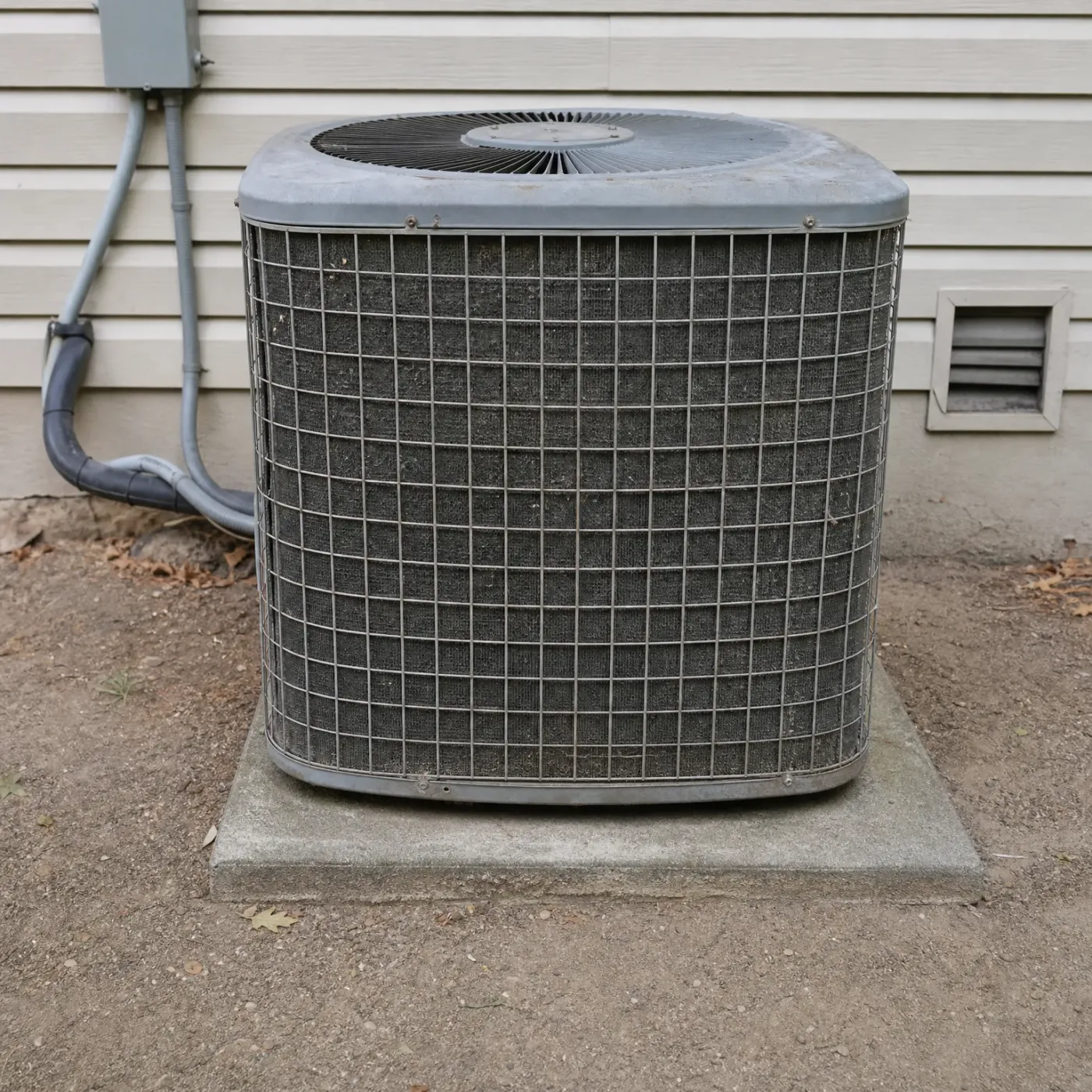

An outdoor air conditioning condenser unit with a dirty mesh coil guard sits on a concrete pad beside a house with horizontal lap siding, a wall vent, and conduit running to an electrical disconnect box.

Choked with dirt and losing ground

Grille and fins packed with debris like this force the unit to run longer for the same cooling. On an aging R-22 system, that extra strain is harder on a compressor that's already working against a dwindling refrigerant supply. A unit in this shape is worth having looked at before it quits in July.

A woman with shoulder-length dark brown hair in a cream knit cardigan sits in an upholstered armchair beside a window, looking off to the side, with a white bookshelf and potted plant blurred behind her.
A woman with dark hair in a bun sits wrapped in a chunky knit blanket on a couch with a child resting his head on her shoulder, eyes closed, beside a lit lamp and bookshelf indoors.

One request and it's handed off

A leak in an R-22 system used to mean a top-off and a few more summers. That gets harder every year, since whatever refrigerant is left in the supply chain is what was already sitting in tanks before 2020, and the price reflects that. At some point the math stops favoring the repair, especially if the compressor is what failed. Kansas heat doesn't give a system room to limp along once it starts losing capacity. A new system brings its own refrigerant, one that isn't going anywhere, and a compressor sized to actually handle July and August here. Sending the request puts this in front of a local contractor who installs these systems in Kansas homes all season and has seen what a dozen-plus-year-old R-22 unit looks like right before it quits for good. One contractor gets your request, not a handful, so you're not fielding five calls to compare the same answer. From there it's a question of what size and setup fits your house, not whether the old one can be nursed through another summer.

An outdoor air conditioner condenser unit on a concrete pad beside a house wall, with a gray electrical disconnect box and conduit above it and grass in the foreground.

What a new system runs on

A new central air system installed today runs on R-410A, not R-22. The two refrigerants work at different pressures, so a new condenser, a new coil, and the right line set all have to go in together. A licensed installer sizes the unit to your house rather than just matching the old tonnage, since a system that's too big or too small for the space won't run right in a Kansas summer.

A gray outdoor air conditioner condenser unit on a concrete pad beside a house with horizontal lap siding, surrounded by white gravel and a lawn, with a white wall at left.

Why matching parts matters

R-410A systems hold a higher pressure than R-22 ones, and the oil that circulates with the refrigerant is different too. That's why a compressor built for one can't just be dropped into the other's lines. When a contractor installs a full system rather than one piece, the coil, the condenser, and the refrigerant are all matched to each other, which is what keeps the system running the way it's rated to.

Power costs 14.44 cents per kilowatt-hour statewide

At 14.44 cents a kilowatt-hour, every extra hour your R-22 unit runs to cool the house shows up on the bill. An aging system that's lost some of its charge draws on longer and harder, so the same summer costs more than it used to, even with nothing obviously broken.

EIA-861 2025 statewide residential average

A repair on an R-22 system fixes what's broken today and buys you more summers out of a unit you already know.

A new system installed now runs on R-410A, so there's no refrigerant clock on it, and a licensed installer can size it properly for your house.

An outdoor air conditioning condenser unit on a concrete pad beside a house with light blue horizontal siding, with a shrub to the left and a conduit and disconnect box on the wall to the right.
Before you get your air conditioner installation
An outdoor air conditioning condenser unit on a concrete pad beside a house with horizontal lap siding, with a gray electrical disconnect box and conduit on the wall, mulch bed and shrub to the right, and mown grass in the foreground.
After you get your air conditioner installation
  1. A technician checks the nameplate to confirm the unit runs on R-22.

  2. Gauges go on the lines to measure the remaining charge and pressure.

  3. A leak search finds where the refrigerant has been escaping.

  4. The compressor and coil get inspected for wear R-22 systems show with age.

An R-22 system does not fail all at once. It loses a little charge, runs a little longer, and costs a little more, until one summer the compressor gives out and there is no cheap way back. A new system sidesteps all of that by running on R-410A, sized to your house by someone who installs these year after year in Kansas and knows what tends to go wrong in a system this old before it shows up on your power bill. You don't have to figure out whether your unit is worth repairing one more time or past that point. Send the request and a licensed local installer takes it from there, the kind who works on these systems every summer here and has seen what a dozen years of Kansas heat does to an R-22 unit. One contractor, matched to your situation, so you're dealing with one call instead of sorting through several.

A gray outdoor air conditioning condenser unit on a concrete pad beside a house with horizontal lap siding, with a wall-mounted disconnect box and conduit, lava rock mulch, a shrub, and grass nearby.

Done looking for an air conditioner pro

Find a local pro

The pro who reaches out is licensed in Kansas.

You're not committing to anything by asking.